
If you haven’t looked at hearing aids in the last ten years, you’re in for a surprise.
The clunky beige things people used to hide are mostly gone. What’s on the shelf now is small, light, and honestly a bit clever. Devices talk to your phone. They charge overnight like a pair of earbuds. They quietly figure out whether you’re in a quiet room or a noisy restaurant and adjust themselves.
All good. But here’s where people go wrong.
They assume newest equals best. Or priciest equals best. And that’s just not how this works. The best hearing aid is the one that matches your hearing loss, your daily routine and your comfort, and if it fails on any of those three, the rest of the spec sheet doesn’t matter much.
So when you’re comparing the best hearing aids in 2026, look past the brand and the price tag. Style, sound processing, battery, connectivity, how easy it is to handle, and the fitting itself, all of that shapes how the device actually feels day to day.
A device that suits someone who’s home most of the day watching TV is not the same device for someone running between meetings and airports. Same hearing loss, maybe. Different needs entirely.
Two things, really. It has to give you the right amount of amplification, and it has to be comfortable enough that you’ll wear it every day without thinking about it.
The technology side is genuinely impressive now. These devices don’t just crank up the volume. They read the sound coming in, break it down, and adjust it depending on what’s around you, so speech gets a lift while some of the background noise gets held back.
But the technology only works if it’s aimed at the right target. Mild loss, moderate loss, severe loss, they all need different amounts of power and sometimes different designs altogether. There’s no one device that suits everyone. Anyone who tells you otherwise is selling something.
And comfort. I’ll keep saying this in every article I write, because it’s the thing people underrate most. A device packed with features that’s fiddly to put in, awkward to clean or uncomfortable after three hours ends up in a drawer. Size, fit, the controls, how you charge it, what the upkeep looks like, think about all of that before you think about the fancy stuff.
This is the engine underneath everything else.
Instead of making the whole world louder, the device sorts the incoming sound and treats different frequencies differently, based on how it’s been programmed for your ears. That’s the bit that matters. Old amplifiers made the traffic as loud as the conversation. These don’t.
And it shifts as you move around. The processing you need for a quiet chat in your living room isn’t the same as what you need standing in a busy market. Good devices handle that change themselves.
Noisy places are the number one complaint. Restaurants, weddings, family lunches, open-plan offices. People manage fine one-on-one and then completely lose the thread the moment there’s a crowd.
Modern hearing aids tackle this with directional microphones and digital processing, basically favouring the voice in front of you over the clatter around you.
One honest caution though. This does not make noise vanish. Nothing does. What it does is improve the balance between speech and everything else, so following a conversation takes less effort. That’s a real improvement, but go in expecting “easier”, not “silent”.
This one has become a favourite, and I understand why.
If your hearing aids are Bluetooth-capable, they can pair up with your phone, your tablet, your TV. Calls come straight into your ears. Music, videos, voice notes, same thing. No fumbling with the speakerphone, no holding the handset at a weird angle hoping it lines up.
If you’re on your phone a lot, this one feature can change your day more than any other.
Tiny disposable batteries are a nuisance. Small fingers-required, always running out at the worst moment, always needing a spare pack in the bag.
Rechargeable models skip all that. You drop them in the charging case at night and pick them up in the morning.
Just check the numbers before you buy. Runtime varies quite a bit between models, and streaming audio all day will drain them faster than normal use. Ask how many hours you’ll realistically get and how long a full charge takes.
Most current devices come with an app. Depending on the model you can adjust volume, switch listening programs, see how much battery is left, and tweak a few settings yourself.
For people who’d rather tap a phone screen than hunt for a tiny button behind their ear, it’s a nice bit of control. For people who aren’t phone-friendly, it’s not essential. Either is fine.
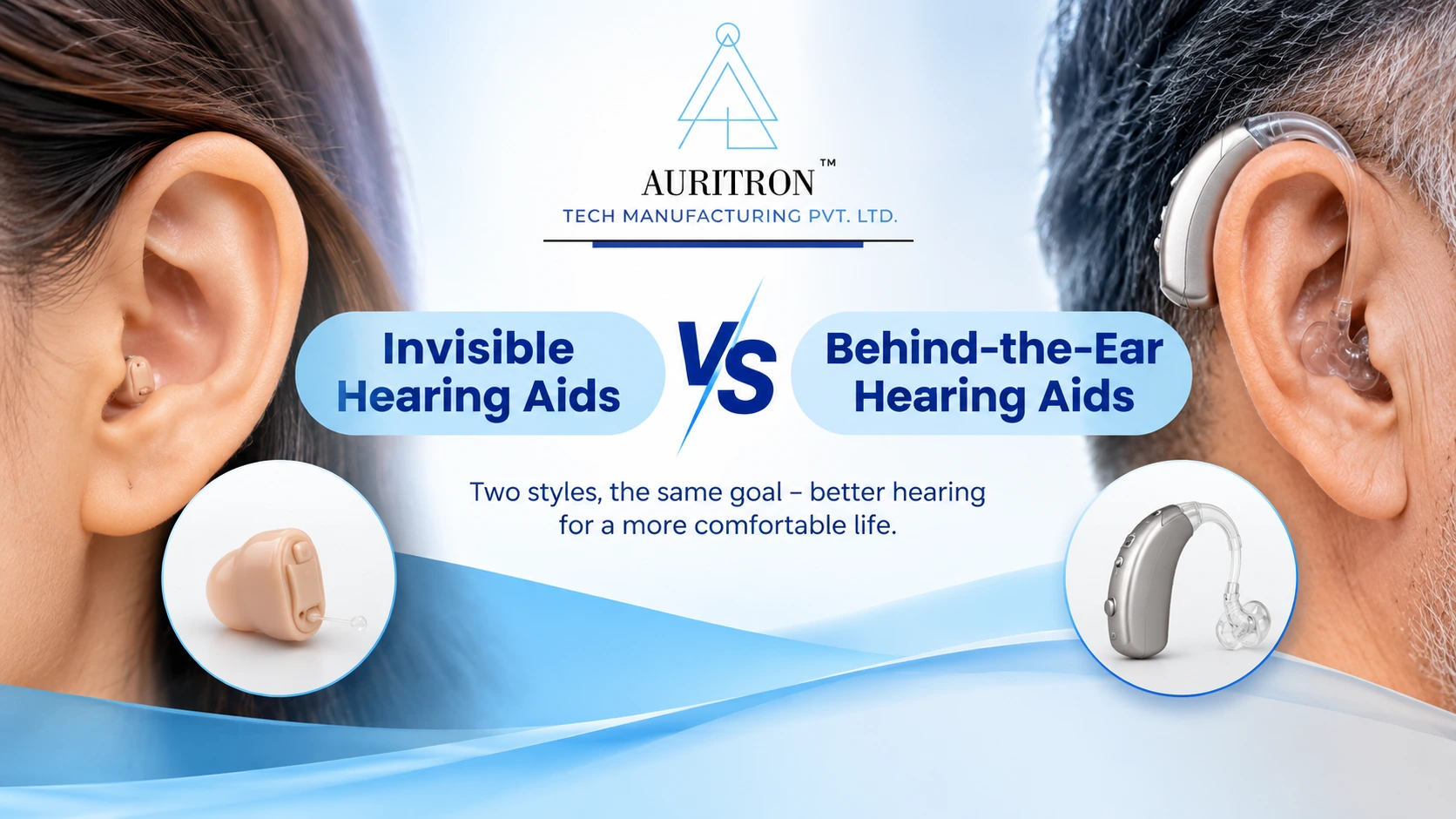
BTE devices sit behind your ear and connect down to an earmould or earpiece in the ear.
They come in a range of power levels and cover a wide span of hearing losses, including the more severe end. Since the main body sits outside the ear, there’s more room inside for the technology and for stronger amplification when that’s needed.
They’re also usually the easiest to handle, which matters more than people think if your fingers aren’t as nimble as they used to be. What suits you still comes down to your hearing test.
RIC models are a bit of a middle ground and they’re very popular for that reason.
The small main unit sits behind the ear like a BTE, but the receiver, the speaker part, sits down in or near the ear canal on a thin wire. The result is something fairly discreet that still delivers solid amplification.
Plenty of adults end up here, especially first-time users who want something that doesn’t announce itself.
These sit inside the outer ear rather than behind it. Nothing visible over the top of the ear, no wire.
There’s a whole range within this category, from ones that fill a good part of the outer ear to smaller ones that tuck further into the canal. Bigger ones are easier to handle and can hold more; smaller ones are harder to spot but fiddlier to manage.
Which one works depends on your hearing needs, the shape of your ear canal, and plain personal preference. Some people simply will not wear anything visible, and that’s a legitimate factor.
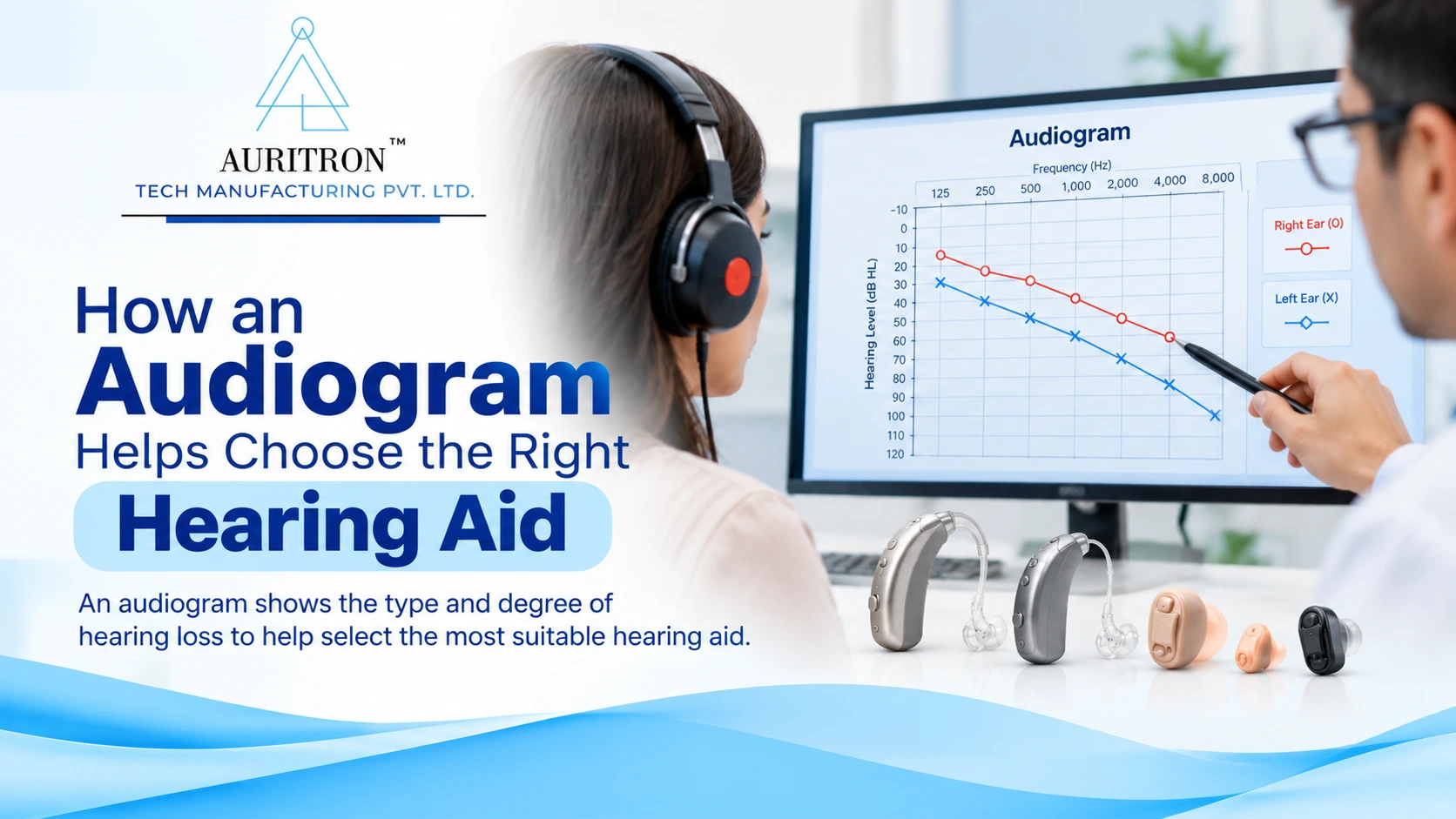
Start with a hearing test. Not a browse, not a price comparison. A test.
A hearing care professional needs to know what your hearing actually looks like before anyone can sensibly recommend a device. Everything after this step is built on those results.
Then think about your life, honestly. Are you mostly at home, or are you out in meetings, gatherings, noisy places? Do you spend half your day on the phone? Would charging overnight suit you better than swapping batteries? Is noise the thing that frustrates you most, or is it just general volume?
Answer those and the list of options gets shorter fast.
And last, the fit. You’ll be wearing this for maybe ten, twelve hours a day. If it pinches, whistles, or you can’t get it in without a struggle, none of the rest of it matters.
Buying the device is honestly the smaller half of the job.
Two people can walk out with the exact same model and have completely different experiences, because one was properly fitted and programmed and the other wasn’t. The device has to be tuned to your hearing profile, not to some average.
During the fitting, the professional sets it up against your test results and then adjusts based on what you’re actually hearing. And you’ll probably need a follow-up or two as your brain settles into it, because the first week always feels a bit strange.
A well-fitted device gives you the lift you need without everyday sounds becoming sharp or uncomfortable. If things feel too loud or too harsh, that’s not something to put up with. Go back and say so.
Not automatically, no.
Spend more and you’ll usually get more advanced sound processing, better connectivity, rechargeable technology, more room to customise things. Those are real advantages, in the right hands.
But features only have value if you use them. Someone who rarely touches a smartphone won’t get much from top-tier streaming. Someone who’s on calls all day will find that same feature worth every rupee.
So weigh the price against everything else, hearing performance, comfort, the features you’ll genuinely use, the quality of the fitting, the warranty, and whether there’s proper support when something goes wrong. A mid-range device with excellent aftercare often beats a premium one with none.
Different places create different problems.
At home, comfort and clear speech are usually the priorities. Nothing exotic needed. At work, speech clarity and microphone performance start to matter more, especially in meetings or on calls.
Restaurants and social events are where noise management earns its money. If that’s where you struggle most, prioritise it.
If you’re glued to your phone, Bluetooth. If you travel often, rechargeable devices and automatic adjustments between environments save a lot of fiddling.
The point is simple. Buy for the situations where you actually need help, not for the ones in a brochure.
Several years with reasonable care, though it varies.
How long depends on the device itself, how much you wear it, how well you look after it, and how much moisture and knocking about it takes. Sweat and humidity are the quiet killers here.
Regular cleaning helps a lot, and so does the occasional professional service. Follow whatever the manufacturer says about cleaning and storage, and keep it away from water unless your model is specifically built for it.
Worth adding, technology keeps moving. Your old device might still work perfectly well and a newer one could still be noticeably better on connectivity, processing or charging. Working and best-available aren’t the same thing.
A few things to watch for.
It’s in for repairs more often than it used to be. The sound goes in and out, or just doesn’t feel right. Battery life has dropped off noticeably. Or it simply isn’t giving you enough support anymore for normal conversation.
That last one can also mean your hearing itself has changed, which is common. If speech is getting harder even with the device in and working properly, book a fresh hearing test before you buy anything.
And yes, sometimes an upgrade is worth it purely for newer features. Just make sure you’re replacing it because your hearing needs something better, not because a newer model exists.
There’s no single feature that decides it. Anyone who tells you “just get the one with X” is oversimplifying.
Hearing performance, comfort, style, battery type, connectivity and a proper professional fitting all need to be weighed together.
If you’re often in busy places, put sound processing and noise management near the top. If batteries annoy you, go rechargeable. If your phone is basically an extra limb, Bluetooth and app control are worth the spend.
But above all of it, the device has to suit your hearing loss and your actual daily life. Get the hearing test, get it fitted properly, and give yourself a few weeks to settle in. That combination matters more than any feature on the box.
ower level and style should come from a professional hearing assessment, not from guesswork.
Auritron Tech offers a range of hearing aid solutions designed to suit different hearing needs, lifestyles and preferences. With options across different styles and technologies, you can explore hearing aids with features such as rechargeable batteries, Bluetooth connectivity, digital sound processing and smartphone compatibility.
Choosing a hearing aid is not just about finding the newest or most expensive device. Auritron Tech can help you consider factors such as your hearing requirements, daily routine, comfort, preferred features and device handling before selecting a suitable option. The focus is on helping you find a hearing aid that fits naturally into your everyday life.
Choosing the best hearing aid in 2026 is less about finding the device with the longest list of features and more about finding one that works for you. Your hearing loss, daily routine, comfort, listening environments, battery preferences and connectivity needs all play a role in the decision.
Start with a proper hearing test, understand the different hearing aid styles and features, and consider how the device will fit into your everyday routine. A professional fitting is equally important because even a good hearing aid needs to be properly programmed for your hearing profile.
Whether you need better speech clarity, easier conversations in noisy places, smartphone connectivity or a rechargeable option, focus on the features you will genuinely use. With the right assessment, fitting and support, you can choose a hearing aid that makes everyday listening more comfortable and manageable.
For most people, yes, especially if you’re tired of handling tiny disposable batteries. Just compare runtime and charging time between models, and factor in streaming if you plan to use it a lot.
No, and be wary of anyone who claims they do. Noise-processing systems reduce the effect of unwanted sound and improve the balance between speech and everything else, which makes conversation less tiring. They don’t create silence.
Many can. Bluetooth and other wireless connectivity are common now, and compatible devices let you stream calls, music and other audio straight into your hearing aids. Check compatibility with your specific phone before buying.
Ready to hear better? Visit our store or schedule hearing test with our experts. Auritron Tech is committed to helping you or your loved ones regain the joy of hearing with care and compassion.