
Buying a hearing aid is a bigger decision than most people expect it to be.
The right one quietly changes your whole day. Phone calls stop being stressful. You stop asking your grandson to repeat himself. You can sit at a family lunch and actually follow what’s being said instead of nodding along and hoping you guessed right.
And the wrong one? It usually ends up in a drawer. That’s the part nobody warns you about. People spend a good amount of money, wear the device for two weeks, get frustrated, and then it sits in a bedside drawer for the next three years.
Most of the time it isn’t because the device was bad. It’s because it was never the right match in the first place.
So if you’re planning to buy one soon, here are five mistakes that trip people up again and again. Knowing them in advance saves a lot of money and a lot of frustration.
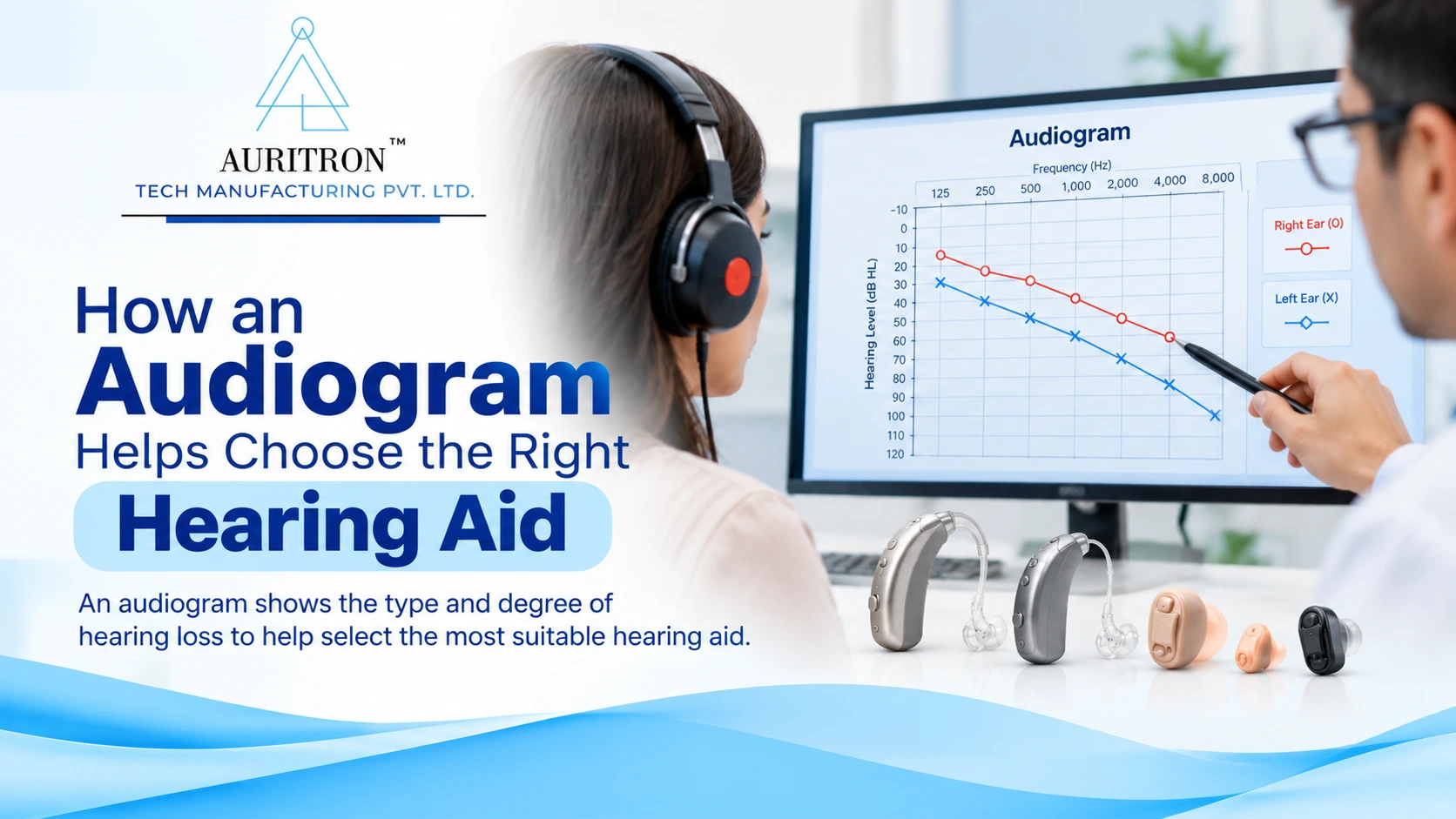
This is the big one. People walk in knowing they want a hearing aid but not knowing what their hearing loss actually looks like.
Here’s the thing, hearing loss isn’t one single thing. It’s different for everyone. Some people lose the high frequencies first, which is why voices sound mumbled even when they’re loud enough. Some people have it in one ear only. Some have mild loss, some severe. The pattern matters as much as the amount.
A hearing test tells you which sounds you’re missing and how much amplification you actually need in those specific ranges. Without that, you’re guessing. And a hearing care professional needs those numbers to program the device properly, otherwise they’re guessing too.
The FDA suggests getting a hearing evaluation before you buy, for exactly this reason. It tells you the type and degree of loss before you commit to anything.
Think about it practically. Someone with mild loss and someone with severe loss need very different amounts of power from a device. If you pick based on how small it looks or what was on offer that week, there’s a decent chance you end up with something that’s either not strong enough, or uncomfortably loud in the wrong places.
Because it tells you the type and degree of your hearing loss, and that’s what the whole fitting is built on. Everything else, the style, the features, the settings, comes after that.
Budget matters. I’m not going to pretend otherwise. For most families this is a real expense and it deserves some thought.
But price alone is a terrible way to choose.
Go too cheap and you might get a device that amplifies everything equally, including the fan, the traffic and the neighbour’s TV. Go too expensive and you might be paying for a stack of features you’ll never switch on.
Better question to ask yourself: what do I actually need this thing to do?
Somebody who’s home most of the day, watching television and chatting with family in a quiet room, has very different needs from somebody who’s still working, sitting in meetings, travelling, taking calls all day. Both of them need a good hearing aid. They don’t need the same hearing aid.
Features like noise reduction, directional microphones, rechargeable batteries and wireless connectivity are genuinely useful, but only in the situations they’re built for.
And look at the whole package, not just the sticker price. Comfort, how easy it is to maintain, warranty, whether someone will service it locally when something goes wrong. A cheaper device with no support behind it isn’t really cheaper.
You can have the smartest device on the market. If it hurts after two hours, you won’t wear it. Simple as that.
Comfort deserves the same attention as sound quality, and people usually give it about ten percent of the attention.
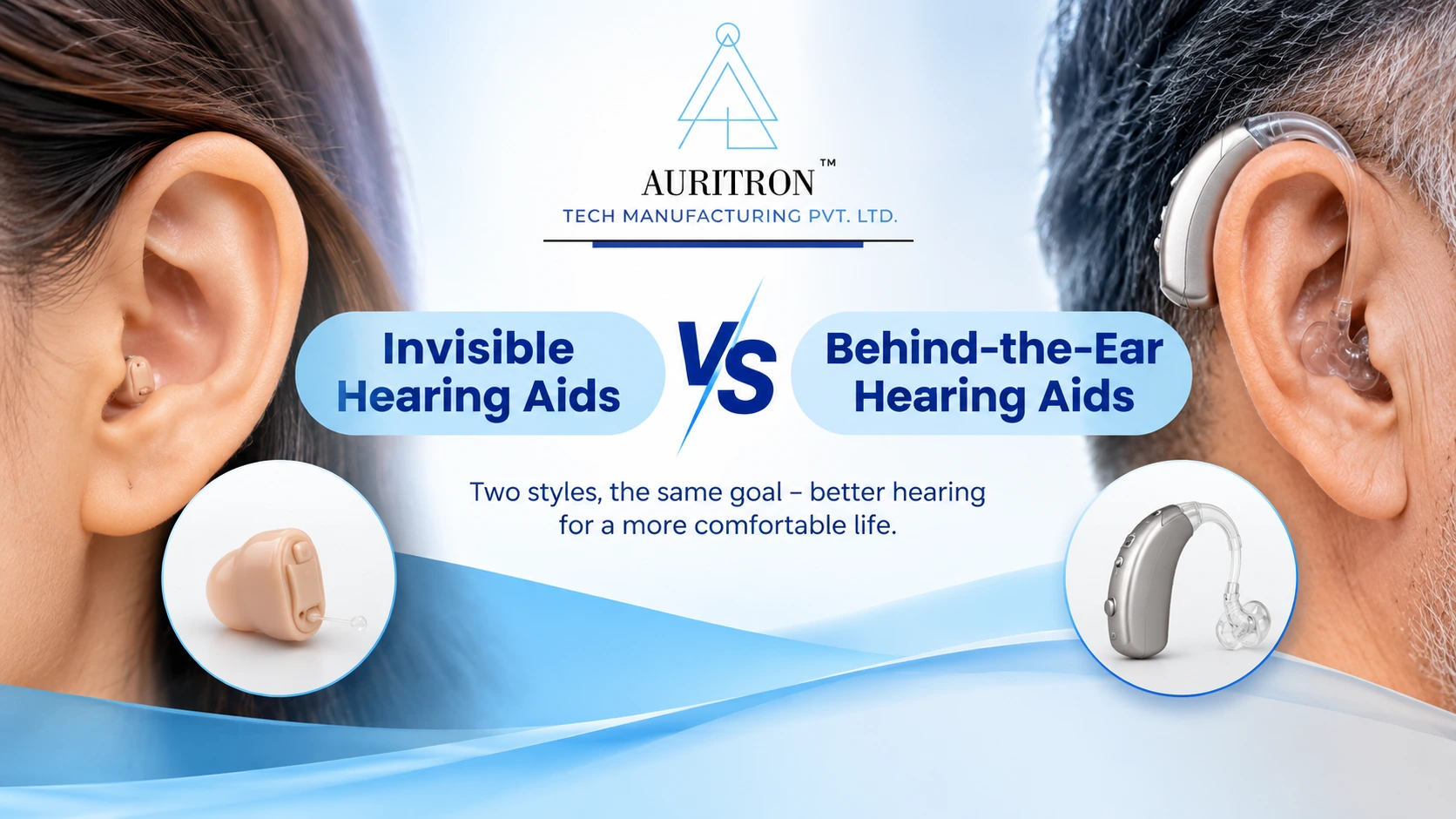
Different styles sit in the ear differently. Behind-the-ear (BTE), receiver-in-canal (RIC), in-the-canal (ITC) and completely-in-canal (CIC) all have their own shape, their own handling, their own quirks. Some people want something nobody can see. Others, especially if their fingers aren’t as steady as they used to be, find a behind-the-ear model far easier to put on, clean and adjust. Neither preference is wrong. Auritron Tech’s range covers these different styles for exactly that reason.
The fit itself matters too. A poorly fitted device can whistle, feel blocked up, or just ache. That blocked-up feeling has a name, occlusion, and it puts a lot of first-time users off.
And be honest with yourself about handling it. Can you get it in without a struggle? Take it out? Clean it? Change a battery or set it on the charger without dropping it? These sound like small things. They’re not.
Does it feel comfortable after a while, not just in the first minute? Does it stay put when you move your head or chew? Is the sound clear, not just loud? Can you manage the controls yourself? If something feels off, say so. That’s what the fitting appointment is for.
More features doesn’t mean better hearing. It just means a longer spec sheet.
The features worth paying for are the ones that solve a problem you personally run into. That’s the whole test.
Bluetooth is brilliant if you’re on the phone a lot or you stream music and TV audio. Rechargeable batteries are a small daily blessing if you’re tired of fiddling with tiny disposable ones. Noise reduction earns its keep if you eat out, attend weddings, sit in busy family rooms, anywhere with a hum of background noise.
But if you’re mostly at home in a quiet house, some of that is money you didn’t need to spend.
Before you settle on a model, just walk through a normal day in your head. Do you use your phone much? Do you sit in meetings? Are you out and about? Is noisy conversation the thing that frustrates you most? Would you rather charge it overnight than buy batteries?
Answer those honestly and half the options rule themselves out.
The FDA makes the same point, choose special features based on your lifestyle and listening needs rather than picking up technology for the sake of it.
Here’s something people don’t expect. You don’t put in a hearing aid and instantly hear like you’re twenty-five again.
If you’ve been living with hearing loss for years, your brain has gotten used to a quieter world. Suddenly it’s getting all that sound back, and at first it’s a lot. Your own footsteps. The fridge. Paper rustling. People often say everything feels too loud in week one. That’s normal, and it settles.
But it settles faster if you wear the device regularly instead of only for special occasions. And it usually needs a few follow-up adjustments as you get used to it and as your needs change.
So ask the after-sale questions before you pay. How do I clean it? What’s the charging routine? What does the warranty cover and for how long? Where do I go if it stops working? Will you re-programme it if I’m not happy in a month?
This is a device you’ll wear every single day. The support behind it is honestly as important as the device itself.
The right hearing aid fits five things at once, your hearing loss, the places you listen, your comfort, your lifestyle and your budget.
Start with the hearing test. Always. Then sit down and talk through the styles and features with someone who knows what they’re doing, using your actual daily routine as the reference point.
Don’t pick a device just because it’s the tiniest, or the most advanced, or the cheapest thing on the shelf. Pick the one you’ll wear every day without thinking about it. That’s the one that works.
Ask about trial or adjustment periods if they’re offered. Being able to wear a device in your own kitchen, your own office, your own noisy family gathering tells you far more than a quiet demo room ever will. And check the warranty and service terms before you hand over the money, not after.
Auritron Tech offers hearing aids across different styles and technologies, including BTE, rechargeable, wireless, ITC and CIC models. Specifications vary from model to model, so the right pick should come from your hearing requirements, not from which one looks nicest in the box.
Choosing a hearing aid gets a lot simpler once you stop looking for the “best” one and start looking for the one that suits you.
Skip the hearing test and you’re guessing. Buy on price alone and you’ll probably regret it either way. Ignore comfort and it ends up in a drawer. Pay for features you never use and you’ve wasted money. Forget about after-sales support and you’re on your own the first time something goes wrong.
Take your time with it. Compare the fit, the features, the upkeep and the support, not just the price tag. A good hearing aid should feel like part of your day rather than something you’re putting up with.
Whether it suits your type and degree of hearing loss. That comes first. After that, think about comfort, your lifestyle, the features you’ll genuinely use, how easy it is to handle, the cost and the support you get afterwards.
Yes. It shows the type and degree of your hearing loss, and that information is what a professional uses to select and programme the device properly.
No. A higher price tag doesn’t make a device more suitable for you. What matters is your hearing needs, your daily routine, how comfortable it feels and whether you’ll actually use what you’re paying for.
There isn’t one. BTE, RIC, ITC and CIC each handle differently and suit different people. The right style depends on your hearing loss, comfort, how steady your hands are, your lifestyle and simple personal preference.
It varies from person to person. Most new users notice everyday sounds seem louder or strange at first. Wearing it regularly, along with a few follow-up adjustments, makes the transition much smoother.




Ready to hear better? Visit our store or schedule hearing test with our experts. Auritron Tech is committed to helping you or your loved ones regain the joy of hearing with care and compassion.