
Which Is Better: Hearing Aid With Battery or Rechargeable?
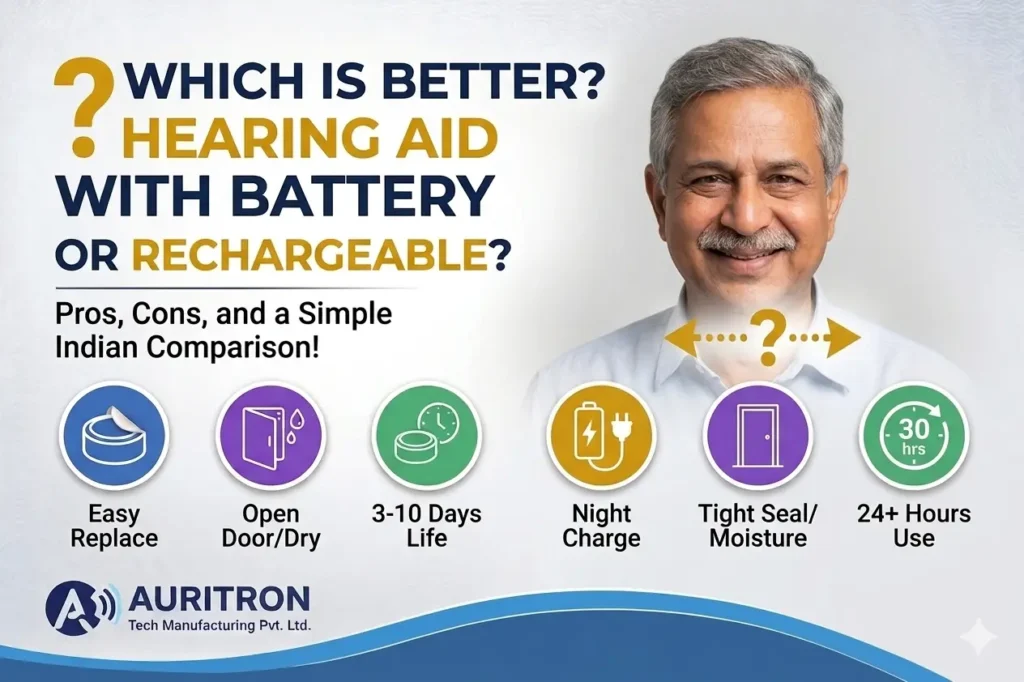
Blog Book An Appointment Which Is Better, Hearing Aid With Battery or Rechargeable? Choosing a hearing aid is an important step toward better hearing, and many people ask the same question: Which is better, hearing aid with battery or rechargeable?Both types help improve hearing, but they work differently in daily life. This blog explains everything in simple, easy words, so even young readers can understand. By the end, you’ll clearly know which option fits your lifestyle, comfort, budget, and hearing needs best. Understanding the Basics – Hearing Aid With Battery vs Rechargeable Before deciding which is better, hearing aid with battery or rechargeable, it helps to understand how each type works. What Is a Hearing Aid With Battery? A battery hearing aid uses small disposable batteries that need to be replaced when they run out. These batteries usually last from a few days to a week, depending on how often the hearing aid is used. Battery hearing aids have been around for many years and are still trusted by people who prefer simple, replaceable power options. What Is a Rechargeable Hearing Aid? A rechargeable hearing aid has a built-in battery. Instead of changing batteries, you place the hearing aids in a charging case, usually overnight. Rechargeable hearing aids use modern lithium-ion technology, similar to mobile phones, and are becoming very popular because of their convenience. Why the Question Matters – Which Is Better, Hearing Aid With Battery or Rechargeable? This choice affects your daily comfort, ease of use, and long-term cost. Choosing the wrong type may lead to: Frustration from changing batteries often Worry about power running out Trouble handling tiny batteries Extra spending over time Choosing the right hearing aid makes listening easier, more comfortable, and stress-free. Hearing Aid With Battery – Pros and Cons Explained Advantages of Hearing Aids With Battery Batteries can be replaced anytime Lower upfront cost Useful for frequent travelers Batteries are easily available Disadvantages of Hearing Aids With Battery Batteries need frequent replacement Small batteries are hard to handle Ongoing cost of buying batteries Less eco-friendly Rechargeable Hearing Aids – Pros and Cons Explained Advantages of Rechargeable Hearing Aids No need to change batteries Easy for children and seniors Saves money over time Environment-friendly Often includes advanced features like Bluetooth Disadvantages of Rechargeable Hearing Aids Must be charged daily Higher initial cost Battery replacement needed after a few years Which Is Better, Hearing Aid With Battery or Rechargeable for Different Lifestyles? For Children and Teenagers Rechargeable hearing aids are safer and easier because there are no small batteries to lose or swallow. For Seniors Rechargeable hearing aids are preferred as they remove the difficulty of handling tiny batteries. For Travelers Battery hearing aids work well in places without electricity. Rechargeable hearing aids are also suitable when portable chargers are used. For Busy Adults Rechargeable hearing aids are ideal because they are easy to use and fit well into daily routines. Which Is Better, Hearing Aid With Battery or Rechargeable for Hearing Loss Levels? Both battery-powered and rechargeable hearing aids work well for: Mild hearing loss Moderate hearing loss Severe hearing loss The difference is not sound quality, but convenience and lifestyle preference. Rechargeable hearing aids are often chosen for moderate to severe hearing loss due to higher power needs. Battery Life Comparison – Hearing Aid With Battery vs Rechargeable Battery Hearing Aids Battery lasts 3–10 days Depends on daily use and sound streaming Rechargeable Hearing Aids One full charge lasts 18–30 hours Enough for a full day of use Safety and Durability – Which Is Better? Rechargeable hearing aids are tightly sealed, helping protect them from: Moisture Dust Battery hearing aids are opened often, which may allow dirt or moisture to enter over time. Cost Comparison – Short-Term vs Long-Term Short-Term Cost Battery hearing aids usually cost less at first. Long-Term Cost Rechargeable hearing aids save money because there is no need to buy batteries regularly. Over several years, rechargeable hearing aids often become more cost-effective. Why Choose One Hearing Aid Type Over the Other? Choosing between battery-powered and rechargeable hearing aids depends on your daily habits and comfort needs. If you prefer simple use and modern convenience, rechargeable hearing aids are a great choice because you only need to charge them once a day. They are especially helpful for children, seniors, and people who do not want to handle small batteries. If you value flexibility and instant power replacement, or if you travel often to places without reliable electricity, battery hearing aids may be a better fit. Which Is Better, Hearing Aid With Battery or Rechargeable for First-Time Users? Rechargeable hearing aids are often recommended for first-time users because: They are easier to manage Have fewer steps to remember Reduce confusion and handling issues Many hearing professionals suggest rechargeable models for beginners. Final Verdict – Which Is Better, Hearing Aid With Battery or Rechargeable? Choose a Battery Hearing Aid If You want a lower upfront cost You travel frequently You prefer replaceable batteries Choose a Rechargeable Hearing Aid If You want convenience and ease You dislike changing batteries You prefer modern features You want long-term savings For most people today, rechargeable hearing aids are the better choice. Why Choose Auritron Hearing Aids? At Auritron Tech Manufacturing Pvt. Ltd., we believe that everyone deserves the joy of hearing, and it always begins with quality. As a trusted name in the hearing care industry, Auritron is committed to delivering high-quality, innovative hearing aid machines supported by years of research and advanced technology. Our dedicated team ensures that every product meets the highest standards of performance, comfort, and reliability. Proudly serving people across India, Auritron focuses on making life-changing hearing solutions accessible, affordable, and easy to use. Whether you choose a battery-powered or rechargeable hearing aid, Auritron is here to change lives—one clear sound at a time. Conclusion Understanding which is better, hearing aid with battery or rechargeable helps you make a confident and informed decision. Both options improve hearing and quality of life. The
What are the 5 levels of hearing loss?
Blog Book An Appointment What Are the 5 Levels of Hearing Loss? If you’re looking for clear guidance on What are the 5 levels of hearing loss, this article breaks each stage down in simple language so you can identify where your hearing currently stands. Hearing loss progresses gradually for many people, and knowing the exact level helps you decide when you need support like hearing aids or medical evaluation. These five levels are based on globally accepted audiology measurements and reflect how well you can hear soft, moderate, and loud sounds in daily life. What Is Considered Normal Hearing? Normal hearing falls within the range of 0–25 dB, which means you can detect very soft sounds such as whispers, leaves rustling, or quiet speech. People with normal hearing rarely struggle to follow conversations in quiet rooms. However, even within this range, factors like ageing, noise exposure, or certain medications may create minor difficulties such as missing consonant sounds or needing more focus in noisy places. Normal hearing does not mean hearing is perfect all the time. Some adults experience early signs such as needing repetition or struggling in crowded restaurants. These are early warning signals, and a hearing check is recommended before the condition progresses to the next stages. The 5 Levels of Hearing Loss Mild Hearing Loss (26–40 dB) Mild hearing loss affects clarity more than loudness. A person hears speech but misses soft consonants and high-pitched sounds. You may feel that people mumble, especially children or women with soft voices. In group settings or crowded places, conversations become harder to follow because background noise masks subtle speech details. You may start turning up the TV volume slightly or asking people to repeat the last few words. Hallway conversations, whispers, and distant sounds become less clear. Although mild hearing loss may not seem alarming, early hearing support helps prevent communication fatigue and improves clarity in day-to-day interactions. Moderate Hearing Loss (41–55 dB) Moderate hearing loss makes normal conversations difficult without visual cues. You may catch part of a sentence but miss key words, leading to confusion or misunderstandings. Talking on the phone becomes challenging because you cannot rely on lip-reading. People often raise their voice to be heard, and noisy environments become frustrating. Many individuals with moderate loss avoid conversations because they fear mishearing. With modern digital hearing aids, speech clarity improves significantly, reducing stress during communication and helping the brain process sound more efficiently. Moderately Severe Hearing Loss (56–70 dB) At this stage, understanding speech without hearing aids becomes nearly impossible. Loud conversations still sound unclear, and daily sounds like alarms, microwave beeps, doorbells, and indicators in vehicles may go unnoticed. Social interactions become more effortful, and many people start withdrawing from gatherings or meetings due to the mental strain. Hearing aids become essential to restore access to speech and environmental sounds. Without amplification, the brain receives less auditory input, which can accelerate listening fatigue and communication difficulties. Severe Hearing Loss (71–90 dB) A person with severe hearing loss depends heavily on lip-reading or written communication. Even loud voices may not be clear, and only strong sounds like a vacuum cleaner, dog bark, or loud music can be detected. Hearing aids with high power amplification support speech awareness but may not bring full clarity for everyone. Life at this stage requires consistent hearing support to maintain communication, especially in family interactions, workplace discussions, and daily activities. Profound Hearing Loss (91 dB and above) This is the highest level of hearing loss. Speech becomes nearly impossible to detect naturally, and only very loud environmental sounds may be heard faintly. People at this stage rely on advanced hearing aids or cochlear implants depending on medical evaluation. Without auditory support, social interaction becomes challenging, but technology today offers significant improvement in speech awareness and connection with others. At What Stage Do You Need a Hearing Aid? Most people benefit from hearing aids starting at moderate hearing loss, but even mild hearing loss impacts clarity in real-life situations. You may need hearing aids if you: Struggle to catch words in group conversations • Turn TV volume higher than others • Feel tired after long conversations • Miss soft speech or children’s voices • Cannot hear clearly in noisy cafés or meetings Using hearing aids early keeps the brain stimulated and supports sharper speech recognition. Can Hearing Loss Recover? Recovery depends entirely on the cause. Temporary causes such as wax, infections, or sudden pressure changes usually improve with treatment. Permanent hearing loss caused by ageing or noise exposure typically does not recover fully, but hearing aids and therapy make daily communication significantly easier. If hearing drops suddenly within hours or days, it is considered a medical emergency and needs immediate treatment. What Degree of Hearing Loss Is Considered Deaf? People with profound hearing loss (91 dB+) are often classified as deaf. This does not always mean silence. It means natural hearing is extremely restricted, and speech cannot be detected without assistance. Many people in this range use cochlear implants or advanced digital hearing aids to improve awareness of speech and everyday sounds. Why Choose Auritron? Auritron offers advanced technology designed to support clarity across all 5 levels of hearing loss. The brand focuses on natural sound, comfort, and easy adaptation for first-time users. With features like noise reduction, speech enhancement, rechargeable options, and discreet designs, Auritron hearing aids make communication easier in quiet and noisy environments. Whether you’re at the mild, moderate, or severe stage, Auritron provides solutions that fit different lifestyles and hearing goals. Conclusion Knowing What are the 5 levels of hearing loss helps you recognise early signs and take action before communication becomes stressful. The moment you notice difficulty in conversations, phone calls, or noisy environments, a hearing check is the best step. Modern hearing aids, especially from Auritron, make day-to-day communication clearer and more comfortable. Early support ensures better long-term hearing health and keeps speech processing strong. FAQs What level requires a cochlear implant? A cochlear implant
What Do I Need to Know Before Buying a Hearing Aid?
Blog Book An Appointment Introduction Buying a hearing aid can be one of the most important decisions you make for your hearing health. It’s not just a device, it’s a gateway to better communication, improved confidence, and reconnecting with loved ones. However, with so many styles, brands, and price ranges available, many people struggle to decide which one fits them best. If you’ve ever asked yourself, “What do I need to know before buying a hearing aid?”, you’re in the right place. This blog will guide you through all the key points from understanding hearing loss levels to choosing the right model, cost, lifespan, and maintenance helping you make a smart and comfortable choice. What Level of Hearing Loss Needs a Hearing Aid? Understanding your level of hearing loss is the first step in determining whether you need a hearing aid. Hearing loss is measured in decibels (dB), which indicates how soft a sound must be before you can hear it. Generally, the greater the number, the more severe the hearing loss. Understanding Hearing Loss and Decibel Levels If your hearing test shows a threshold above 25 dB, you may benefit from a hearing aid. Mild hearing loss (26–40 dB) makes it difficult to hear soft speech, while moderate loss (41–55 dB) causes problems understanding conversations in noisy places. Severe hearing loss (71–90 dB) often makes speech inaudible without amplification, and profound loss (above 90 dB) makes hearing even loud sounds challenging. When to Consider a Hearing Aid If you find yourself asking others to repeat themselves, turning up the TV volume, or feeling left out in group discussions, it’s time to consider professional evaluation. An audiologist can perform a test to determine your hearing threshold and recommend the right device that restores your listening clarity. How Do I Choose the Right Hearing Aid? Choosing the perfect hearing aid requires balancing comfort, performance, and technology. The best device for you depends on your hearing loss severity, lifestyle, and budget. Consider Your Hearing Needs and Lifestyle If you live an active lifestyle, look for water-resistant and rechargeable models that can handle movement and sweat. For office workers or people who attend meetings often, a model with noise cancellation and Bluetooth connectivity helps maintain clear conversations. Focus on Technology and Comfort Today’s hearing aids offer advanced digital features like automatic volume adjustment, background noise filtering, and directional microphones. Comfort is key; models such as in-the-ear (ITE) or receiver-in-canal (RIC) are discreet yet comfortable, while behind-the-ear (BTE) aids are more durable and powerful. Getting a professional fitting ensures optimal sound and comfort balance. Which Type of Hearing Aid Is Best? There’s no universal answer: the best hearing aid depends on your hearing range, comfort, and personal preference. Choosing Between BTE, ITE, RIC, and CIC Models Behind-the-Ear (BTE) models are ideal for all ages and degrees of hearing loss. They sit comfortably behind the ear and are easy to adjust. In-the-Ear (ITE) devices are smaller and fit inside the ear bowl, offering discretion without sacrificing performance. For those who prefer lightweight and natural-sounding options, Receiver-in-Canal (RIC) models deliver excellent clarity. Finally, Completely-in-Canal (CIC) hearing aids are nearly invisible, best for mild to moderate hearing loss. Each type has its pros and cons, so discuss your hearing lifestyle with an audiologist before choosing one. Which Hearing Aid Brand Is Best in India? Choosing a trustworthy brand ensures long-lasting performance and quality after-sales service. India offers several globally recognized hearing aid brands that meet diverse hearing needs. Comparing the Top Hearing Aid Brands Some of the top brands include Phonak, Signia, Oticon, Widex, and ReSound. Phonak is known for its crystal-clear sound and powerful noise management. Signia models offer great affordability and comfort, while Oticon provides natural sound processing with its brain-hearing technology. Widex focuses on pure, distortion-free sound, and ReSound delivers excellent connectivity with smartphones. When comparing Phonak vs Signia, Phonak is best for advanced sound control, while Signia is great for comfort and budget-friendly performance. Always consider warranty and after-sales support when choosing your brand. What Is the Average Cost and Lifespan of a Hearing Aid? The average hearing aid cost in India varies depending on the technology and brand. Understanding cost helps you choose wisely and budget effectively. Understanding Hearing Aid Pricing in India Basic models with standard amplification features cost around ₹25,000–₹50,000. Mid-range options range from ₹50,000–₹1,50,000, offering better noise reduction and battery life. Premium aids with rechargeable batteries and Bluetooth connectivity can cost up to ₹3,00,000. Hearing Aid Lifespan and Maintenance Most hearing aids last between 5 to 7 years, depending on how well they’re maintained. Regular cleaning, professional tuning, and avoiding exposure to moisture and dust can help extend their life. Replacing parts like wax guards and domes also keeps them performing optimally. What Things Should You Avoid When Wearing a Hearing Aid? Common Mistakes to Avoid Avoid wearing your hearing aid in the shower or while swimming, as water can damage internal circuits. Keep them away from sprays, perfumes, and lotions that can clog the microphones. Maintenance Best Practices When not in use, store your aids in a dry, dust-free case. Use a cleaning brush to remove earwax, and schedule routine servicing every six months. Never try to repair them yourself, professional help ensures optimal performance and longevity. Can Hearing Loss Affect Balance? Many people are surprised to learn that hearing loss can affect balance because both are connected to the inner ear. Connection Between Hearing and Balance The inner ear’s vestibular system helps maintain balance and orientation. When hearing deteriorates, it may affect your awareness of surrounding sounds and spatial cues, leading to occasional imbalance or dizziness. How Hearing Aids Help While hearing aids can’t directly treat balance issues, they improve sound awareness and spatial perception, reducing the risk of falls and improving stability, especially in older adults. Why Choose Auritron? Choosing the right hearing aid provider is just as important as selecting the device itself and that’s where Auritron stands out. Personalized Hearing Care You Can
How many hours a day should you wear your hearing aid
Blog Book An Appointment How Many Hours a Day Should You Wear Your Hearing Aid? Adjusting to a hearing aid is a gradual process, especially for those using one for the first time. Many new users wonder how many hours a day should you wear your hearing aid? The answer depends on your comfort level, your stage of adaptation, and the type of hearing loss you have. In this blog, we’ll walk through how long you should wear your hearing aid each day, why consistent use matters, and practical tips to help you adapt faster. Why It’s Important to Wear Hearing Aids Regularly Wearing your hearing aid consistently is the key to retraining your brain to recognize and interpret sounds effectively. When you first start using hearing aids, your brain has to readjust to the sounds it may not have heard clearly for a while from background noises to soft speech tones. If you wear them only for a few hours a day or skip days, your brain won’t have the consistency it needs to adapt. This can make the adjustment period longer and reduce the benefits of wearing hearing aids. The goal is to wear your device enough that your brain and ears naturally adjust to amplified sounds, leading to clearer communication and more confidence in social situations. Mild Hearing Loss People with mild hearing loss may miss soft sounds like whispers or distant voices.They can follow one-on-one conversations in quiet settings but struggle in noisy areas such as restaurants or gatherings.While some manage without hearing aids, early adoption helps reduce listening strain and maintain brain responsiveness. Average range: 26–40 dB Severe and Profound Hearing Loss Severe hearing loss makes it hard to hear even loud environmental sounds like car horns or alarms.Profound loss means you can’t hear most sounds, even at high volumes.For such conditions, powerful hearing aids or cochlear implants are often suggested by audiologists. Average range: 71–90+ dB How Many Hours a Day Should You Wear Your Hearing Aid? There isn’t one fixed number that suits everyone, but generally, hearing professionals recommend wearing your hearing aid for 8 to 10 hours a day once you’re comfortable. However, it’s best to build up slowly, especially during the initial weeks. Here’s a helpful week-by-week guide: Week 1 – Start Slow Begin by wearing your hearing aid for 1 to 2 hours a day. Choose quiet environments where you can focus on familiar sounds like conversations with family or watching TV.If you feel tired or overwhelmed, take short breaks. Remember this is part of the normal adjustment process. Week 2 – Increase Your Wearing Time Once your ears start getting used to amplified sounds, extend your wearing time to 3 to 5 hours a day. Start using your hearing aid in slightly noisier settings such as cafes, offices, or outdoor walks.You’ll begin noticing subtle improvements in speech clarity and background sound balance. Week 3 and Beyond – Full-Day Use By the third week, aim to wear your hearing aid for 8 to 10 hours daily, ideally during all waking hours except when sleeping or showering.The longer and more consistently you wear it, the more natural hearing will feel almost like a part of your daily routine. Signs You’re Wearing Your Hearing Aid for the Right Duration It’s normal to question whether you’re wearing your device enough. Here are a few signs that indicate you’ve reached the ideal daily usage: Comfort throughout the day: No pain, irritation, or sound fatigue. Improved speech understanding: Especially in noisy environments. Better awareness of sounds: Like footsteps, doorbells, or background music. Reduced listening effort: You’re not straining to hear people during conversations. If you experience headaches, discomfort, or excessive fatigue, you may be wearing your device for too long initially. It’s okay to reduce the time temporarily and build it up again. Can You Wear Hearing Aids All Day? You can and in most cases, you should wear your hearing aids all day except while sleeping, showering, or swimming. Prolonged use ensures your brain gets consistent auditory input, helping you adapt quicker and preventing auditory deprivation. However, avoid wearing them for 16–18 hours straight without breaks, especially in the beginning. Your ears need breathing time, and your device may need to be cleaned or recharged depending on the model. What Happens If You Don’t Wear Your Hearing Aid Enough? Not wearing your hearing aid regularly can slow down your adjustment and make it harder for your brain to process sound. Over time, you may notice: Difficulty following conversations Increased frustration or fatigue when listening Reduced effectiveness of the hearing aid Delayed auditory adaptation Just like physical exercise strengthens muscles, daily use of hearing aids strengthens your auditory system. Tips to Get Used to Wearing Hearing Aids Longer If you find it challenging to wear your hearing aids all day, try these simple strategies: Set a Routine Wear them at the same time every morning like when you brush your teeth or get dressed. Making it a daily habit helps your brain adjust faster. Use in Familiar Environments First Start at home or in calm spaces before exposing yourself to noisy places. Gradual exposure prevents sound fatigue. Take Short Breaks If sounds feel too loud or irritating, remove your device for 10–15 minutes before resuming. Over time, you’ll need fewer breaks. Keep Them Clean A dirty or clogged hearing aid can cause discomfort or muffled sound. Regular cleaning ensures clear hearing and longer usage comfort. Stay Consistent Even if you’re not going out or talking much, keep your hearing aid on. Everyday sounds like the ticking of a clock or rustling papers play a vital role in retraining your hearing. Why Choose Auritron for Your Hearing Aids? At Auritron, we design hearing aids that blend comfort, innovation, and long-lasting performance. Our devices are built for everyday use, ensuring users can wear them comfortably for extended hours without irritation. Whether you’re a first-time user or looking for an upgrade, Auritron hearing aids provide: Lightweight comfort
What are the side effects of ear machine for hearing?
Blog Book An Appointment What are the side effects of ear machine for hearing? Hearing aids, also known as ear machines for hearing, have revolutionized the way people with hearing loss connect with the world. These devices amplify sound and make communication easier.However, just like any wearable medical device, hearing aids can have minor side effects, especially during the first few days of use.Understanding these side effects and managing them effectively ensures a smooth and comfortable hearing experience. What Are the Levels of Hearing Loss? When people first start using ear machines for hearing, their ears and brain need time to adjust. During this adaptation period, some temporary side effects may occur. Common Side Effects Include: Ear itching or irritation: Caused by continuous contact between the ear canal and the hearing aid. Soreness or pressure: Occurs when the hearing aid doesn’t fit properly. Feedback or whistling sounds: Happens when amplified sound leaks back into the microphone. Earwax buildup: Hearing aids can reduce airflow, leading to increased wax production. Headaches or fatigue: Your brain needs time to adapt to new sound levels. These side effects usually fade with regular use and proper fitting by an audiologist. Keeping the device clean and adjusting the fit can significantly reduce discomfort. Are Sound Machines Safe for Ears? Yes, hearing aids are completely safe for ears when used correctly. Modern devices come with features that limit sound levels to protect your hearing. Safety Tips for Hearing Aid Users: Avoid increasing the volume too much. Take small breaks throughout the day to rest your ears. Clean your device daily to avoid bacterial buildup. Get regular ear checkups for wax removal and hygiene. When used under professional guidance, hearing aids can significantly improve your hearing health without harming your ears. What are the New Treatments for Hearing Loss? Modern science has introduced several innovative treatments for hearing loss, making hearing aids more effective than ever. Latest Advancements Include: Rechargeable hearing aids with longer battery life. Bluetooth-enabled hearing aids that connect to phones and TVs. AI-based sound processing that automatically adjusts to noisy environments. Cochlear implants for individuals with severe or profound hearing loss. These treatments ensure improved clarity, comfort, and adaptability for different listening conditions. Which Company is Best for Ear Machines? Choosing the best ear machine for hearing depends on comfort, sound quality, and aftercare.Auritron is one of the leading providers in this space, offering advanced technology at affordable prices. Why Auritron is a Trusted Choice: Advanced sound clarity and feedback cancellation. Lightweight, skin-friendly designs. Personalized fitting and ongoing support. Various styles like in-the-ear and behind-the-ear options. Auritron combines innovation and user comfort to create a better listening experience for every individual. What Should a Person Avoid When Wearing a Hearing Aid? Proper care is essential for maintaining your hearing aids and ear health. Things to Avoid: Exposure to water: Remove hearing aids while showering or swimming. Hair products near ears: Sprays and gels can block microphones. Sleeping with hearing aids: It can cause pressure and damage the device. Ignoring maintenance: Clean and service your device regularly. Taking these precautions ensures your hearing aids last longer and perform at their best. What is the Most Common Cause of Hearing Loss? The most common cause of hearing loss is aging (presbycusis). However, there are other contributing factors as well. Common Causes Include: Prolonged exposure to loud noises. Genetic predisposition. Ear infections or injuries. Certain medications affecting the auditory system. Understanding these causes can help prevent further damage and promote better hearing health. How Many Hours a Day Should You Wear a Hearing Aid? For beginners, it’s best to start with 3–4 hours daily and gradually increase usage. Once accustomed, most users comfortably wear their hearing aids for 10–12 hours a day. Helpful Tips: Avoid wearing aids while sleeping. Give your ears rest if you feel discomfort. Keep the devices dry and clean after every use. This routine ensures comfort and long-term durability. Can You Talk on the Phone While Wearing a Hearing Aid? Yes, you can talk on the phone while wearing your hearing aids. Modern Connectivity Options: Bluetooth hearing aids (like those from Auritron) allow you to connect directly to smartphones. For non-Bluetooth models, hold the phone slightly above your ear to reduce feedback. This feature helps you enjoy seamless calls and music streaming without removing your device. Can You Live a Normal Life with Hearing Loss? Absolutely. Many people with hearing loss live normal, active lives with the help of ear machines for hearing. Hearing Aids Help You: Engage confidently in social situations. Watch TV and listen to music clearly. Stay independent and socially active. With today’s technology, hearing loss doesn’t have to restrict your lifestyle. Can You Get Benefits If You Wear a Hearing Aid? Yes, wearing a hearing aid offers both health and lifestyle benefits. Major Benefits Include: Improved speech clarity and understanding. Reduced mental fatigue from straining to hear. Better cognitive function and emotional well-being. Some insurance and government programs even provide financial aid. Hearing aids improve overall quality of life and help maintain strong relationships. Why Choose Auritron for Your Hearing Needs? Auritron stands out for delivering innovation, comfort, and precision in hearing technology. Key Reasons to Choose Auritron: Modern designs with advanced sound processing. Custom-fitted solutions for all hearing levels. Exceptional after-sales service and support. Trusted by thousands of satisfied users. Auritron’s mission is to make better hearing accessible, effortless, and comfortable for everyone. Conclusion While ear machines for hearing may cause mild side effects at first, most are temporary and easy to manage.With regular use, professional fitting, and proper care, these issues fade away.Choosing a trusted provider like Auritron ensures safety, clarity, and long-term satisfaction with your hearing experience. If you or someone you know experiences hearing loss, visit Auritron today and take a step toward better hearing health. FAQs Do ear machines cause headaches? Mild headaches can occur during the initial phase but usually fade once your ears adapt. Can hearing aids damage
What level of hearing loss requires a hearing aid
Blog Book An Appointment What Level of Hearing Loss Requires a Hearing Aid? Hearing loss can occur gradually, often going unnoticed in its early stages.You may start missing soft conversations, feeling tired after social gatherings, or turning up the volume more than usual.At that point, people often wonder — what level of hearing loss requires a hearing aid? The answer depends on how much sound your ears can detect and process.Audiologists measure hearing in decibels (dB).Normal hearing ranges between 0–25 dB, and any threshold beyond that indicates varying degrees of hearing loss.Understanding this scale is the first step toward better hearing care. What Are the Levels of Hearing Loss? Hearing loss is classified into five main levels based on the intensity of sound needed for perception. These include mild, moderate, moderately severe, severe, and profound hearing loss. Mild Hearing Loss People with mild hearing loss may miss soft sounds like whispers or distant voices.They can follow one-on-one conversations in quiet settings but struggle in noisy areas such as restaurants or gatherings.While some manage without hearing aids, early adoption helps reduce listening strain and maintain brain responsiveness. Average range: 26–40 dB Severe and Profound Hearing Loss Severe hearing loss makes it hard to hear even loud environmental sounds like car horns or alarms.Profound loss means you can’t hear most sounds, even at high volumes.For such conditions, powerful hearing aids or cochlear implants are often suggested by audiologists. Average range: 71–90+ dB When Should You Start Using a Hearing Aid? You should consider using a hearing aid when your hearing loss begins to affect your daily communication or safety.If conversations seem muffled or you rely heavily on lip-reading, it’s time to act. Delaying the use of hearing aids can make the brain less responsive to sound over time.Studies show untreated hearing loss can contribute to social withdrawal, depression, and cognitive decline. Starting early allows your brain to adapt easily, and with advanced technology like digital hearing aids, you can enjoy clearer, more natural sound quality without discomfort or feedback. Can You Treat Mild Hearing Loss Without a Hearing Aid? For mild hearing loss, lifestyle adjustments and medical treatments can sometimes help before needing a hearing device. Treatment options include: Removing earwax buildup or treating infections Avoiding long-term noise exposure and using ear protection Regular hearing check-ups to track changes Using sound amplifiers in specific environments However, if mild hearing loss interferes with conversations or work communication, consider hearing aids. Modern devices are lightweight, nearly invisible, and can be customized to your listening environment. How Do You Treat Hearing Loss in Toddlers? Hearing loss in toddlers requires immediate attention to ensure proper speech and language development. Parents should watch for signs like a lack of response to sounds, delayed speech, or constant high TV volume. Treatment depends on the cause and severity. Common approaches include: Pediatric hearing aids designed for small ears Speech and auditory therapy Cochlear implants for profound loss Continuous monitoring by audiologists Early intervention can help toddlers develop normal communication skills and prevent long-term developmental challenges. Can Hearing Loss in One Ear Cause Dizziness? Yes, hearing loss in one ear can cause dizziness or imbalance.This happens because the inner ear controls both hearing and balance.Conditions such as Meniere’s disease, acoustic neuroma, or inner ear infections may trigger one-sided hearing loss and vertigo. If you experience dizziness along with hearing difficulty, get a professional evaluation immediately.Early diagnosis can help treat the underlying issue and prevent further damage to the ear’s balance system. Why Choose Auritron for Hearing Solutions? When it comes to hearing care, technology and precision matter. Auritron stands out for its commitment to innovation, comfort, and personalized solutions for every degree of hearing loss. Here’s why thousands trust Auritron: Advanced Technology: Auritron hearing aids use adaptive sound processing that automatically adjusts to your environment, ensuring crystal-clear sound. Customized Fitting: Every ear is unique. Auritron’s hearing aids are designed for a perfect, comfortable fit tailored to your hearing profile. Discreet Design: Sleek and nearly invisible models allow you to enjoy conversations confidently without drawing attention. Durability & Reliability: Built with high-quality materials, Auritron devices offer long-lasting performance with minimal maintenance. Comprehensive Support: From professional hearing tests to device tuning and aftercare, Auritron ensures continuous support at every stage. By combining advanced technology with personalized care, Auritron makes better hearing simple, seamless, and satisfying. Conclusion: Early Help Makes a Difference Every level of hearing loss deserves attention even the mildest one.Getting a hearing test helps determine whether you need hearing support and what type suits you best.Addressing hearing problems early can enhance your communication, confidence, and overall well-being. If you’re noticing changes in how you hear, take action now.With Auritron, you can rediscover sound clarity and enjoy life’s conversations again without limits. FAQs What is the first sign of hearing loss? You may start missing soft sounds or asking people to repeat themselves often. Can hearing loss get worse if untreated? Yes, untreated hearing loss can worsen over time and lead to communication difficulties and cognitive strain. Here are the hearing aid advantages and disadvantages for better understanding. Are hearing aids useful for mild hearing loss? Yes, even mild hearing loss can benefit from hearing aids to improve clarity and reduce mental fatigue. Can hearing loss be prevented? Avoid loud environments, use ear protection, and get regular hearing check-ups to keep your hearing healthy. You may start missing soft sounds or asking people to repeat themselves often. Yes, untreated hearing loss can worsen over time and lead to communication difficulties and cognitive strain. Here are the hearing aid advantages and disadvantages for better understanding. Yes, even mild hearing loss can benefit from hearing aids to improve clarity and reduce mental fatigue. Avoid loud environments, use ear protection, and get regular hearing check-ups to keep your hearing healthy. Worried About Hearing Loss? Talk to a Specialist Today! Book An Appointment
Hearing Aid Types and Costs: What You Need to Know Before Buying
Blog Contact Us Hearing Aid Types and Costs: What You Need to Know Before Buying Introduction When it comes to improving hearing, choosing the right hearing aid can feel overwhelming. With various hearing aid types and costs, advanced technologies, different sizes, and brand variations, people often struggle to understand which device will best suit their needs. A hearing aid is not just an audio amplifier it is a sophisticated digital hearing device designed to enhance sound clarity, reduce background noise, and improve daily communication. Today’s hearing aids are available in multiple styles, including behind-the-ear hearing aids (BTE), invisible hearing aids, and rechargeable digital hearing aids, each offering unique features and benefits. Costs can vary depending on technology levels, features, and customization. Many modern devices come equipped with Bluetooth connectivity, smartphone control, rechargeable batteries, and advanced sound processing. This blog aims to simplify the entire selection process. We’ll explain the different hearing aid types and costs, levels of technology, and additional expenses to consider before purchasing. Whether you are looking for affordable hearing aids, high-end premium options, or the newest hearing aid technology 2025 models, this guide will help you make an informed decision. We will also reference AuritronTech, a trusted hearing care provider offering high-quality hearing aids and professional fitting services, to help ensure comfortable, effective, and long-lasting hearing improvement. Average Hearing Aid Prices Understanding hearing aid types and costs begins with knowing the typical price range. Hearing aid costs vary depending on the level of technology and brand. Basic Technology Basic hearing aids usually cost less and provide: Amplification for general sound improvement Basic noise reduction Simple manual or automatic volume control Average Cost Range: ₹10,000 – ₹25,000 These devices are suitable for individuals who spend most of their time in quiet environments. AuritronTech often recommends basic models for seniors or first-time users who want affordable hearing aids without complex features. Mid-Range Technology Mid-range hearing aids offer better sound clarity and comfort. Key features: Improved background noise reduction Better speech clarity in multiple listening environments Wireless connectivity options Average Cost Range: ₹25,000 – ₹80,000 These are recommended for people who go outdoors, interact socially, and require clarity in conversations. Premium Technology Premium hearing aids offer advanced capabilities: Artificial intelligence-based sound processing Excellent performance in noisy settings Bluetooth music streaming and call handling Rechargeable hearing aids feature with long-lasting battery Average Cost Range: ₹80,000 – ₹3,00,000+ These are ideal for active individuals seeking top-quality sound experience. AuritronTech offers multiple premium models from leading brands with personalized fitting and lifetime support. Having trouble hearing clearly or choosing the right hearing aid? Get expert guidance and personalized care today! +91 9892232702 +91 2247511219 Types of Hearing Aids Hearing aids vary based on how they are positioned in or behind the ear. Let’s explore the most common hearing aid types. Behind-the-Ear (BTE) Hearing Aids These are among the most widely used behind-the-ear hearing aids (BTE). Features: Suitable for all ages and all hearing loss levels Easy to handle and maintain Available in rechargeable and wired battery options Pros: Durable and long-lasting Larger size allows more power and features Cons: More visible compared to invisible models AuritronTech recommends BTEs for children, seniors, and users requiring higher amplification. In-the-Ear (ITE) Hearing Aids ITE hearing aids fit inside the outer ear and are custom molded. Advantages: Easier insertion compared to deeper canal devices More discreet than BTE Ideal for mild-to-moderate hearing loss Best for: Users seeking comfort, custom fit, and moderate visibility. In-the-Canal (ITC) and Completely-In-Canal (CIC) Hearing Aids These models are commonly called invisible hearing aids since they fit deep within the ear canal. Benefits: Highly discreet almost invisible Natural sound experience Comfortable and secure Limitations: Smaller size means fewer control buttons Not ideal for severe hearing loss AuritronTech provides advanced digital invisible hearing aids that merge performance with cosmetic comfort. What Factors Determine Pricing Among Hearing Aids? Factor Impact Technology Level Higher features → higher cost Brand & Warranty Premium brands cost more due to reliability Custom Fitting Personalization improves comfort but increases price Battery Type Rechargeable models cost more upfront Bluetooth & Smart Features Increases functionality and price Additional Costs Associated with Hearing Aids When evaluating hearing aid types and costs, remember to include: 1. Hearing Tests and Consultation Professional hearing evaluation ensures accurate hearing aid selection.AuritronTech provides free or affordable hearing assessment depending on location. 2. Fitting and Programming Custom tuning ensures maximum benefit. 3. Maintenance & Repairs Includes wax guards, tubing replacements, or cleaning services. 4. Accessories Charging units Bluetooth streamers Ear molds (if required) Why Choose AuritronTech? Auritron Tech is a leading provider of digital and advanced hearing solutions known for: Professional audiology support Affordable pricing options Latest hearing aid technology 2025 models Lifetime service & support packages Centers across multiple locations for easy access AuritronTech focuses on patient comfort and long-term satisfaction. Important Note: Always choose a certified provider like AuritronTech to avoid poor-quality devices from uncertified online sellers. Conclusion Choosing the right hearing aid involves understanding various hearing aid types and costs, technology levels, user lifestyle, and comfort preferences. Whether you need behind-the-ear hearing aids, invisible hearing aids, or rechargeable digital hearing aids, ensure you select the right model with proper guidance. For expert consultation and high-quality hearing aids, AuritronTech is a trusted choice that ensures comfort, clarity, and long-term service support. FAQs What is the average cost of a good hearing aid? A good quality hearing aid typically ranges from ₹25,000 to ₹3,00,000 depending on features and brand. Are rechargeable hearing aids better? Yes, they are convenient, eco-friendly, and cost-saving in the long run. Are invisible hearing aids suitable for everyone? They are best for mild to moderate hearing loss, not severe cases. How long does a hearing aid last? Most hearing aids last 4–7 years with proper care. Where can I buy hearing aids? You can consult and purchase high-quality hearing aids at AuritronTech for expert fitting and reliable service support. Call Now +91 9892232702 +91 2247511219
Hearing Aid Types and Costs: What You Need to Know Before Buying
Hearing Aid Types and Costs: What You Need to Know Before Buying Introduction When it comes to improving hearing, choosing the right hearing aid can feel overwhelming. With various hearing aid types and costs, advanced technologies, different sizes, and brand variations, people often struggle to understand which device will best suit their needs. A hearing aid is not just an audio amplifier it is a sophisticated digital hearing device designed to enhance sound clarity, reduce background noise, and improve daily communication. Today’s hearing aids are available in multiple styles, including behind-the-ear hearing aids (BTE), invisible hearing aids, and rechargeable digital hearing aids, each offering unique features and benefits. Costs can vary depending on technology levels, features, and customization. Many modern devices come equipped with Bluetooth connectivity, smartphone control, rechargeable batteries, and advanced sound processing. This blog aims to simplify the entire selection process. We’ll explain the different hearing aid types and costs, levels of technology, and additional expenses to consider before purchasing. Whether you are looking for affordable hearing aids, high-end premium options, or the newest hearing aid technology 2025 models, this guide will help you make an informed decision. We will also reference AuritronTech, a trusted hearing care provider offering high-quality hearing aids and professional fitting services, to help ensure comfortable, effective, and long-lasting hearing improvement. Average Hearing Aid Prices Understanding hearing aid types and costs begins with knowing the typical price range. Hearing aid costs vary depending on the level of technology and brand. Basic Technology Basic hearing aids usually cost less and provide: Amplification for general sound improvement Basic noise reduction Simple manual or automatic volume control Average Cost Range: ₹10,000 – ₹25,000 These devices are suitable for individuals who spend most of their time in quiet environments. AuritronTech often recommends basic models for seniors or first-time users who want affordable hearing aids without complex features. Mid-Range Technology Mid-range hearing aids offer better sound clarity and comfort. Key features: Improved background noise reduction Better speech clarity in multiple listening environments Wireless connectivity options Average Cost Range: ₹25,000 – ₹80,000 These are recommended for people who go outdoors, interact socially, and require clarity in conversations. Premium Technology Premium hearing aids offer advanced capabilities: Artificial intelligence-based sound processing Excellent performance in noisy settings Bluetooth music streaming and call handling Rechargeable hearing aids feature with long-lasting battery Average Cost Range: ₹80,000 – ₹3,00,000+ These are ideal for active individuals seeking top-quality sound experience. AuritronTech offers multiple premium models from leading brands with personalized fitting and lifetime support. Types of Hearing Aids Hearing aids vary based on how they are positioned in or behind the ear. Let’s explore the most common hearing aid types. Behind-the-Ear (BTE) Hearing Aids These are among the most widely used behind-the-ear hearing aids (BTE). Features: Suitable for all ages and all hearing loss levels Easy to handle and maintain Available in rechargeable and wired battery options Pros: Durable and long-lasting Larger size allows more power and features Cons: More visible compared to invisible models AuritronTech recommends BTEs for children, seniors, and users requiring higher amplification. In-the-Ear (ITE) Hearing Aids ITE hearing aids fit inside the outer ear and are custom molded. Advantages: Easier insertion compared to deeper canal devices More discreet than BTE Ideal for mild-to-moderate hearing loss Best for: Users seeking comfort, custom fit, and moderate visibility. In-the-Canal (ITC) and Completely-In-Canal (CIC) Hearing Aids These models are commonly called invisible hearing aids since they fit deep within the ear canal. Benefits: Highly discreet almost invisible Natural sound experience Comfortable and secure Limitations: Smaller size means fewer control buttons Not ideal for severe hearing loss AuritronTech provides advanced digital invisible hearing aids that merge performance with cosmetic comfort. What Factors Determine Pricing Among Hearing Aids? Factor Impact Technology Level Higher features → higher cost Brand & Warranty Premium brands cost more due to reliability Custom Fitting Personalization improves comfort but increases price Battery Type Rechargeable models cost more upfront Bluetooth & Smart Features Increases functionality and price Additional Costs Associated with Hearing Aids When evaluating hearing aid types and costs, remember to include: 1. Hearing Tests and Consultation Professional hearing evaluation ensures accurate hearing aid selection. AuritronTech provides free or affordable hearing assessment depending on location. 2. Fitting and Programming Custom tuning ensures maximum benefit. 3. Maintenance & Repairs Includes wax guards, tubing replacements, or cleaning services. 4. Accessories Charging units Bluetooth streamers Ear molds (if required) Why Choose AuritronTech? Auritron Tech is a leading provider of digital and advanced hearing solutions known for: Professional audiology support Affordable pricing options Latest hearing aid technology 2025 models Lifetime service & support packages Centers across multiple locations for easy access AuritronTech focuses on patient comfort and long-term satisfaction. Important Note: Always choose a certified provider like AuritronTech to avoid poor-quality devices from uncertified online sellers. Conclusion Choosing the right hearing aid involves understanding various hearing aid types and costs, technology levels, user lifestyle, and comfort preferences. Whether you need behind-the-ear hearing aids, invisible hearing aids, or rechargeable digital hearing aids, ensure you select the right model with proper guidance. For expert consultation and high-quality hearing aids, AuritronTech is a trusted choice that ensures comfort, clarity, and long-term service support. FAQs What is the average cost of a good hearing aid? A good quality hearing aid typically ranges from ₹25,000 to ₹3,00,000 depending on features and brand. Are rechargeable hearing aids better? Yes, they are convenient, eco-friendly, and cost-saving in the long run. Are invisible hearing aids suitable for everyone? They are best for mild to moderate hearing loss, not severe cases. How long does a hearing aid last? Most hearing aids last 4–7 years with proper care. Where can I buy hearing aids? You can consult and purchase high-quality hearing aids at AuritronTech for expert fitting and reliable service support. +91 9892232702 +91 2247511219
The Future of Hearing: Everything About Bluetooth Hearing Aids
The Future of Hearing: Everything About Bluetooth Hearing Aids Hearing care has entered a new era with the rise of Bluetooth hearing aids. These innovative devices blend high-quality sound amplification with wireless connectivity, letting you connect directly to phones, TVs, and other smart gadgets. No more struggling with background noise or tangled accessories. Bluetooth hearing aids bring convenience, clarity, and comfort together in one compact design. They also allow app-based adjustments, meaning you can fine-tune your sound settings anytime, anywhere. Whether for calls, music, or everyday conversations, Bluetooth-enabled hearing aids deliver unmatched listening precision. What Are Bluetooth Hearing Aids? Bluetooth hearing aids use advanced digital processing combined with wireless transmission. They pair with Bluetooth-enabled devices like smartphones, tablets, and laptops to stream sound directly into your ears. This eliminates the need for external accessories, providing a natural and immersive listening experience. Bluetooth Low Energy (BLE) technology ensures long-lasting battery life without compromising on connection quality. Modern designs even support multiple device pairing — you can switch effortlessly between your mobile phone and TV without reconfiguring every time. This technology bridges the gap between hearing improvement and modern-day convenience, giving users complete control over their hearing experience. Benefits of Using Bluetooth Hearing Aids The popularity of Bluetooth hearing aids comes from their superior user experience. Here are some standout benefits: Direct Audio Streaming: Enjoy music, movies, and phone calls without additional devices. Custom Control via App: Adjust volume, switch modes, and personalize sound profiles easily. Noise Reduction: Advanced models minimize background sounds in crowded environments. Comfort and Discretion: Sleek, lightweight designs ensure comfort during long hours of wear. Rechargeable Options: Many versions offer all-day power with fast-charging capabilities. These benefits make Bluetooth-enabled hearing aids ideal for anyone seeking performance, style, and smart connectivity in one solution. How Bluetooth Hearing Aids Work Bluetooth hearing aids work by transmitting sound data wirelessly from an external source to the hearing aid receiver. Once paired, sound signals—like voices or media—are converted into digital signals, amplified, and delivered directly into the ear canal. Bluetooth Low Energy (BLE) ensures efficiency and battery optimization, allowing users to enjoy extended use without frequent charging. Some hearing aids even feature automatic scene detection, adjusting sound settings based on the surrounding noise level. This ensures you always experience clear, crisp audio whether you’re at home, outdoors, or in social gatherings. Factors That Affect Bluetooth Hearing Aids Price The Bluetooth hearing aids price can vary significantly, depending on technology, design, and added features. Technology and Features Advanced digital noise reduction, AI-based sound recognition, and smartphone app connectivity influence pricing. Rechargeable batteries and compact invisible models tend to cost more. Brand and Model Range Renowned brands such as Phonak, Signia, and ReSound offer premium Bluetooth hearing aids with superior clarity and adaptive features. Entry-level models provide essential connectivity at a lower cost. After-Sales Support and Warranty Warranty coverage, regular servicing, and professional fitting services all impact the Bluetooth hearing aids price. Choosing a reliable provider ensures long-term performance and peace of mind. How to Choose the Right Bluetooth Hearing Aid Selecting the best hearing aid involves considering comfort, compatibility, and lifestyle needs. Here are key points to keep in mind: Hearing Profile: Choose a model that matches your level of hearing loss. Connectivity: Ensure it pairs easily with your smartphone or TV. Battery Type: Opt for rechargeable versions for daily convenience. Fit and Comfort: The right design prevents irritation during prolonged wear. Cost vs. Features: Compare Bluetooth hearing aids price to ensure good value for money. Consulting a certified audiologist can also help you find the most suitable model based on your hearing assessment. Why Choose Auritron Tech for Bluetooth Hearing Aids If you’re looking for reliable and affordable Bluetooth hearing aids, Auritron Tech stands out as a trusted choice. 1. Advanced Technology Integration Auritron offers state-of-the-art hearing aids designed with the latest Bluetooth and AI sound processing. These devices ensure seamless wireless connectivity, crystal-clear audio, and adaptive noise control for real-world comfort. 2. Wide Range of Products From discreet in-the-canal models to high-power behind-the-ear variants, Auritron provides options suited for every age group and hearing level. You can also explore Bluetooth hearing aids price categories to match your budget without compromising on quality. 3. Professional Consultation and Support Auritron’s trained audiologists and support staff help customers select, fit, and maintain their hearing aids effectively. Personalized fittings ensure maximum comfort and optimal sound performance. 4. Warranty and After-Sales Service Auritron offers warranty-backed devices with service support and maintenance plans. This ensures that your investment remains protected and functional for years to come. 5. Commitment to Affordability Unlike many premium brands, Auritron aims to make advanced hearing technology accessible. With transparent pricing and reliable performance, it’s an excellent destination for both quality and value. When you choose Auritron, you choose clear communication, smart connectivity, and trustworthy care. Final Thoughts Bluetooth hearing aids represent a significant leap in hearing technology. They not only improve hearing ability but also bring convenience, customization, and control to everyday life. As technology continues to evolve, Bluetooth hearing aids are becoming more compact, energy-efficient, and affordable. If you’re planning to invest, compare models and features to ensure the best match for your needs and budget. Auritron’s range of Bluetooth hearing aids offers exceptional quality, competitive pricing, and reliable aftercare — making it a perfect choice for your hearing wellness journey. FAQs Are Bluetooth hearing aids suitable for all hearing levels? Yes, they can be programmed for mild, moderate, or severe hearing loss. How long does the battery last in Bluetooth hearing aids? Rechargeable models last between 16–24 hours, depending on usage. Do Bluetooth hearing aids work with both Android and iPhone? Yes, most models are compatible with both platforms via dedicated apps. Can I use Bluetooth hearing aids for calls and music? Yes, they support hands-free calling and direct audio streaming. What is the average Bluetooth hearing aids price in India? The cost ranges between ₹25,000 and ₹2,00,000 based on brand, features, and model.
Types of Hearing Aids
Types of Hearing Aids Introduction f you or someone close to you is experiencing hearing challenges, choosing the right types of hearing aids can make a life-changing difference.Modern hearing aid devices are designed not only to amplify sound but also to enhance speech clarity, reduce background noise, and fit seamlessly into daily life.With advancements in technology, today’s hearing aids come in a variety of styles and features that cater to different hearing needs, preferences, and lifestyles. Let’s explore the different options available and understand how each type supports better hearing and overall comfort. What Are the Main Types of Hearing Aids? There are several types of hearing aids available today, each with its own design, functionality, and benefits.The four primary categories include Behind-the-Ear (BTE), In-the-Ear (ITE), Receiver-in-Canal (RIC), and Completely-in-Canal (CIC) models. Each type is designed to suit specific degrees of hearing loss and user preferences.For instance, digital hearing aids come with smart processors that automatically adjust to your surroundings, providing crystal-clear sound even in noisy environments.Meanwhile, rechargeable hearing aids remove the hassle of battery changes, and Bluetooth hearing aids allow you to connect directly to your smartphone or television for an enhanced audio experience. Choosing the best one depends on your hearing needs, ear shape, and lifestyle habits. Completely-in-Canal (CIC): Fits fully inside the canal for a discreet look and natural sound. Invisible-in-Canal (IIC): Even smaller, sitting deeper in the ear canal for near-total invisibility. The benefits go beyond appearance. Users often report that invisible aids sound more natural because the microphone is positioned close to the eardrum. However, due to their small size, they are best for mild to moderate hearing loss. They are lightweight, easy to insert, and available in both standard and rechargeable invisible hearing aids, offering flexibility and long-term comfort. Behind-the-Ear (BTE) Hearing Aids Behind-the-Ear (BTE) hearing aids are among the most commonly used and versatile options.These devices rest comfortably behind your ear, with a slim tube that carries sound into an ear mold placed inside the ear canal. BTE models are known for their durability, strong sound output, and ease of handling, making them ideal for people with mild to profound hearing loss.They are suitable for both adults and children and can accommodate additional features like Bluetooth hearing aids technology and directional microphones. Modern BTE designs are sleek, lightweight, and customizable in colors to match your hair or skin tone.Their combination of power, reliability, and comfort makes them one of the most trusted choices among hearing aid users. In-the-Ear (ITE) Hearing Aids In-the-Ear (ITE) hearing aids are custom-molded to fit entirely within the outer ear.They are slightly larger than canal-based models, which allows for more built-in features and longer battery life. ITE aids are great for individuals with mild to severe hearing loss who want a balance between performance and visibility.They often include digital hearing aids technology, noise reduction filters, and volume controls that are easy to adjust. Since they fit directly in the ear, users experience less wind noise and more natural sound clarity.If you prefer something discreet yet functional, ITE aids provide a comfortable and efficient hearing solution. Invisible and Completely-in-Canal (CIC) Hearing Aids Invisible hearing aids and Completely-in-Canal (CIC) models are the smallest and most discreet options available.They fit deep inside the ear canal, making them virtually invisible from the outside. These models are best for mild to moderate hearing loss. Despite their small size, they deliver high-quality sound and a snug, comfortable fit.They are particularly popular among users who value aesthetic appeal and minimal visibility. However, due to their compact size, CIC hearing aids may lack features like wireless connectivity or rechargeable batteries.They are also not ideal for people with dexterity issues since they require careful handling during insertion and cleaning.Still, for those prioritizing invisibility, CIC devices offer a seamless hearing experience without drawing attention. Receiver-in-Canal (RIC) and Receiver-in-the-Ear (RITE) Hearing Aids Receiver-in-Canal (RIC) and Receiver-in-the-Ear (RITE) models are known for their slim, modern designs and exceptional sound quality.The receiver or speaker sits inside the ear canal, while the main body rests discreetly behind the ear. These devices are lightweight, comfortable, and capable of producing natural, clear sound.They are suitable for mild to severe hearing loss and come equipped with digital hearing aid features such as adaptive sound processing, smartphone control apps, and noise suppression technology. RIC and RITE models are perfect for users who value both aesthetics and advanced performance, offering an excellent balance between functionality and discretion. Rechargeable and Bluetooth Hearing Aids The latest types of hearing aids combine technology and convenience through rechargeable and Bluetooth-enabled designs. Rechargeable hearing aids come with built-in batteries that can last up to 24 hours on a single charge.They eliminate the need to frequently replace small disposable batteries, making them eco-friendly and user-friendly. On the other hand, Bluetooth hearing aids can wirelessly connect to smartphones, tablets, or TVs.Users can stream phone calls, music, and media directly into their hearing aids, offering an immersive audio experience.These features are ideal for individuals who use digital devices regularly and value modern convenience. How to Choose the Right Hearing Aid for You When choosing from various types of hearing aids, consider the following factors: Level of hearing loss: Severe hearing loss may require BTE or RIC devices, while mild cases may do well with CIC or ITE types. Lifestyle: Active users who enjoy outdoor activities or frequent calls may prefer Bluetooth hearing aids for connectivity. Budget: Prices vary based on technology, brand, and features, so it’s important to find one that offers value for money. Comfort: The device should feel natural in your ear for long periods. Always try a custom-fit model if possible. It’s best to consult an audiologist to identify the right device based on your hearing profile and personal preferences. How to Choose the Right Hearing Aid for You Proper care and maintenance extend the lifespan and performance of your hearing aid devices. Clean your hearing aids daily using a soft, dry cloth or brush. Keep them away from moisture and store