
What Happens If You Ignore Mild Hearing Loss?
Blog Book An Appointment What Happens If You Ignore Mild Hearing Loss? Mild hearing loss often feels manageable. You may still follow conversations in quiet rooms and respond when someone calls your name. Because the changes happen gradually, it is easy to assume nothing serious is happening. Many people adjust without realizing their hearing clarity is slowly declining. But what happens if you ignore mild hearing loss? The effects usually build quietly over time. It may begin with small communication gaps, but eventually it can influence mental sharpness, social life, emotional well-being, and even workplace confidence. Taking early signs seriously is not about panic—it is about prevention. Why Mild Hearing Loss Often Goes Untreated Hearing loss develops gradually, which makes it easy to overlook. Unlike sudden illnesses, it creeps in slowly — and families adjust without realizing it.Mild hearing loss does not completely block sound. Instead, it reduces clarity. Soft speech, distant voices, or conversations in noisy settings become harder to follow. Subtle Symptoms People Overlook You may notice: Asking others to repeat themselves occasionally Increasing television volume slightly Struggling to follow conversations in restaurants Mishearing similar-sounding words Because these issues seem minor, many delay getting a hearing test. However, small signs are often early indicators of a bigger pattern. Increased Brain Strain and Listening Fatigue One important aspect of What Happens If You Ignore Mild Hearing Loss? involves the brain. Hearing is not just about the ears; it is also about how the brain processes sound. When sound signals are incomplete, the brain works harder to fill in the missing pieces. Mental Exhaustion from Straining to Hear This extra effort can lead to: Tiredness after conversations Reduced focus during meetings Difficulty remembering spoken details Slower reaction times Over time, constant listening effort may affect cognitive performance. Research has shown a link between untreated hearing loss and cognitive decline, particularly when intervention is delayed for years. Communication Gaps That Affect Relationships Ignoring hearing problems affects much more than conversation.Hearing clearly is essential for smooth communication. Even mild hearing challenges can create misunderstandings Small Misunderstandings Become Repeated Frustrations When words are missed or misheard, conversations may feel awkward. You might answer incorrectly or avoid responding altogether. Family members may think you are distracted or uninterested. Repeated communication breakdowns can lead to: Frustration on both sides Reduced participation in discussions Emotional distance in relationships Over time, this strain may impact both personal and professional connections. Social Withdrawal and Emotional Impact Many people with untreated hearing loss begin avoiding social situations without consciously realizing it Avoidance of Noisy Environments Crowded gatherings, office meetings, and public events require active listening. If hearing feels difficult, it may seem easier to stay quiet or skip events entirely. Emotional Consequences Reduced interaction can lead to: Feelings of isolation Lower confidence Irritability Symptoms of anxiety or low mood The emotional effects often develop slowly, which is why they are sometimes overlooked. Safety Concerns That Should Not Be Ignored Hearing plays an important role in environmental awareness. Missing Important Warning Sounds With mild hearing loss, you may not clearly hear: Car horns Doorbells Alarm systems Announcements in public spaces Although it may not seem critical at first, reduced sound awareness can increase safety risks over time. Workplace Performance May Decline Professional settings demand clear communication and quick understanding. Challenges in Meetings and Calls Missing key details during presentations or calls can cause: Reduced confidence Hesitation in group discussions Increased stress Mistakes due to miscommunication Even mild hearing issues can slowly affect productivity and career growth if not addressed. Long-Term Cognitive Health Risks Several studies have observed connections between untreated hearing loss and cognitive decline. Reduced Brain Stimulation When the brain receives less auditory input, certain areas may become under-stimulated. Over time, this may increase the risk of memory challenges. Early management helps maintain active brain engagement and supports cognitive health. Early Action Makes a Significant Difference The good news is that mild hearing loss is manageable when identified early. Benefits of Early Hearing Support Modern hearing aids are discreet, comfortable, and technologically advanced. They can: Improve clarity in conversations Reduce listening fatigue Enhance sound quality in noisy environments Restore confidence in social settings Early intervention preserves both hearing clarity and brain function. When Should You Consider a Hearing Test? If you notice consistent difficulty hearing in specific situations, it is wise to schedule a professional hearing evaluation. Signs That Should Prompt Action Frequently asking for repetition Increasing volume levels often Ringing in the ears Difficulty following group conversations A hearing test provides clarity about your hearing status and available solutions. Final Thoughts So, what happens if you ignore mild hearing loss? It may not cause immediate disruption, but its long-term effects can influence communication, emotional health, safety, cognitive performance, and overall quality of life. Mild hearing loss is easier to manage when addressed early. Taking action at the right time helps protect not only your hearing but also your confidence, relationships, and mental sharpness. For more information, visit the Auritrontech FAQs Can mild hearing loss become severe? Yes, hearing loss can gradually worsen, especially if caused by aging or prolonged noise exposure. Does mild hearing loss affect daily life? It can impact communication, concentration, and emotional well-being over time. Is treatment necessary for mild hearing loss? Early treatment helps prevent long-term complications and reduces listening fatigue. How is mild hearing loss diagnosed? A professional audiometry test determines the type and level of hearing loss. Can hearing aids help with mild hearing loss? Yes, modern hearing aids are effective even for mild cases and improve overall sound clarity. Yes, hearing loss can gradually worsen, especially if caused by aging or prolonged noise exposure. It can impact communication, concentration, and emotional well-being over time. Early treatment helps prevent long-term complications and reduces listening fatigue. A professional audiometry test determines the type and level of hearing loss. Yes, modern hearing aids are effective even for mild cases and improve overall sound clarity. Prevent Long-Term Hearing Damage Book An Appointment
How Can Indian Seniors Manage Age-Related Hearing Loss?
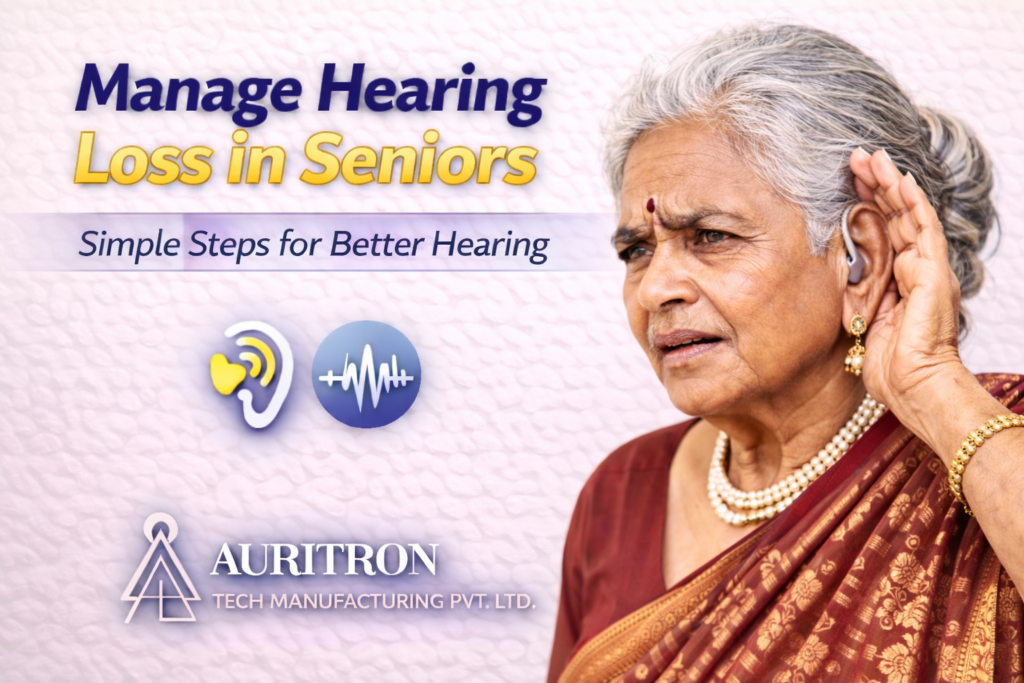
Blog Book An Appointment How Can Indian Seniors Manage Age-Related Hearing Loss? Growing older brings experience, family memories, and a lifetime of conversations. Yet for many families in India, hearing loss slowly becomes part of daily life. The television volume creeps up. Conversations during family dinners need repetition. Grandchildren’s voices sound softer than before. If you’ve been wondering, How Can Indian Seniors Manage Age-Related Hearing Loss?, the answer lies in a mix of lifestyle adjustments, safe ear care, timely testing, and the right technology. With the right approach, seniors can continue participating fully in family gatherings, festivals, and everyday life without feeling left out. Why Age-Related Hearing Loss Happens Age-related hearing loss, also known as presbycusis, usually develops gradually. It affects both ears and often goes unnoticed in the beginning. Many seniors assume it’s “just old age,” but ignoring it can lead to social withdrawal and communication difficulties. Inside the ear, tiny sensory cells in the cochlea convert sound vibrations into signals that travel to the brain. Over time, these delicate cells wear out. Unlike other tissues in the body, they do not regenerate. Several factors common in Indian settings can accelerate this process: Long-term exposure to traffic and urban noise Diabetes and high blood pressure Family history of hearing loss Certain medications While the damage itself cannot be reversed, early care can slow progression and improve quality of life significantly. Early Signs Families Often Notice Hearing changes rarely happen overnight. Instead, small signs appear gradually: Frequently asking others to repeat themselves Difficulty following conversations in noisy places Complaints that people are “mumbling” Increasing TV or phone volume Avoiding social gatherings When these patterns appear, it’s wise not to dismiss them. Addressing hearing concerns early prevents emotional isolation and reduces cognitive strain. Practical Home Adjustments That Make a Big Difference Many families ask, How Can Indian Seniors Manage Age-Related Hearing Loss? without immediately turning to medical devices. The first step is often improving the home environment. Reduce Background Noise Indian homes are lively spaces. Ceiling fans, pressure cookers, street traffic, and television noise can compete with speech. During conversations: Switch off unnecessary appliances Close windows facing busy roads Lower TV volume before talking Even small noise reductions improve clarity. Improve Lighting Hearing isn’t only about ears. Visual cues like lip movements and facial expressions help the brain interpret speech. Good lighting ensures seniors can see clearly during conversations. Add Soft Furnishings Hard surfaces reflect sound, creating echo. Rugs, curtains, cushions, and upholstered furniture absorb excess noise, making speech easier to follow. Communication Habits That Help Seniors How family members speak matters more than how loudly they speak. Speak clearly at a moderate pace Avoid shouting, which distorts words Maintain face-to-face contact Rephrase sentences instead of repeating the same words For example, if “The courier has arrived” isn’t heard clearly, try “A delivery person is at the door.” Different words may be easier to catch. Simple changes in communication style can restore confidence in daily interactions. Safe Ear Care for Indian Seniors Ear hygiene plays a major role in hearing health. Avoid Cotton Buds Using cotton buds often pushes wax deeper into the ear canal. Impacted wax can temporarily reduce hearing and mimic more serious problems. Professional cleaning is always safer. Keep Ears Dry During monsoon seasons, fungal ear infections are common. After bathing, gently dry the outer ear with a soft towel. Avoid inserting objects inside. Manage Chronic Conditions Conditions like diabetes affect blood circulation and nerve health, including those connected to hearing. Proper sugar control, regular medication, and routine health checkups help protect auditory function over time. Avoid Home Remedies Mustard oil, herbal oils, or unprescribed drops can worsen infections or damage the eardrum. If pain, discharge, or sudden hearing loss occurs, consult a qualified professional promptly. The Role of Nutrition in Hearing Support Diet cannot reverse hearing damage, but certain nutrients support inner ear health. Potassium: Maintains inner ear fluid balance (bananas, spinach, potatoes) Magnesium: Helps protect against noise-related damage (cashews, pumpkin seeds) Zinc: Supports immune response (lentils, chickpeas, almonds) Folic Acid: Encourages healthy circulation (green leafy vegetables, eggs) Balanced Indian meals rich in vegetables, pulses, nuts, and fruits naturally provide many of these nutrients. When a Professional Hearing Test Becomes Necessary Home strategies help, but they cannot replace proper diagnosis. If conversations feel increasingly difficult or social withdrawal begins, scheduling a hearing test is the responsible next step. A professional assessment determines: Type of hearing loss Severity level Suitable treatment options Early testing prevents complications such as cognitive strain and reduced speech processing ability. Modern Hearing Aids Have Changed Dramatically Many seniors hesitate because they imagine bulky, uncomfortable devices. Today’s hearing aids are smaller, discreet, and technologically advanced. Modern features may include: Rechargeable batteries Bluetooth connectivity for phone and TV Noise reduction systems Custom fittings for comfort When properly fitted and adjusted, hearing aids do not weaken hearing. In fact, they keep the brain actively engaged with sound, reducing auditory deprivation. Emotional and Social Impact of Untreated Hearing Loss Hearing loss affects more than ears. It can influence mood, memory, and relationships. Seniors who struggle to follow conversations may begin to withdraw. Over time, this isolation increases the risk of depression and cognitive decline. Families play an essential role. Encouragement, patience, and supportive communication help seniors regain confidence. So when families ask, How Can Indian Seniors Manage Age-Related Hearing Loss?, the answer is not just technical. It involves emotional care, awareness, and timely action. How Auritron Hearing Solutions Supports Seniors At Auritron Hearing Solutions, senior hearing care is approached with compassion and precision. Every individual has unique listening needs. Some want clarity during temple prayers, others during family weddings or daily conversations. Services typically include: Comprehensive hearing evaluations Personalized hearing aid recommendations Device fitting and fine-tuning Ongoing aftercare and support The goal is not simply to amplify sound, but to restore connection — to voices, laughter, and everyday moments. Taking the First Step Hearing loss does not have to
What Is One of the First Signs of Hearing Loss?
Blog Book An Appointment What Is One of the First Signs of Hearing Loss? Hearing loss often begins quietly, without pain or obvious warning. Many people continue their daily routine unaware that their hearing has started to change. One of the first signs of hearing loss is difficulty understanding speech, especially in noisy environments. Conversations may feel unclear, and listening may require extra effort. Recognizing these early changes helps prevent long-term communication problems. What Are the First Signs of Hearing Loss? The first signs of hearing loss usually appear during everyday conversations. You may hear sounds but struggle to understand words clearly. This often leads to repeated misunderstandings or the need to ask people to repeat themselves. Why Do Voices Sound Unclear in Early Hearing Loss? In early stages, the ear struggles to detect certain sound frequencies, especially high-pitched consonants like “s,” “f,” and “t.” As a result, speech may sound muffled even though volume seems adequate. Is Difficulty Hearing in Noisy Places an Early Sign of Hearing Loss? Yes, difficulty hearing in noisy environments is one of the most common early symptoms. Restaurants, social gatherings, and crowded places amplify background noise, making it harder to separate speech from sound. Why Does Background Noise Make Hearing Worse? When hearing sensitivity decreases, the brain struggles to filter unwanted noise. This makes listening tiring and conversations less enjoyable, often signalling the first signs of hearing loss. Why Do People Often Miss the Early Signs of Hearing Loss? Many people dismiss early hearing issues as distraction, fatigue, or others speaking unclearly. Because hearing loss develops gradually, the brain adapts and compensates without conscious awareness. Can Hearing Loss Start Without Noticeable Symptoms? Yes, hearing loss can progress silently. By the time symptoms become obvious, communication challenges may already be affecting daily life. Must Read:https://auritrontech.com/what-are-the-signs-of-hearing-loss/ How Does Hearing Loss Start Gradually? Hearing loss usually begins when tiny sensory cells in the inner ear become damaged. These cells help convert sound waves into signals for the brain. What Causes Gradual Hearing Damage? Long-term noise exposure, aging, ear infections, medications, and genetics can damage these cells. Once damaged, they cannot regenerate, leading to progressive hearing difficulty. How to Fix Hearing Loss? Treatment depends on the cause and type of hearing loss. Some cases are temporary, while others require long-term management. Can Hearing Aids Help Early Hearing Loss? Yes, hearing aids amplify specific frequencies, improving clarity and reducing listening effort. Early use often leads to better adaptation and comfort. Can Early Hearing Loss Be Treated? Early hearing loss can be managed effectively when addressed promptly. Medical treatment may help if the issue is related to infection or blockage. Why Is Early Treatment Important? Addressing the first signs of hearing loss early prevents further decline and supports better communication, confidence, and social interaction. How to Check for Hearing Loss? Hearing loss can be checked through self-assessment and professional evaluation. Difficulty hearing conversations or frequent repetition requests often signal the need for testing. What Does a Hearing Test Involve? A hearing test measures sound detection, speech clarity, and ear function. These tests are painless and provide accurate insights into hearing health. Are Online Hearing Tests Reliable for Detecting Hearing Loss? Online tests can indicate potential hearing concerns but cannot replace a professional hearing evaluation. When Should Online Tests Be Used? They are helpful as an initial screening but should always be followed by clinical testing for reliable results. When Should You Get a Hearing Test? You should consider a hearing test if symptoms persist for weeks or interfere with conversations. Regular testing is especially important for older adults and those exposed to loud noise. Can Hearing Loss Occur at a Young Age? Yes, hearing loss can affect people of all ages due to environmental and medical factors. Can You Live With Hearing Loss? Many people live well with hearing loss when it is managed properly. Modern hearing solutions support clear communication and active lifestyles. What Happens If Hearing Loss Is Ignored? Untreated hearing loss may lead to social withdrawal, listening fatigue, and reduced confidence. Why Choose Auritron for Hearing Care? Auritron provides personalized hearing care focused on comfort, clarity, and long-term results. Advanced diagnostic tools and modern hearing solutions ensure tailored support for every individual. From initial evaluation to ongoing care, Auritron prioritizes hearing wellness and communication ease at every stage. Conclusion One of the first signs of hearing loss is difficulty understanding speech in noisy environments. These early changes may seem minor but often signal underlying hearing decline. Timely evaluation and proper hearing care help maintain quality of life, confidence, and strong communication. FAQs What is the earliest sign of hearing loss? Difficulty hearing conversations in noisy places is often the earliest symptom. Can hearing loss develop without pain? Yes, most hearing loss progresses without pain or discomfort. Is hearing loss reversible? Some types are temporary, while others are permanent but manageable. How often should hearing be tested? Every 1–2 years or sooner if symptoms appear. Does hearing loss affect mental health? Untreated hearing loss can increase stress and social isolation. Difficulty hearing conversations in noisy places is often the earliest symptom. Yes, most hearing loss progresses without pain or discomfort. Some types are temporary, while others are permanent but manageable. Every 1–2 years or sooner if symptoms appear. Untreated hearing loss can increase stress and social isolation. Find the Right Solution for Your Hearing Needs Book An Appointment
What are the advantages of Bluetooth hearing aids
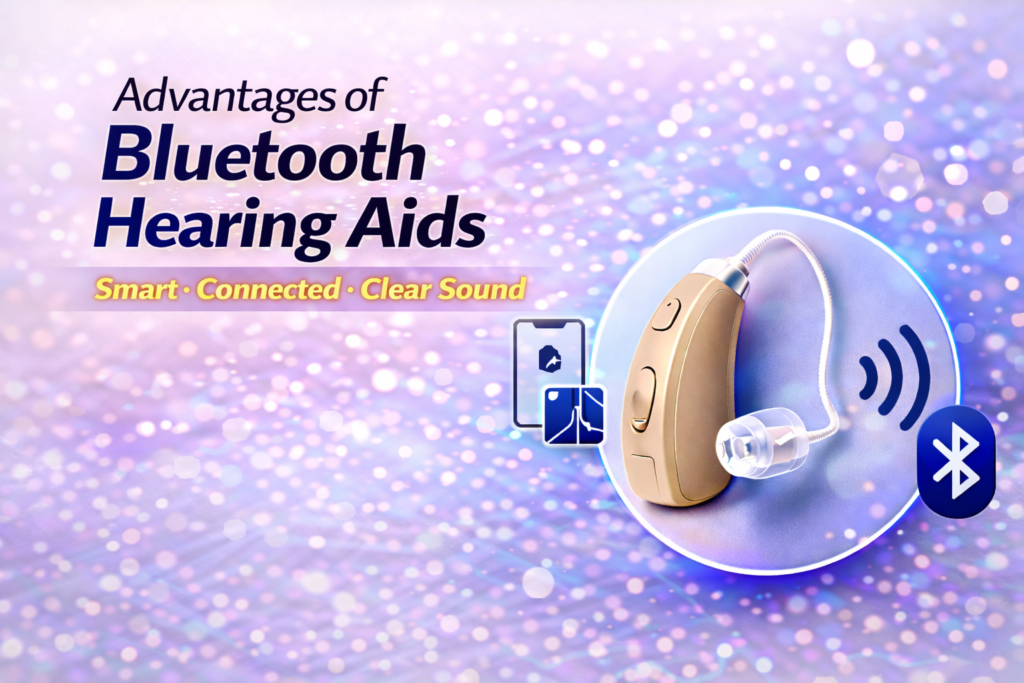
Blog Book An Appointment What Are the Advantages of Bluetooth Hearing Aids? Hearing technology has advanced significantly, and Bluetooth hearing aids represent one of the most impactful developments in modern hearing care. These devices are designed not only to amplify sound but also to connect seamlessly with digital devices used in daily life. This integration helps users hear more clearly, communicate effortlessly, and stay connected without additional accessories. When people ask what are the advantages of Bluetooth hearing aids, they are often referring to real-life improvements such as clearer phone calls, better sound quality, and easier control. What makes Bluetooth hearing aids different from traditional hearing aids? Bluetooth hearing aids differ from traditional hearing aids by offering wireless connectivity along with advanced digital sound processing. Instead of relying only on microphones to capture surrounding sound, these devices can receive audio directly from compatible devices, improving clarity and consistency. Wireless connectivity and digital integration Bluetooth technology allows hearing aids to connect directly to smartphones, tablets, and televisions, delivering sound without interference from distance or background noise. Reduced reliance on external accessories Modern Bluetooth hearing aids often work without additional streamers, making them simpler and more convenient for everyday use. How do Bluetooth hearing aids improve daily communication? Clear communication is essential for social interactions, professional conversations, and personal confidence. Bluetooth hearing aids enhance communication by delivering speech directly into both ears, improving balance and clarity. Clearer phone conversations Phone calls stream directly into the hearing aids, reducing distortion and making voices easier to understand. Hands-free listening experience Users can speak naturally without holding the phone close, allowing smoother and more comfortable conversations. Why is direct audio streaming considered a major benefit? Direct audio streaming allows sound to travel digitally from the source to the hearing aids. This eliminates many common issues such as echoes, feedback, and external noise interference. Improved sound quality from digital media Music, videos, and podcasts are delivered clearly and consistently, enhancing both speech and entertainment experiences. Stable listening across environments Streaming ensures the same sound quality whether the user is at home, outdoors, or in a busy public place. Do Bluetooth hearing aids perform better in noisy environments? Noisy environments often make conversations difficult for people with hearing loss. Bluetooth hearing aids use a combination of direct streaming and advanced sound processing to improve listening comfort in such situations. Enhanced speech focus Speech signals are prioritized, helping users follow conversations even in crowded surroundings. Automatic environmental adjustments Many devices adapt automatically to changing noise levels, reducing the need for manual changes. How do smartphone apps enhance control and comfort? Smartphone apps play an important role in making Bluetooth hearing aids more user-friendly. These apps allow users to adjust their hearing experience quickly and discreetly. Personalized sound settings Users can modify volume levels and listening modes based on their surroundings and preferences. Real-time device monitoring Battery status and connection details can be checked instantly, adding convenience and reliability. Are Bluetooth hearing aids easier to use in daily life? Ease of use is a major advantage of Bluetooth hearing aids, especially for people who rely on hearing support throughout the day. Integration with familiar devices simplifies daily routines. Seamless connection with everyday activities From phone calls to television viewing, Bluetooth hearing aids fit naturally into daily habits. Minimal manual handling Reduced need for physical adjustments makes them suitable for users with limited dexterity. How does battery technology support Bluetooth hearing aids? Battery performance plays a key role in the reliability of Bluetooth hearing aids. Modern designs focus on efficiency and convenience to support regular streaming and connectivity. Rechargeable battery options Many Bluetooth hearing aids offer rechargeable batteries that last all day on a single charge. Efficient power management Advanced systems help maintain consistent performance without frequent charging. Are Bluetooth hearing aids suitable for different age groups? Bluetooth hearing aids are designed to support a wide range of users with varying lifestyles and hearing needs. Their flexibility makes them suitable for both younger and older individuals. Advantages for younger users Wireless connectivity and media streaming align well with modern digital lifestyles. Comfort and simplicity for older users Clear sound, automatic features, and easy controls support comfortable daily use. Why choose Auritron for Bluetooth hearing aids? Choosing the right provider ensures that Bluetooth hearing aids deliver their full benefits. Auritron focuses on combining advanced technology with personalized hearing care. Customized hearing solutions Each hearing aid is selected and adjusted based on individual hearing needs and preferences. Trusted technology and professional support Auritron provides reliable devices backed by professional guidance and ongoing assistance. Conclusion Bluetooth hearing aids offer a combination of clarity, convenience, and connectivity that traditional hearing aids cannot match. They improve communication, enhance entertainment experiences, and adapt to different listening environments with ease. For those considering what are the advantages of Bluetooth hearing aids, the benefits are evident in daily comfort, improved sound quality, and seamless integration with modern technology. FAQs Are Bluetooth hearing aids compatible with Android and iPhone? Most modern Bluetooth hearing aids work with both platforms, though features may vary. Do Bluetooth hearing aids use more battery power? Streaming can increase usage, but modern devices are optimized for efficiency. Can Bluetooth hearing aids connect to multiple devices? Many models allow pairing with more than one device for added convenience. Are Bluetooth hearing aids suitable for first-time users? With simple controls and guided setup, most users adapt comfortably. Most modern Bluetooth hearing aids work with both platforms, though features may vary. Streaming can increase usage, but modern devices are optimized for efficiency. Many models allow pairing with more than one device for added convenience. With simple controls and guided setup, most users adapt comfortably. Find the Right Solution for Your Hearing Needs Book An Appointment
What things should a person avoid when wearing a hearing aid?
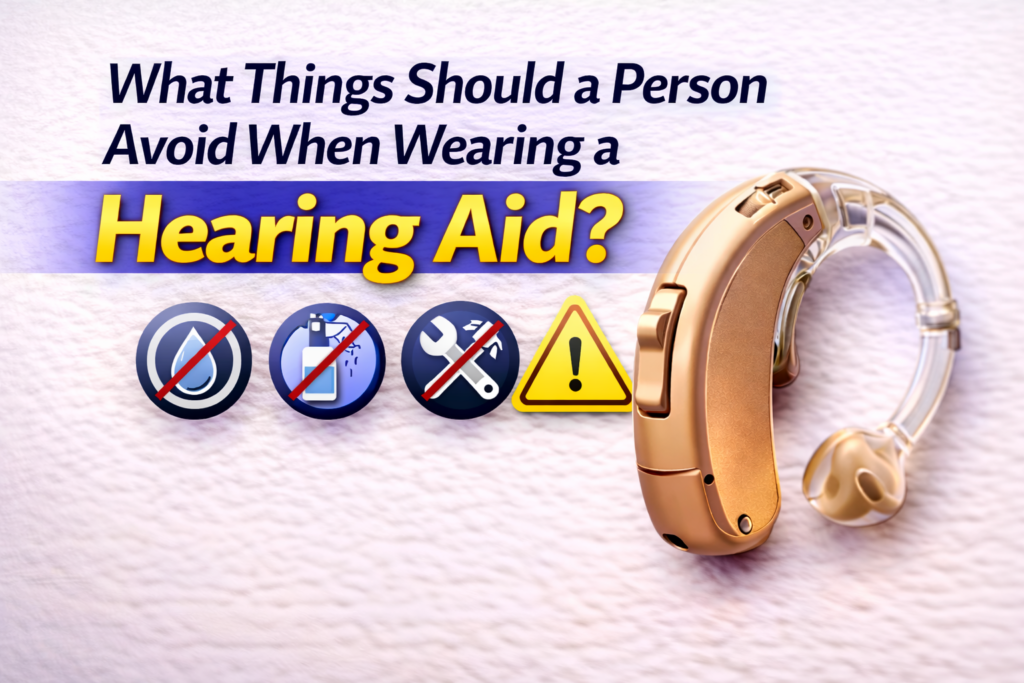
Blog Book An Appointment What Things Should a Person Avoid When Wearing a Hearing Aid? Wearing a hearing aid improves communication and daily comfort, but small mistakes can reduce its effectiveness or shorten its lifespan. Many users often ask what things should a person avoid when wearing a hearing aid, especially after facing feedback noise, discomfort, or device damage. This blog answers those common questions in a simple, practical way so daily hearing aid use stays smooth and worry-free. What is something you should never do to a hearing aid? Hearing aids are precision electronic devices, and one of the biggest mistakes is treating them roughly or casually. Avoid rough handling and forced adjustments A hearing aid should never be dropped, squeezed, twisted, or pulled out forcefully. Even a small fall onto a hard surface can damage internal microphones or receivers. Another mistake is attempting self-repair. Opening the device, adjusting tiny components, or using sharp objects can permanently affect sound quality. When thinking about what things should a person avoid when wearing a hearing aid, improper handling is the most common cause of early damage. Can you talk on the phone while wearing a hearing aid? Yes, phone conversations are possible and often clear with hearing aids, but incorrect phone placement creates problems. Avoid placing the phone directly over the hearing aid Holding the phone directly over the hearing aid microphone often causes whistling or echo. Instead, the phone should be positioned slightly above or behind the ear. Avoid increasing phone volume too much, as excessive amplification can distort speech and cause listening fatigue. Bluetooth-enabled hearing aids offer better clarity and should be used whenever available. How many hours a day should you wear a hearing aid? Daily wearing time plays a big role in how well a hearing aid works. Avoid wearing it too little or forcing long hours immediately New users should avoid wearing hearing aids only occasionally. Inconsistent usage slows sound adaptation. At the same time, wearing them for too many hours on the first day can cause discomfort. A gradual increase from a few hours daily to full-day use helps the brain adjust naturally. For most users, 8–12 hours a day becomes comfortable over time. When should you not wear your hearing aid? There are certain situations where wearing a hearing aid can cause more harm than benefit. Avoid wearing hearing aids during risky daily activities Hearing aids should not be worn while sleeping, bathing, swimming, or applying hair products. Moisture, steam, and chemicals can block microphones and damage internal parts. If there is ear pain, irritation, or infection, wearing a hearing aid should be avoided until evaluated. These situations are often overlooked when discussing what things should a person avoid when wearing a hearing aid. Can hearing aids get damaged by water or sweat? Yes, moisture is one of the most common causes of hearing aid failure. Avoid moisture exposure and excessive sweating Sweat contains salt, which can corrode electronic components over time. Wearing hearing aids during heavy workouts without protection or in humid environments increases the risk of internal damage. Using a drying box or dehumidifier overnight helps remove trapped moisture and keeps the device functioning properly. What cleaning mistakes should be avoided with hearing aids? Cleaning is necessary, but improper cleaning methods can damage hearing aids. Avoid water, alcohol, and sharp cleaning tools Hearing aids should never be cleaned with water, alcohol wipes, or household cleaning sprays. Sharp objects like pins or toothpicks can damage speaker openings. Daily cleaning should be done using a dry cloth and a soft brush made specifically for hearing aids. Incorrect cleaning is a hidden factor when people ask what things should a person avoid when wearing a hearing aid. Should you avoid sleeping while wearing a hearing aid? Yes, sleeping with hearing aids on is not recommended. Avoid overnight wear to prevent irritation and damage Sleeping with hearing aids can cause ear soreness due to pressure and block airflow in the ear canal. Devices can also break if rolled on during sleep. Removing hearing aids at night allows ears to rest and helps prevent moisture buildup. Can loud environments damage hearing aids? Hearing aids can handle everyday sounds, but extreme noise needs caution. Avoid increasing volume excessively in noisy places In loud environments, turning up volume too high can cause distortion and listening fatigue. Many modern hearing aids have noise management features that should be used instead of manual volume boosts. Protecting both hearing comfort and device performance is essential. Can improper storage affect hearing aid performance? Yes, how and where hearing aids are stored matters. Avoid storing hearing aids in humid or hot places Leaving hearing aids in bathrooms, pockets, or near heat sources exposes them to moisture and temperature damage. They should always be stored in a dry case when not in use. Proper storage directly affects how long the device lasts. Why Choose Auritron? Auritron focuses on providing hearing solutions that match everyday lifestyles. From proper fitting to long-term care guidance, Auritron helps users avoid common hearing aid mistakes and maintain consistent sound quality. Personalized support and modern technology ensure comfort, reliability, and long-term satisfaction. Conclusion Knowing what things should a person avoid when wearing a hearing aid helps prevent damage, discomfort, and poor sound clarity. Avoiding moisture, rough handling, incorrect cleaning, and inconsistent usage makes a noticeable difference in daily hearing experience. With the right habits and proper care, hearing aids continue to support confident communication and better quality of life. FAQs Can hearing aids be worn all day? Yes, once adapted, most users comfortably wear them 8–12 hours daily. Is sweat harmful to hearing aids? Yes, sweat can corrode internal components if not managed properly. Should hearing aids be removed during hair styling? Yes, sprays and gels can clog microphones and reduce sound clarity. Can hearing aids cause ear pain? Pain usually indicates improper fit or excessive wear and should be checked. How long do hearing aids usually last? With proper
At What Age Do Most Men Begin Experiencing Hearing Loss?
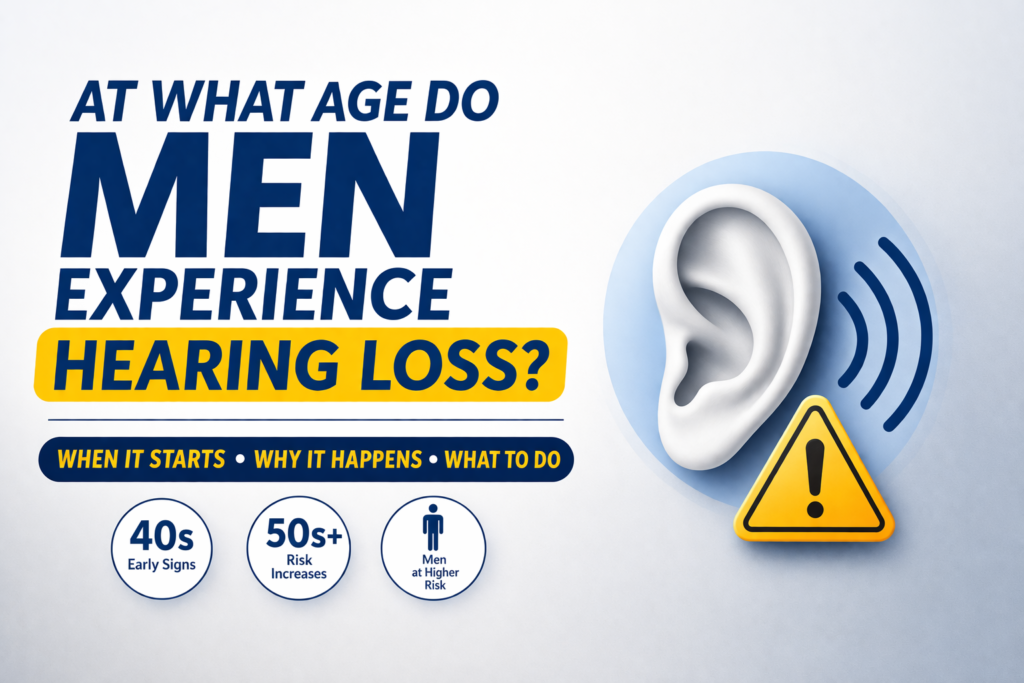
Blog Book An Appointment At What Age Do Most Men Begin Experiencing Hearing Loss? Hearing loss is often associated with old age, but for many men, the process starts much earlier than expected. Conversations become harder to follow, background noise feels overwhelming, and sounds lose their clarity. These changes usually happen gradually, which is why the question at what age do most men begin experiencing hearing loss is asked so frequently. Knowing when hearing loss starts, why it happens, and what can be done early helps men protect their hearing and quality of life. How to prevent hearing loss naturally? Preventing hearing loss naturally focuses on protecting the ears before damage becomes permanent. Since hearing damage builds over time, daily habits play a major role in preserving hearing ability. Lifestyle habits that protect hearing Reducing exposure to loud sounds is essential. Using ear protection at noisy workplaces, lowering headphone volume, and taking breaks from continuous noise can significantly reduce damage. Maintaining overall health through exercise and a balanced diet also supports inner ear function by improving blood circulation. Why prevention matters early Once damage occurs in the inner ear, it cannot be naturally repaired. This is why understanding at what age do most men begin experiencing hearing loss is important—early prevention can delay or reduce long-term hearing decline. Can you regain hearing loss? Whether hearing loss can be regained depends on its cause. Some forms are temporary, while others are permanent. Temporary vs permanent hearing loss Hearing loss caused by earwax buildup, fluid, or infections may improve with medical care. However, age-related and noise-induced hearing loss usually involves damage to inner ear hair cells, which do not regenerate. Managing hearing loss effectively Even when hearing cannot be restored, hearing devices and rehabilitation help improve clarity and communication. Early action leads to better long-term outcomes. What are the first signs of hearing loss? Early signs of hearing loss are often subtle and easy to ignore, especially when they develop slowly. Early symptoms men often miss Men may hear sounds but struggle to understand speech clearly, especially in noisy environments. Frequently asking others to repeat themselves or increasing TV volume are common early signs. Why early signs should not be ignored These symptoms may appear years before noticeable hearing difficulty. Recognizing them early helps address hearing changes before they worsen. Can you slow down hearing loss? Hearing loss progression can often be slowed with the right steps. Actions that slow hearing decline Limiting noise exposure, using ear protection, and addressing hearing concerns early help preserve remaining hearing. Regular hearing check-ups allow changes to be detected sooner. Importance of monitoring hearing Tracking hearing ability over time makes it easier to manage progression and maintain communication skills. How quickly can hearing loss progress? The speed of hearing loss progression varies from person to person. Factors affecting progression speed Noise exposure, health conditions, and genetics influence how fast hearing declines. Some men experience slow changes over decades, while others notice faster deterioration. Why progression differs Because progression is unpredictable, understanding at what age do most men begin experiencing hearing loss helps encourage earlier hearing evaluations. Why do men lose their hearing first? Men often experience hearing loss earlier than women due to a mix of environmental and biological factors. Occupational and lifestyle exposure Men are more likely to work in noisy environments and engage in loud recreational activities, increasing long-term hearing damage. Health-related contributors Cardiovascular issues and circulation problems, more common in men at earlier ages, also affect inner ear health. At what age do most men begin experiencing hearing loss? Most men begin noticing hearing changes between the ages of 40 and 55. These changes often start subtly and become more noticeable over time. Early onset vs noticeable symptoms Hearing decline may begin in the late 30s, but symptoms usually become apparent in the 40s when conversations become harder to follow. Hearing loss after 60 By age 65, a significant number of men show measurable hearing loss, making early monitoring essential. Can hearing loss start in your 30s or 40s? Yes, hearing loss can begin earlier than expected, especially with repeated noise exposure. Early hearing damage causes Loud headphones, industrial noise, and untreated ear infections can trigger early hearing changes. Long-term impact of early loss Early hearing damage often progresses slowly but can worsen without preventive care. What factors increase the risk of hearing loss in men? Several risk factors increase the likelihood of hearing loss. Health and lifestyle risks Smoking, diabetes, high blood pressure, and certain medications contribute to hearing decline. Genetic and medical factors Family history, head injuries, and chronic ear infections also raise hearing loss risk. When should men get their hearing tested? Regular hearing tests help identify changes before they become severe. Recommended testing age Men should consider baseline testing around age 40, even without symptoms. Ongoing hearing monitoring Testing every one to two years after 50 helps track progression accurately. What treatment options are available for age-related hearing loss? Treatment depends on the type and severity of hearing loss. Medical and device-based options Medical treatment helps when hearing loss is caused by infections or blockages. Hearing devices are commonly used for permanent hearing loss. Benefits of early treatment Early treatment improves speech clarity, confidence, and daily communication. Why choose Auritron for hearing loss? Choosing the right hearing care provider supports long-term hearing health. Personalized hearing care Auritron offers detailed assessments and tailored hearing solutions based on individual needs. Long-term support and guidance For those concerned about at what age do most men begin experiencing hearing loss, Auritron provides consistent care and advanced hearing solutions. Conclusion Hearing loss develops gradually and affects men earlier than many realize. Most men begin noticing changes in their 40s or 50s, though damage may start sooner. Knowing at what age do most men begin experiencing hearing loss encourages early prevention, timely testing, and effective treatment. With proper care, men can protect their hearing and remain connected to their world. FAQs Is hearing loss
What Is the Best Treatment for Hearing Loss?
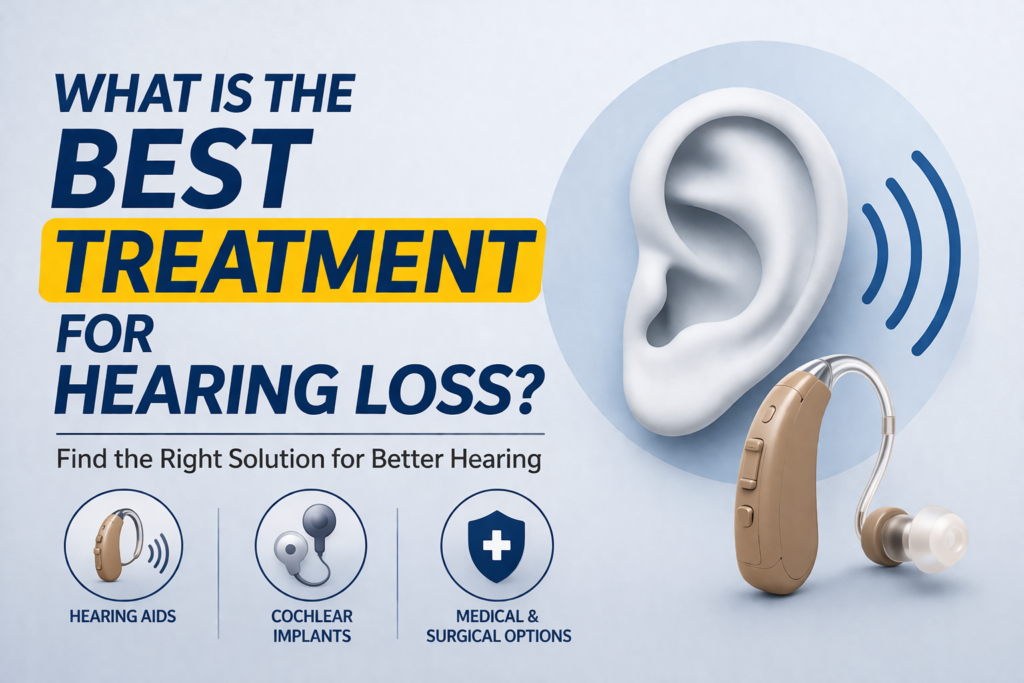
Blog Book An Appointment What Is the Best Treatment for Hearing Loss? What is hearing loss and how does it affect daily life? Hearing loss often starts subtly, which is why many people don’t recognize it immediately. Everyday sounds may feel softer, speech may seem unclear, and conversations may require more effort than before. These small changes can slowly affect communication, confidence, and social interaction. How hearing loss changes everyday communication Hearing loss is a condition where sounds are not heard clearly at normal volumes. It may affect one ear or both and can develop gradually or suddenly. Over time, people may start avoiding conversations or social settings, which makes choosing the best treatment for hearing loss even more important. What are the most common causes of hearing loss? Hearing loss does not happen for a single reason. Different lifestyle factors, medical conditions, and natural aging processes can all play a role. Identifying the cause helps in deciding the most effective solution. Why hearing loss happens Age-related changes, long-term noise exposure, ear infections, earwax buildup, medications, and genetics are common causes. In some cases, hearing loss can occur suddenly due to infections or circulation issues. Knowing the cause helps determine the best treatment for hearing loss more accurately. What are the different types of hearing loss? Not all hearing loss affects the ear in the same way. The type of hearing loss determines how sound is disrupted and what kind of treatment will work best. Understanding how hearing loss is classified Conductive hearing loss affects sound movement through the outer or middle ear. Sensorineural hearing loss involves damage to the inner ear or hearing nerve. Mixed hearing loss combines both. Each type requires a different approach to the best treatment for hearing loss. What is the best treatment for hearing loss? Many people search for a single solution, but hearing care is never one-size-fits-all. The right treatment depends on individual hearing needs, lifestyle, and severity. Why there is no one-size-fits-all solution The best treatment for hearing loss may include hearing aids, medical care, therapy, or surgical options. A detailed hearing assessment ensures the solution chosen delivers the most natural and comfortable hearing improvement. Does the treatment for hearing loss depend on its type? Yes, treatment varies significantly depending on how hearing is affected. Treating hearing loss without understanding its type can lead to poor results. Matching treatment to the hearing problem Conductive hearing loss may respond to medication or procedures, while sensorineural hearing loss is managed with hearing aids or implantable devices. Choosing the best treatment for hearing loss means matching care to the hearing condition. Are hearing aids the best solution for hearing loss? Hearing aids are one of the most commonly recommended options, especially when hearing loss affects speech clarity. Why hearing aids are widely recommended Modern hearing aids enhance speech, reduce background noise, and adjust automatically to environments. For many individuals, hearing aids remain the best treatment for hearing loss, especially for long-term management. Can hearing loss be treated without hearing aids? Some people hope to improve hearing without devices, and in certain cases, this is possible. When alternatives to hearing aids work Medical treatment, earwax removal, or surgery can improve hearing when the cause is reversible. However, for nerve-related hearing loss, hearing aids remain the best treatment for hearing loss. When is surgery required for hearing loss? Surgery is not common for all types of hearing loss, but it can be helpful in specific conditions. Situations where surgery is considered Structural ear issues, chronic infections, or damaged ear bones may require surgery. Even then, surgery may be combined with hearing devices as part of the best treatment for hearing loss plan. What is the best treatment for age-related hearing loss? Age-related hearing loss develops gradually and often affects speech understanding before volume. Managing hearing changes with age Hearing aids are widely accepted as the best treatment for hearing loss linked to aging. Early use helps maintain brain stimulation and communication ability. How early treatment improves hearing outcomes? Delaying treatment can reduce how well the brain processes sound over time. Why timing matters in hearing care Starting the best treatment for hearing loss early helps preserve speech clarity, mental sharpness, and social connection. Why choose Auritron for hearing loss treatment? Choosing the right provider i.e. Auritron ensures long-term success with hearing treatment, not just short-term improvement. Personalized hearing care that fits real life Auritron Tech offers personalized hearing evaluations, advanced hearing aid solutions, and ongoing support focused on real-life listening needs. This approach helps individuals achieve consistent results with the best treatment for hearing loss. Conclusion Taking the right step toward better hearing Hearing loss can be managed effectively with timely action and proper care. The best treatment for hearing loss depends on accurate diagnosis, personalized planning, and continuous support. FAQs Is hearing loss permanent? Some types are temporary, while others are permanent but manageable Are hearing aids effective for all ages? Yes, they are suitable across age groups when selected correctly. How long does it take to adjust to hearing aids? Most people adapt within a few weeks. Can untreated hearing loss worsen over time? Yes, it can affect communication and overall well-being. Some types are temporary, while others are permanent but manageable Yes, they are suitable across age groups when selected correctly. Most people adapt within a few weeks. Yes, it can affect communication and overall well-being. Find the Right Solution for Your Hearing Needs Book An Appointment
What Is the Most Common Cause of Hearing Loss?
Blog Book An Appointment What Is the Most Common Cause of Hearing Loss? Many people wonder what leads to hearing problems in everyday life. Hearing loss can affect people of all ages and often develops slowly, which makes it easy to ignore at first. In most cases, hearing loss happens because of long-term exposure to loud noise or natural ageing of the ears. However, infections, sudden illness, nutritional deficiencies, and lifestyle habits can also damage hearing. Hearing loss does not affect only older adults, it can impact children, teenagers, working professionals, and seniors. Understanding the causes of hearing loss helps people take early action, protect their ears, and maintain a better quality of life. The Most Common Cause of Hearing Loss in Daily Life The most common cause of hearing loss is damage to the inner ear, mainly due to loud noise exposure and ageing. How Loud Noise Damages Hearing Inside the inner ear are tiny hair cells that help send sound signals to the brain. Loud sounds damage these cells, and once damaged, they do not grow back. Over time, this damage reduces the ear’s ability to send clear sound signals. Everyday Sources of Harmful Noise Common noise sources that slowly damage hearing include loud music through headphones, industrial machines and factory noise, traffic and construction sounds, and firecrackers or concerts. Regular exposure to these sounds can reduce hearing ability even when there is no pain. Early Signs That Hearing Loss May Be Starting Hearing loss usually begins with small changes that people often overlook or ignore. First Signs You Should Notice Early hearing loss often appears during conversations and daily activities. People may ask others to repeat themselves, struggle to understand speech in noisy places, increase TV or mobile volume, or miss soft sounds like doorbells and alarms. Recognising these signs early helps prevent further hearing damage. At What Age Can Hearing Loss Begin? Hearing loss does not have a fixed starting age and can begin at different stages of life. Hearing Loss Across Different Age Groups Hearing loss can start in childhood due to infections or birth conditions, in teenagers because of loud music and headphone use, in adults due to workplace noise or stress, and in older adults due to natural ageing. Age-related hearing loss often becomes noticeable after 40–50 years, but lifestyle choices can cause earlier damage. The Four Main Types of Hearing Loss Doctors classify hearing loss into four main types based on where the problem occurs. Conductive Hearing Loss This type affects the outer or middle ear and often occurs due to earwax buildup, fluid, or infection. It is sometimes temporary and treatable. Sensorineural Hearing Loss This is the most common type of hearing loss. It occurs due to damage to the inner ear or hearing nerve and is usually permanent. Mixed Hearing Loss Mixed hearing loss is a combination of conductive and sensorineural hearing loss, meaning both the middle ear and inner ear are affected. Auditory Neuropathy This condition affects how sound signals travel from the ear to the brain, even when the ear can detect sound. Can Nutritional Deficiencies Cause Hearing Loss? Yes, certain nutritional deficiencies can affect hearing health. Deficiencies Linked to Hearing Problems Vitamin B12 deficiency, iron deficiency, and vitamin D deficiency can reduce nerve strength or blood flow to the ear. Over time, this can increase the risk of hearing loss, especially if left untreated. What Is the Most Common Cause of Hearing Loss? There are many causes of hearing loss, but some are more common than others. Common Causes of Hearing Loss The most common causes include: Natural ageing of the inner ear Long-term exposure to loud noise Ear infections or wax buildup Certain medications that affect hearing Noise-induced hearing loss is especially common today due to loud music and noisy environments. What Causes Sudden Hearing Loss? Sudden hearing loss happens quickly and needs immediate medical attention. Sudden Hearing Loss Needs Urgent Care Sudden hearing loss may occur due to viral infections, blood circulation problems, head injury, or autoimmune conditions. A sudden drop in hearing, especially in one ear, is considered a medical emergency and should never be ignored. How to Stop Hearing Loss from Getting Worse Not all hearing loss can be prevented, but further damage can often be reduced with simple steps. Simple Ways to Protect Your Hearing Avoid loud environments when possible, use ear protection in noisy places, keep headphone volume low, and take regular listening breaks. These habits help preserve hearing for the long term. Is It Possible to Recover Hearing Loss? Recovery depends on the cause of hearing loss. When Hearing Can Improve Hearing loss caused by earwax or infection may improve with treatment. Sudden hearing loss may recover if treated early. Permanent hearing loss cannot be reversed, but hearing aids greatly improve communication and confidence. New and Modern Treatments for Hearing Loss Hearing care continues to improve with advances in technology. Advanced Hearing Loss Solutions Modern treatment options include digital hearing aids, cochlear implants, hearing therapy programs, and ongoing research in regenerative and gene therapy. These solutions help people stay socially active and independent. Why Early Action for Hearing Loss Matters Ignoring hearing loss affects more than hearing alone. Effects of Untreated Hearing Loss Untreated hearing loss can lead to social isolation, learning difficulties in children, communication problems at work, and reduced confidence and independence. Early testing and treatment protect emotional and mental well-being. Why Choose Auritron Hearing Solutions? At Auritron Tech , we believe that everyone deserves the joy of hearing, and it begins with quality. Auritron delivers innovative, high-quality hearing aid machines backed by years of research and advanced technology. Proudly serving people across India, Auritron focuses on comfort, performance, and affordability, helping individuals reconnect with sound and communication one clear moment at a time. Conclusion Understanding what is the most common cause of hearing loss helps people take timely action. Loud noise, ageing, infections, nutritional deficiencies, and sudden illness all contribute to hearing problems. With awareness, healthy
What Are the Signs of Hearing Loss? Early Symptoms Explained
Blog Book An Appointment What Are the Signs of Hearing Loss? Many people do not notice hearing loss right away because it usually happens slowly over time. That’s why a very common question is: What are the signs of hearing loss? Hearing loss does not always mean complete silence. It often begins with small, everyday problems like missing words, struggling in noisy places, or turning up the TV volume. This blog explains the early warning signs, stages, causes, and solutions in simple, easy-to-understand language. What Are the Early Warning Signs of Hearing Loss? Early signs are often ignored because they seem normal at first. Many people think others are speaking unclearly, but the real issue may be hearing clarity. Common Early Warning Signs In the early stage, hearing changes are subtle but noticeable in daily life. You may experience: Asking people to repeat themselves more often Difficulty hearing clearly in noisy places like restaurants or markets Increasing TV or phone volume higher than others prefer Missing soft sounds such as doorbells, alarms, or whispers Noticing these signs early makes it easier to protect hearing before it worsens. What Are the First Stages of Hearing Loss? The first stage of hearing loss is usually mild hearing loss. At this stage, people can still hear speech but may miss important sound details. What Happens in the First Stage During the first stage of hearing loss: Speech sounds may feel unclear or muffled High-pitched sounds are harder to hear Conversations in noisy environments become tiring You may hear people talking but miss parts of words Early testing at this stage helps prevent further hearing decline. How Do I Know If I’m Losing My Hearing? Many people are unsure if their hearing has changed because the process is gradual. Paying attention to daily listening struggles can help. Signs You Might Be Losing Your Hearing You may be experiencing hearing loss if: Conversations leave you feeling tired or stressed You avoid group discussions or meetings You misunderstand words often Phone calls feel harder than before If these problems happen regularly, it’s a good idea to get your hearing tested. What Are Three Warning Signs of Hearing Loss? Some signs are stronger indicators and should never be ignored. Three Clear Warning Signs The three most common warning signs are: Difficulty understanding speech in noisy environments Frequently asking people to repeat what they said Increasing the volume on TVs, phones, or music devices If you notice all three, professional hearing evaluation is recommended. What Age Does Hearing Loss Start? Hearing loss does not affect only older adults. It can begin much earlier than many people expect. Age-Related Hearing Loss Hearing loss may start: As early as the 30s or 40s Gradually increasing with age Becoming more common after 60 Loud noise exposure, headphone use, and health conditions can cause hearing loss at younger ages. What Is the Most Common Cause of Hearing Loss? There are many causes of hearing loss, but some are more common than others. Common Causes of Hearing Loss The most common causes include: Natural ageing of the inner ear Long-term exposure to loud noise Ear infections or wax buildup Certain medications that affect hearing Noise-induced hearing loss is especially common today due to loud music and noisy environments. What Are the Symptoms of Sudden Hearing Loss? Sudden hearing loss happens quickly and is considered a medical emergency. Symptoms of Sudden Hearing Loss Symptoms may include: Sudden loss of hearing in one or both ears Ringing or buzzing sounds (tinnitus) Feeling of pressure or fullness in the ear Dizziness or balance problems Immediate medical care can sometimes restore hearing if treatment begins early. What to Do for Mild Hearing Loss? Mild hearing loss should never be ignored, even if daily life feels manageable. Steps to Take for Mild Hearing Loss If hearing loss is mild: Get a professional hearing test Avoid loud environments when possible Use ear protection in noisy places Consider hearing aids if recommended Early action helps slow down further hearing damage. How Can a Doctor Tell If You Have Hearing Loss? Doctors and hearing specialists use safe and painless tests to check hearing ability. Hearing Tests Used by Doctors A doctor may perform: Basic hearing screening Audiometry tests to measure sound levels Speech understanding tests These tests help identify the type and level of hearing loss accurately. How to Overcome Hearing Loss? While some hearing loss cannot be reversed, it can be managed effectively with the right support. Ways to Overcome Hearing Loss Common management options include: Hearing aids Communication training Hearing therapy Assistive listening devices Modern hearing technology allows people to stay active, social, and confident. How Do the Signs of Hearing Loss Affect Daily Life? Understanding what are the signs of hearing loss is important because these signs affect more than just hearing. People may begin avoiding conversations, feel frustrated, or lose confidence in social situations. Children may struggle in school, and adults may find work meetings stressful. Recognising hearing loss early helps maintain relationships, emotional well-being, and overall quality of life. Why Choose Auritron Hearing Aids? At Auritron Tech, we believe that everyone deserves the joy of hearing, and it begins with quality. As a trusted name in the hearing care industry, Auritron delivers high-quality, innovative hearing aid machines backed by years of research and advanced technology. Our dedicated team ensures every product meets the highest standards of comfort, performance, and reliability. Proudly serving people across India, Auritron focuses on making hearing solutions accessible, affordable, and life-changing, improving communication one clear sound at a time. Conclusion Knowing what are the signs of hearing loss helps you take action before hearing problems interfere with daily life. Early signs like missing words, struggling in noise, or increasing volume levels should never be ignored. With timely testing, proper care, and modern hearing solutions, hearing loss can be managed effectively helping you stay connected and confident. FAQs What are the early signs of hearing loss? Early signs of hearing loss include
Do Hearing Aid Batteries Drain When Not in Use?
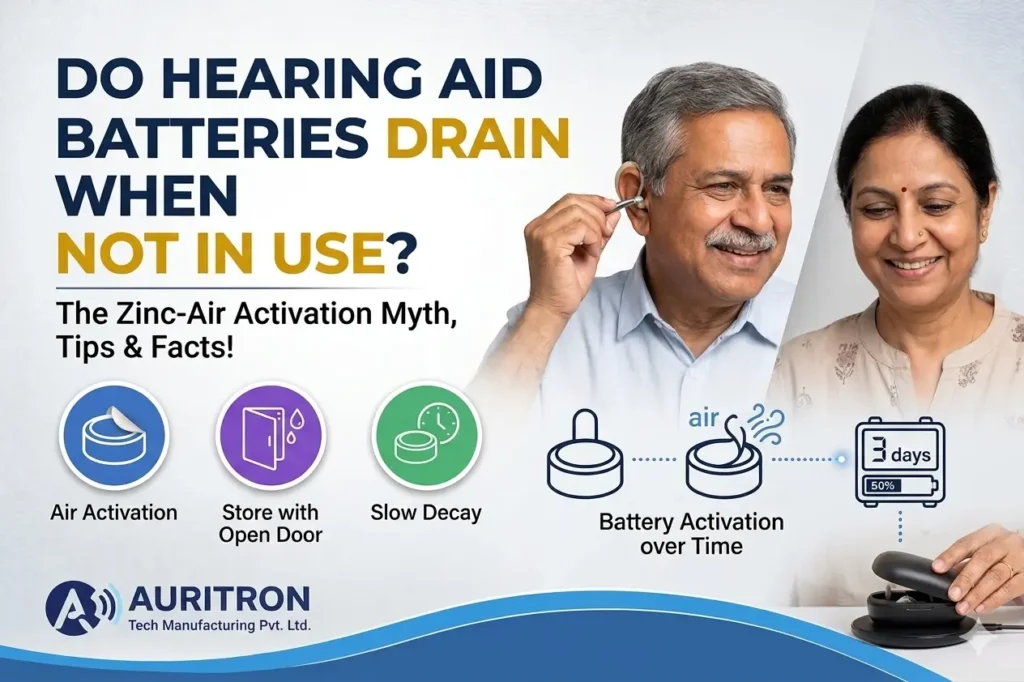
Blog Book An Appointment Do Hearing Aid Batteries Drain When Not in Use? Many hearing aid users ask a very common question: Do hearing aid batteries drain when not in use? The simple and honest answer is yes, especially for disposable hearing aid batteries. Even if you are not wearing your hearing aids every day, the batteries can still lose power. This blog explains why this happens, how battery drain works, and what you can do to make hearing aid batteries last longer. Everything is explained in simple, easy words so anyone can understand. Understanding the Basics – Do Hearing Aid Batteries Drain When Not in Use? Yes, hearing aid batteries can drain even when you are not using your hearing aids, but the reason depends on the type of battery and how it is stored. Most disposable hearing aid batteries are zinc-air batteries. These batteries start working as soon as they are exposed to air, not only when the hearing aid is switched on. Once activated, the battery continues to lose power slowly until it is empty. Why the Question Matters – Which Is Better, Hearing Aid With Battery or Rechargeable? Zinc-Air Batteries Activate With Air Disposable hearing aid batteries use zinc-air technology. They have a small sticker called a tab on the back. This tab blocks air from entering the battery. When the tab is removed, air enters and starts a chemical reaction that creates power. Once this reaction starts, it cannot be stopped. Even if the battery is not placed inside the hearing aid, it will slowly drain as long as it is exposed to air. This is the main reason hearing aid batteries lose power even when not in use. Hearing Aids Can Still Use Small Amounts of Power If a battery is inside the hearing aid and the battery door is closed, the hearing aid may still use a very small amount of electricity. This happens even when you are not wearing the device. Over time, this tiny power usage adds up and drains the battery. That is why simply leaving the hearing aid unused is not enough to save battery life. Do Hearing Aid Batteries Drain Faster If Left Inside the Hearing Aid? Yes, hearing aid batteries drain faster when they are left inside the hearing aid with the battery door closed. Leaving the Battery Door Closed When the battery door stays closed, the hearing aid remains connected to the battery circuit. Even if the device is not in use, a small amount of power continues to flow. This slowly drains the battery and shortens its life. Opening the battery door when you are not using your hearing aids helps reduce battery drain. It also allows moisture to escape, which keeps both the hearing aid and battery in better condition. How Long Do Hearing Aid Batteries Last When Not in Use? Once the battery tab is removed and the battery is activated, most disposable hearing aid batteries last between 3 and 10 days, depending on: Battery size Hearing aid power level Daily usage Even if you do not wear your hearing aids daily, the battery will still drain once air exposure begins. Batteries that still have the tab on do not drain and can be stored safely. Do Rechargeable Hearing Aids Drain When Not in Use? Rechargeable hearing aids work differently from disposable battery hearing aids. Rechargeable Hearing Aids Lose Power More Slowly Rechargeable hearing aids do not rely on air to activate. If fully charged and switched off, they lose power very slowly. In many cases, they can hold a charge for several days when not in use. However, like all electronic devices, rechargeable hearing aids may still lose a small amount of charge over time. This is normal and much less noticeable than disposable battery drain. Do Hearing Aid Batteries Drain in Storage? Batteries With the Tab Still On When the battery tab is still attached, the battery is sealed from air. In this state: The battery does not drain Shelf life can be 2–3 years This is why it is important to keep the tab on until you are ready to use the battery. Batteries With the Tab Removed Once the tab is removed, the battery starts producing power immediately. Even if it is not used, the battery will slowly drain and eventually stop working. Removing the tab too early is a common mistake that shortens battery life. Common Mistakes That Cause Hearing Aid Batteries to Drain Faster Leaving the Battery Door Closed Keeping the battery door closed allows the hearing aid to continue using small amounts of power. This slowly drains the battery and also traps moisture inside the device, which can affect performance Storing Batteries Incorrectly Hearing aid batteries should be stored in a cool, dry place at room temperature. Storing them in bathrooms, kitchens, or refrigerators can damage the battery and reduce its lifespan. Moisture and extreme temperatures interfere with how batteries work. Removing the Tab Too Early Once the tab is removed, the battery starts draining even if it is not inside the hearing aid. To avoid wasting battery life, remove the tab only when you are ready to use the battery. Tips to Make Hearing Aid Batteries Last Longer Remove the tab only when needed Open the battery door when not using the hearing aid Store batteries in a dry place Keep hearing aids clean and moisture-free Consider rechargeable hearing aids for convenience These small habits can make a big difference in battery life. Do Hearing Aid Batteries Drain Faster With Bluetooth Use? Yes. Features like Bluetooth streaming, phone calls, and TV audio use more power. Even when hearing aids are idle but connected, batteries may drain faster. Rechargeable hearing aids usually handle streaming better because they have stronger batteries. Why Choose Auritron Hearing Aids? At Auritron Tech Manufacturing Pvt. Ltd., we believe that everyone deserves the joy of hearing, and it always begins with quality. As a trusted name in the hearing care industry,