
Hearing Aids for Deaf Individuals: How They Support Better Hearing
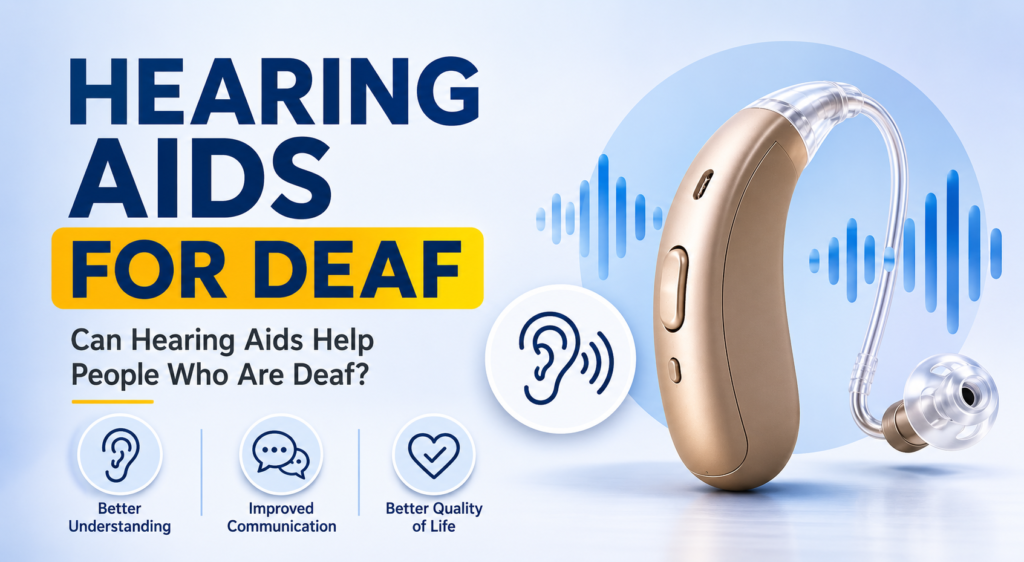
Blog Book An Appointment Hearing Aids for Deaf Individuals: How They Support Better Hearing Hearing loss can affect much more than just the ability to hear sounds clearly. It can influence communication, confidence, relationships, and even daily activities. For individuals dealing with severe hearing challenges, the right hearing support can make everyday life easier and more comfortable. Many people believe hearing aids are only useful for mild hearing loss, but modern hearing technology has advanced significantly over the years. Today, hearing aids are designed to support a wider range of hearing conditions and help individuals stay connected with the world around them. At Auritron Tech Manufacturing Pvt. Ltd., the focus is on creating hearing solutions that combine comfort, clarity, and practicality for daily use. What Are Hearing Aids? Hearing aids are small electronic devices that help improve hearing by amplifying and processing sound. They collect sounds from the surrounding environment, make them clearer, and deliver them into the ear in a way that is easier to understand. Modern hearing aids come in different sizes, styles, and technology options to suit different hearing needs and lifestyles. They are designed to improve communication while remaining comfortable enough for regular everyday use. Can Hearing Aids Help Deaf Individuals? Hearing aids can be beneficial for many individuals with severe hearing loss, especially when there is still some remaining hearing ability. These devices improve sound clarity and make conversations easier to follow in different environments. The effectiveness of a hearing aid depends on the type and severity of hearing loss. In cases of profound hearing loss, hearing specialists may sometimes recommend additional options like cochlear implants. This is why a professional hearing evaluation is important before choosing a device. Types of Hearing Aids for Deaf Individuals Different hearing aids are available based on hearing requirements, comfort, and lifestyle preferences. Choosing the right type depends on individual needs and the level of hearing support required. Behind-The-Ear (BTE) Hearing Aids BTE hearing aids are among the most commonly recommended devices for severe hearing loss. They provide strong amplification and are known for being durable and easy to manage. In-The-Ear (ITE) Hearing Aids ITE hearing aids fit inside the outer ear and are custom-designed for comfort. They are suitable for different levels of hearing loss depending on the model selected. Rechargeable Hearing Aids Rechargeable hearing aids are designed for convenience, removing the need for regular battery replacements and making them easier for everyday use. Digital Hearing Aids Digital hearing aids process sounds more accurately and often include features such as background noise reduction and automatic sound adjustments. Bluetooth-Enabled Hearing Aids These hearing aids can connect with smartphones, televisions, and other digital devices, allowing clearer audio streaming and better communication. Benefits of Hearing Aids Hearing aids can greatly improve communication and overall quality of life. They help users hear speech more clearly, reduce misunderstandings, and make social interactions more comfortable. Improved hearing can also support emotional well-being by helping individuals remain connected with family, friends, and daily activities. Modern hearing aids are now more comfortable, discreet, and adaptable to different listening environments than ever before. How to Choose the Right Hearing Aid? Choosing the right hearing aid depends on factors such as hearing level, comfort, lifestyle, and personal preferences. A hearing specialist usually performs a detailed hearing assessment before recommending the most suitable option. It’s important to select a hearing aid that not only improves hearing quality but also feels comfortable for long-term use in everyday situations. Why Choose Auritron Tech Manufacturing Pvt. Ltd.? Auritron Tech Manufacturing Pvt. Ltd. focuses on delivering hearing solutions that combine advanced technology with comfort and reliability. Every device is designed to improve hearing clarity while remaining simple to use in daily life. With a strong emphasis on innovation, quality, and user-friendly designs, Auritron aims to provide hearing support that helps individuals feel more confident, connected, and independent. Conclusion Hearing aids can make a meaningful difference in the lives of individuals experiencing hearing challenges. By improving sound clarity and communication, they help people stay active, connected, and confident in everyday situations. At Auritron Tech Manufacturing Pvt. Ltd., the focus is on providing dependable and advanced hearing solutions designed to support better hearing and a better quality of life. FAQs Can deaf individuals use hearing aids? Yes, many individuals with severe hearing loss can benefit from hearing aids if there is still some hearing ability present. Which hearing aid is commonly recommended for severe hearing loss? BTE hearing aids are often preferred because they provide stronger amplification and durability. Do hearing aids completely restore hearing? No, hearing aids do not restore natural hearing, but they improve sound clarity and communication significantly. Are hearing aids comfortable for regular use? Modern hearing aids are designed to be lightweight, comfortable, and suitable for daily wear. How long do hearing aids usually last? With proper care and maintenance, hearing aids can typically last several years. Yes, many individuals with severe hearing loss can benefit from hearing aids if there is still some hearing ability present. BTE hearing aids are often preferred because they provide stronger amplification and durability. No, hearing aids do not restore natural hearing, but they improve sound clarity and communication significantly. Modern hearing aids are designed to be lightweight, comfortable, and suitable for daily wear. With proper care and maintenance, hearing aids can typically last several years. Hearing Challenges Shouldn’t Hold You Back — Explore Modern Hearing Aid Solutions Today Book An Appointment
Best CIC Hearing Aids: A Smart and Discreet Hearing Solution
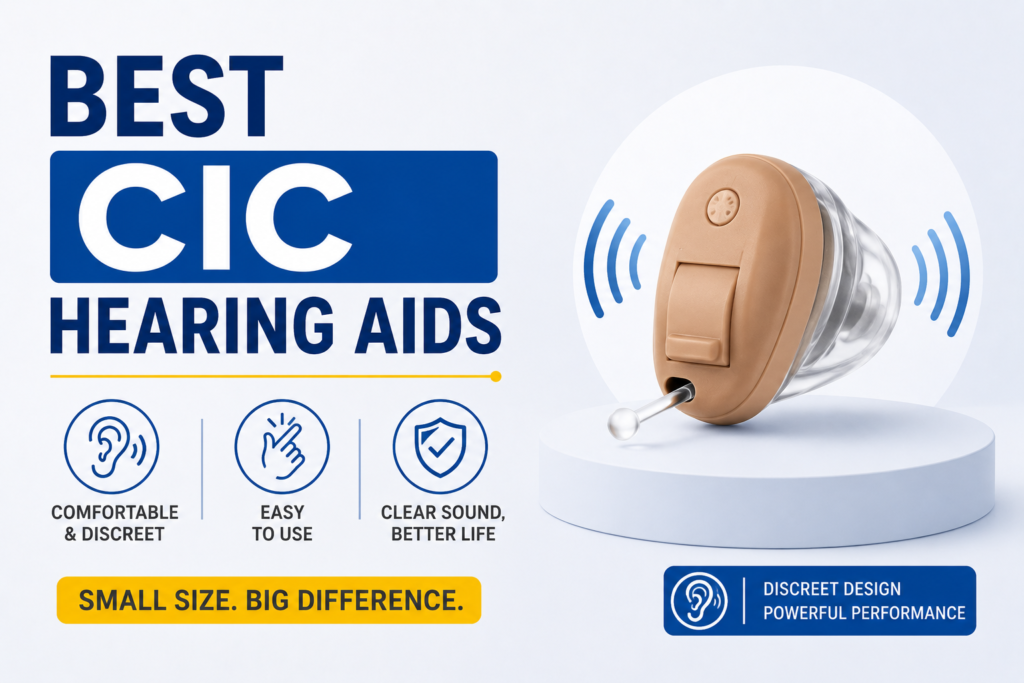
Blog Book An Appointment Best CIC Hearing Aids: A Smart and Discreet Hearing Solution Hearing aids today are designed to be smaller, smarter, and more comfortable than ever before. For people who want better hearing without drawing attention to the device, CIC hearing aids have become a popular choice. Their compact size and nearly invisible fit make them ideal for users looking for a more discreet hearing experience. The best CIC hearing aids are created to improve hearing clarity while sitting comfortably inside the ear canal. They combine convenience, modern technology, and a natural listening experience, making them suitable for many people with hearing difficulties. At Auritron Tech Manufacturing Pvt. Ltd., the focus is on offering hearing solutions that are practical, comfortable, and easy to adapt to everyday life. What Are CIC Hearing Aids? CIC stands for “Completely-in-Canal,” which means the hearing aid is designed to fit deep inside the ear canal. Unlike larger hearing devices, CIC hearing aids are much less visible and offer a more natural appearance. Because of their position inside the ear, these devices help deliver sound in a way that feels more natural to the user. They are commonly recommended for people with mild to moderate hearing loss who prefer a hearing aid that remains discreet during daily activities and conversations. Why Are CIC Hearing Aids So Popular? One of the biggest reasons people prefer CIC hearing aids is their nearly invisible design. Many users feel more confident wearing a hearing aid that is difficult to notice in social or professional settings. Apart from appearance, these hearing aids are also appreciated for their comfort and sound quality. Since they sit deeper inside the ear canal, they often reduce wind interference and make conversations feel clearer and more natural. Their lightweight design also makes them comfortable for long hours of use. Features of the Best CIC Hearing Aids Modern CIC hearing aids are equipped with advanced features that improve both comfort and hearing performance. Discreet and Compact Design CIC hearing aids are among the smallest hearing devices available. Their deep placement inside the ear canal makes them less noticeable, which is ideal for users looking for a subtle hearing solution. Natural Sound Quality Because these devices are positioned close to the eardrum, they often provide a more natural listening experience. This helps users hear conversations and surrounding sounds more comfortably. Comfortable Custom Fit Most CIC hearing aids are custom-made according to the shape of the user’s ear canal. This creates a secure and comfortable fit for everyday use. Reduced Background and Wind Noise Their placement inside the ear canal naturally helps reduce wind noise, making them useful for outdoor activities and crowded environments. Smart Digital Features Many modern CIC hearing aids include features such as speech enhancement, automatic sound adjustment, and background noise reduction for improved clarity in different environments. Who Can Benefit from CIC Hearing Aids? CIC hearing aids are usually suitable for people with mild to moderate hearing loss who prefer a discreet hearing device. They are often chosen by individuals who want a hearing aid that does not interfere with glasses, masks, or daily routines. However, because of their compact size, they may not always be the best option for severe hearing loss. A professional hearing evaluation can help determine whether CIC hearing aids are the right choice for your needs. Things to Consider Before Choosing CIC Hearing Aids Before selecting a CIC hearing aid, it is important to think about your hearing level, lifestyle, and comfort preferences. Since these devices are very small, they may require regular cleaning and careful handling. Battery life, sound features, and ease of maintenance should also be considered before making a decision. Consulting a hearing specialist can help you choose the most suitable device for your daily needs and long-term comfort. Why Choose Auritron Tech Manufacturing Pvt. Ltd.? Auritron Tech Manufacturing Pvt. Ltd. focuses on creating hearing solutions that combine advanced technology with user comfort. The company offers hearing aids designed to improve communication while remaining easy to use in everyday life. With personalized guidance, modern hearing technology, and reliable support, Auritron helps individuals choose hearing solutions that match their lifestyle and hearing requirements. The goal is not just better hearing, but a better overall listening experience. Conclusion CIC hearing aids are an excellent option for individuals looking for a discreet yet effective hearing solution. Their compact design, comfortable fit, and advanced technology make them a preferred choice for many people with mild to moderate hearing loss. At Auritron Tech Manufacturing Pvt. Ltd., the focus is on providing hearing solutions that improve communication, confidence, and everyday comfort through reliable and user-friendly technology. FAQs What does CIC mean in hearing aids? CIC stands for Completely-in-Canal, meaning the hearing aid fits deep inside the ear canal for a discreet appearance. Are CIC hearing aids comfortable to wear? Yes, most CIC hearing aids are custom-designed for the user’s ear, making them comfortable for daily use. Who should use CIC hearing aids? They are generally suitable for individuals with mild to moderate hearing loss who want a less visible hearing solution. Do CIC hearing aids reduce background noise? Many modern CIC devices include digital features that help reduce unwanted noise and improve speech clarity. Are CIC hearing aids easy to maintain? They require regular cleaning and proper care because of their small size and placement inside the ear canal. CIC stands for Completely-in-Canal, meaning the hearing aid fits deep inside the ear canal for a discreet appearance. Yes, most CIC hearing aids are custom-designed for the user’s ear, making them comfortable for daily use. They are generally suitable for individuals with mild to moderate hearing loss who want a less visible hearing solution. Many modern CIC devices include digital features that help reduce unwanted noise and improve speech clarity. They require regular cleaning and proper care because of their small size and placement inside the ear canal. Want clearer hearing with a discreet device? Talk to our hearing experts about
How to Know if Hearing Aids Are the Right Choice for You
Blog Book An Appointment How to Know if Hearing Aids Are the Right Choice for You Hearing loss usually develops slowly, which is why many people don’t notice it right away. At first, it may seem like a small issue—asking someone to repeat a sentence, struggling to hear in crowded places, or increasing the TV volume more than usual. Over time, these everyday moments can start affecting communication and confidence. This is often when people begin wondering whether hearing aids could help. The good news is that modern hearing aids are designed to make daily conversations clearer and more comfortable without disrupting your routine. At Auritron Tech Manufacturing Pvt. Ltd., the focus is on providing hearing solutions that are simple to use, comfortable to wear, and suitable for different hearing needs. What Are Hearing Aids? Hearing aids are compact electronic devices that help improve hearing by making sounds louder and clearer. They collect sound from the environment, process it, and deliver it into the ear in a way that is easier to understand. Today’s hearing aids are more advanced than ever before. They are available in different styles, offer better sound quality, and can automatically adjust to various listening environments. Whether someone has mild or significant hearing loss, there are options designed to suit different lifestyles and comfort levels. Signs That Hearing Aids May Be Right for You Hearing changes can happen gradually, making them easy to ignore in the beginning. However, there are certain signs that may indicate it’s time to consider hearing support. Difficulty Understanding Conversations If you often struggle to follow conversations, especially in busy places or group discussions, it may be a sign that your hearing is not as clear as before. Asking People to Repeat Themselves Frequently Constantly asking others to repeat what they said is one of the most common signs of hearing difficulty. Turning Up the Volume More Than Usual If your family members mention that the TV or phone volume is too high, it could suggest that your hearing needs attention. Feeling Mentally Tired After Listening Trying hard to hear every conversation can become exhausting. Hearing aids can reduce this listening effort and make communication feel more natural. Avoiding Social Gatherings Some people begin avoiding social situations because hearing becomes frustrating or uncomfortable. Better hearing support can help improve confidence and participation in conversations. How Hearing Aids Can Improve Everyday Life Hearing aids do much more than simply increase sound levels. They help improve speech clarity, reduce background noise, and make conversations easier to understand. Better hearing often leads to better communication, improved confidence, and stronger social connections. Many people also feel less stressed and more involved in daily activities once their hearing improves. When Should You Get Your Hearing Checked? If hearing difficulties are becoming noticeable in your routine, it’s a good idea to schedule a hearing evaluation. Even mild hearing loss can gradually affect communication if left untreated. A professional hearing test can help identify the level of hearing loss and guide you toward the most suitable hearing solution for your lifestyle and comfort. Choosing the Right Hearing Aid Choosing the right hearing aid depends on several factors, including the level of hearing loss, comfort preferences, lifestyle, and daily environment. Some people prefer Behind-the-Ear (BTE) hearing aids because they are easy to use, while others may prefer smaller in-ear options. Getting professional guidance is important because the right device should feel comfortable, provide clear sound, and fit naturally into your daily routine. Why Choose Auritron Tech Manufacturing Pvt. Ltd.? Auritron Tech Manufacturing Pvt. Ltd. focuses on creating hearing solutions that combine technology, comfort, and reliability. Every hearing device is designed to improve clarity while remaining practical for everyday use. With a commitment to quality, user-friendly designs, and dependable support, Auritron helps individuals find hearing solutions that improve communication and overall quality of life. Conclusion Recognizing the early signs of hearing loss can help you take the right steps before communication becomes more difficult. If conversations feel tiring or unclear, hearing aids may help improve your everyday hearing experience. At Auritron Tech Manufacturing Pvt. Ltd., the goal is to provide reliable and comfortable hearing solutions that help individuals stay connected, confident, and engaged in daily life. FAQs How can I tell if I need hearing aids? If you often struggle with conversations, increase volume levels frequently, or miss parts of discussions, it may be time for a hearing evaluation. Can hearing aids help with mild hearing loss? Yes, even mild hearing loss can affect communication, and hearing aids can make conversations clearer and easier to follow. Are hearing aids easy to use? Modern hearing aids are designed to be comfortable, simple to manage, and suitable for everyday use. Do hearing aids completely restore hearing? Hearing aids do not restore natural hearing, but they significantly improve sound clarity and communication. Should I get a hearing test before buying hearing aids? Yes, a professional hearing test helps identify the right hearing aid based on your hearing needs and lifestyle. If you often struggle with conversations, increase volume levels frequently, or miss parts of discussions, it may be time for a hearing evaluation. Yes, even mild hearing loss can affect communication, and hearing aids can make conversations clearer and easier to follow. Modern hearing aids are designed to be comfortable, simple to manage, and suitable for everyday use. Hearing aids do not restore natural hearing, but they significantly improve sound clarity and communication. Yes, a professional hearing test helps identify the right hearing aid based on your hearing needs and lifestyle. Take the First Step Toward Better Hearing — Discover Hearing Solutions That Fit Your Lifestyle Book An Appointment
Diseases That Cause Hearing Loss in Adults
Blog Book An Appointment Diseases That Cause Hearing Loss in Adults: What You Should Know Hearing loss is often linked to aging or exposure to loud noise, but in many cases, certain medical conditions can also affect hearing over time. The changes may happen slowly, which is why many people do not notice the problem in the early stages. Conditions affecting blood circulation, nerves, or the inner ear can gradually interfere with the way sound is processed. Understanding the diseases that cause hearing loss in adults can help people identify symptoms early and seek the right support before the condition worsens. At Auritron Tech Manufacturing Pvt. Ltd., the focus is on helping individuals improve hearing and communication through reliable hearing solutions designed for everyday life. How Can Diseases Affect Hearing? Healthy hearing depends on the proper functioning of the ears, hearing nerves, and brain. Certain diseases can damage these systems directly or indirectly, affecting the ability to hear clearly. Some conditions reduce blood flow to the inner ear, while others may cause inflammation or nerve damage that interferes with hearing signals. The impact can vary from mild hearing difficulty to more serious hearing loss. In some situations, hearing changes may improve with treatment, while untreated conditions can sometimes lead to long-term damage. This is why early medical attention is important whenever hearing changes are noticed. Diseases That Cause Hearing Loss in Adults Several health conditions are known to affect hearing in adults. Recognizing these conditions early may help reduce the risk of further hearing damage. Diabetes Diabetes can damage the tiny blood vessels and nerves inside the inner ear. Over time, poor blood sugar control may affect hearing ability and make it difficult to understand sounds clearly. High Blood Pressure High blood pressure can affect healthy blood circulation throughout the body, including the ears. Reduced blood flow may damage sensitive hearing structures and gradually impact hearing clarity. Ear Infections Repeated or untreated ear infections can affect both the middle and inner ear. Chronic infections may cause pain, fluid buildup, and hearing difficulties that can worsen if proper treatment is delayed. Meniere’s Disease Meniere’s disease is an inner ear condition commonly linked with hearing loss, ringing in the ears, dizziness, and pressure inside the ear. Symptoms may appear suddenly and return repeatedly over time. Autoimmune Disorders Some autoimmune diseases can mistakenly attack healthy cells in the inner ear, leading to inflammation and hearing-related problems. Early diagnosis is important to help protect hearing ability. Common Signs of Hearing Loss in Adults Hearing loss caused by medical conditions often develops gradually. Many people first notice difficulty understanding conversations, especially in crowded or noisy environments. Others may frequently increase the volume of the television or ask people to repeat themselves. In some cases, hearing loss may also be accompanied by ringing in the ears, dizziness, or a feeling of pressure inside the ear. Paying attention to these signs can help in seeking timely evaluation and care. When Should You Consult a Specialist? You should consider consulting a specialist if you experience sudden hearing changes, ongoing ringing in the ears, dizziness, or increasing trouble hearing conversations. Ignoring these symptoms can sometimes allow the underlying condition to progress further. Early diagnosis can help identify the exact cause of hearing loss and improve the chances of protecting remaining hearing ability. Timely treatment and hearing support can make daily communication easier and more comfortable. How Is Hearing Loss Managed? Treatment depends on the condition causing the hearing loss. Managing health issues such as diabetes or high blood pressure may help slow down further hearing damage. Some cases may require medications, medical procedures, or lifestyle changes to improve hearing health. For individuals with lasting hearing difficulties, hearing aids can help improve sound clarity and communication. Modern hearing devices are designed to reduce listening effort and make everyday interactions more natural and comfortable. Why Choose Auritron Tech Manufacturing Pvt. Ltd.? Auritron Tech Manufacturing Pvt. Ltd. focuses on developing hearing solutions that combine comfort, performance, and ease of use. The company offers hearing devices suitable for different levels of hearing loss and daily listening needs. With a commitment to quality technology and dependable support, Auritron aims to help individuals improve communication and maintain confidence in everyday situations. The focus is not just on hearing better, but also on improving overall quality of life through practical and user-friendly hearing solutions. Conclusion Several medical conditions can affect hearing health in adults, often causing changes that develop gradually over time. Recognizing the early signs and understanding the possible causes can help individuals seek timely support and prevent further complications. At Auritron Tech Manufacturing Pvt. Ltd., the focus is on providing reliable and comfortable hearing solutions that help people stay connected, confident, and active in everyday life. FAQs Can diseases really cause hearing loss? Yes, conditions like diabetes, high blood pressure, infections, and autoimmune disorders can affect hearing health. Is hearing loss from medical conditions permanent? Not always. Some cases may improve with treatment, while others can lead to permanent hearing damage if ignored. Can diabetes increase the risk of hearing problems? Yes, diabetes can damage blood vessels and nerves in the inner ear, which may affect hearing over time. What are the common warning signs of hearing loss? Difficulty understanding speech, ringing in the ears, and frequently increasing volume levels are common signs. Can hearing aids help adults with hearing loss? Yes, hearing aids can improve sound clarity, communication, and overall listening comfort for many adults. Yes, conditions like diabetes, high blood pressure, infections, and autoimmune disorders can affect hearing health. Not always. Some cases may improve with treatment, while others can lead to permanent hearing damage if ignored. Yes, diabetes can damage blood vessels and nerves in the inner ear, which may affect hearing over time. Difficulty understanding speech, ringing in the ears, and frequently increasing volume levels are common signs. Yes, hearing aids can improve sound clarity, communication, and overall listening comfort for many adults. Take Control of Your Hearing Health
Which Hearing Aid Is Best for Tinnitus?
Blog Book An Appointment Which Hearing Aid Is Best for Tinnitus? Finding the Right Support for Better Hearing Tinnitus is a condition that many people describe as a constant ringing, buzzing, humming, or hissing sound in the ears. For some, it may come and go occasionally, while for others it can become a daily distraction that affects concentration, sleep, and overall comfort. In many cases, tinnitus is linked with hearing loss, which is why hearing aids are often recommended as part of the management process. The right hearing aid can help make external sounds clearer and reduce the awareness of unwanted internal noise. At Auritron Tech Manufacturing Pvt. Ltd., the focus is on offering hearing solutions that combine comfort, clarity, and advanced technology for everyday use. What Is Tinnitus? Tinnitus is the sensation of hearing sound even when no external sound is present. The sound may feel different for each person and can range from mild to severe. Some people notice it only in quiet environments, while others may experience it throughout the day. Although tinnitus itself is not a disease, it is often connected to hearing-related conditions such as age-related hearing loss, prolonged exposure to loud noise, ear injuries, or certain medical conditions. Managing hearing loss can often help reduce how noticeable tinnitus feels. Can Hearing Aids Help with Tinnitus? Yes, hearing aids can be helpful for many people who experience tinnitus along with hearing loss. By amplifying surrounding sounds, they help shift attention away from the ringing or buzzing sensation in the ears. Modern hearing aids also come with features designed specifically for tinnitus support. Some devices provide soft masking sounds or calming background tones that can make tinnitus feel less distracting and easier to manage in daily life. Which Hearing Aid Is Best for Tinnitus? The best hearing aid for tinnitus depends on several factors, including the level of hearing loss, daily lifestyle, and the severity of symptoms. Certain features are especially useful for improving comfort and reducing the impact of tinnitus. Hearing Aids with Tinnitus Masking Features Some hearing aids include built-in sound masking technology that produces soft background sounds or white noise. These sounds help reduce the awareness of ringing or buzzing in the ears. Digital Hearing Aids with Smart Sound Adjustment Digital hearing aids can automatically adjust sound levels based on the surrounding environment. This helps create a more natural listening experience and improves comfort throughout the day. Behind-the-Ear (BTE) Hearing Aids BTE hearing aids are commonly recommended because they provide strong amplification, easy handling, and support for advanced tinnitus features. They are also comfortable for long-term use. Rechargeable Hearing Aids Rechargeable devices are convenient for everyday use and remove the hassle of frequent battery changes. They are especially useful for people who wear hearing aids for long hours. Bluetooth-Enabled Hearing Aids Some modern hearing aids allow Bluetooth connectivity, making it possible to stream calming sounds, relaxation audio, or therapy programs directly from a smartphone or other device. Features to Consider in a Tinnitus Hearing Aid Choosing the right hearing aid involves more than just amplification. Features like noise reduction, customizable sound settings, and tinnitus masking programs can improve comfort significantly. Comfort, battery life, ease of use, and proper fitting are also important. A professional hearing assessment helps determine which hearing aid is best suited to individual hearing needs and lifestyle. Benefits of Using Hearing Aids for Tinnitus Hearing aids can make conversations clearer while reducing the focus on tinnitus sounds. Many users find that external sounds become more noticeable, helping the brain pay less attention to ringing or buzzing sensations. They can also improve communication, concentration, and confidence in social situations. Better hearing often leads to less frustration and a more comfortable daily experience. When Should You Consult a Hearing Specialist? If tinnitus becomes frequent, affects sleep, or starts interfering with everyday activities, it’s important to consult a hearing specialist. Early evaluation can help identify whether hearing loss or another condition may be contributing to the issue. A specialist can recommend the right hearing aid and guide you toward suitable tinnitus management options based on your hearing condition. Why Choose Auritron Tech Manufacturing Pvt. Ltd.? Auritron Tech Manufacturing Pvt. Ltd. focuses on delivering hearing solutions designed for comfort, reliability, and long-term performance. The company offers modern hearing aids equipped with advanced features that support both hearing improvement and tinnitus management. With a strong focus on quality, user-friendly technology, and personalized support, Auritron aims to help individuals enjoy clearer hearing and a better everyday experience. Conclusion Choosing the right hearing aid can make managing tinnitus much more comfortable. Features like sound masking, smart sound adjustment, and clear amplification can help reduce the effect tinnitus has on everyday life. At Auritron Tech Manufacturing Pvt. Ltd., the goal is to provide advanced and dependable hearing solutions that support better hearing, greater comfort, and improved quality of life. FAQs Can hearing aids completely cure tinnitus? No, hearing aids do not cure tinnitus, but they can help reduce how noticeable it feels and improve overall hearing comfort. Which type of hearing aid is commonly recommended for tinnitus? Hearing aids with tinnitus masking features, digital sound adjustment, and noise reduction are often recommended. Do all people with tinnitus need hearing aids? Not always. Hearing aids are usually most beneficial for individuals who experience tinnitus along with hearing loss. Are rechargeable hearing aids good for tinnitus users? Yes, rechargeable hearing aids are convenient for long daily use and are commonly preferred by many users. How do hearing aids help reduce tinnitus symptoms? They amplify external sounds, which helps the brain focus less on internal ringing or buzzing noises. No, hearing aids do not cure tinnitus, but they can help reduce how noticeable it feels and improve overall hearing comfort. Hearing aids with tinnitus masking features, digital sound adjustment, and noise reduction are often recommended. Not always. Hearing aids are usually most beneficial for individuals who experience tinnitus along with hearing loss. Yes, rechargeable hearing aids are convenient for long
BTE Hearing Aid
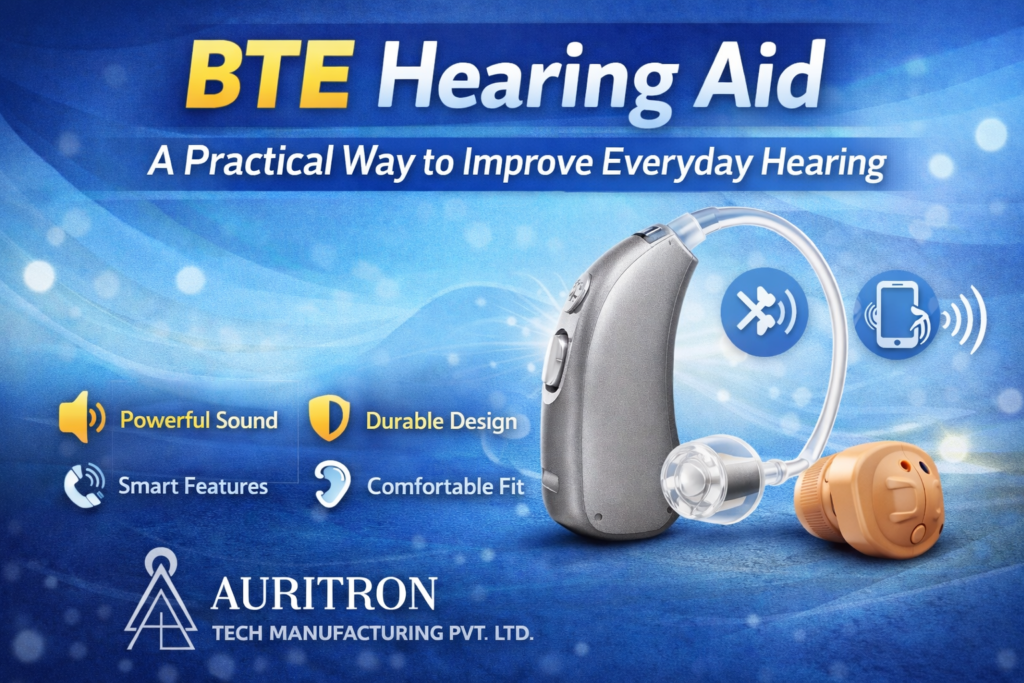
Blog Book An Appointment BTE Hearing Aid: A Practical Way to Improve Everyday Hearing Hearing loss rarely happens all at once; it often starts with small frustrations, like asking someone to repeat themselves or struggling to follow a conversation in a busy restaurant. Over time, these moments can make you feel disconnected from the world around you. Fortunately, modern audiology has turned these challenges into manageable hurdles. One of the most time-tested and versatile solutions available today is the BTE (Behind-The-Ear) hearing aid. A BTE hearing aid is widely respected for its reliability and its ability to adapt to almost any level of hearing loss. At Auritron Tech Manufacturing Pvt. Ltd., we focus on engineering these devices to be more than just amplifiers—we design them to be seamless extensions of your daily life. By combining durability with sophisticated sound processing, we ensure that regaining your hearing feels natural and effortless. What Is a BTE Hearing Aid? In the world of hearing technology, the BTE model is a classic for a reason. As the name suggests, the main body of the device sits tucked neatly behind the outer ear. This sturdy housing contains all the essential electronics and is connected to a custom ear mold or a discrete tip that rests inside the ear canal. This physical separation allows the device to house larger, more powerful components than its smaller “in-the-canal” counterparts. Because of this design, BTE devices are incredibly versatile. They aren’t just for one specific type of user; they are effective for everyone from children with mild hearing loss to seniors dealing with more profound auditory challenges. By providing a stable fit and powerful output, the BTE style remains a dependable anchor in the hearing aid industry. How Does a BTE Hearing Aid Work? The magic behind a BTE hearing aid lies in a very sophisticated three-step process. First, a tiny, high-sensitivity microphone picks up the acoustic waves from your environment. That sound is then converted into a digital signal and sent to an internal processor. This “brain” of the device is what makes the difference—it filters out annoying background hums, sharpens the frequency of human speech, and boosts the volume to a level specifically tuned to your needs. Once the sound is optimized, it travels through a thin, transparent tube or wire directly into the ear canal. Modern BTE devices from Auritron Tech are smart enough to recognize where you are; they can automatically shift settings when you move from a quiet living room to a windy street. This ensures that the sound you hear isn’t just louder, but significantly clearer and more realistic. Key Features of BTE Hearing Aid What sets a BTE device apart isn’t just that it helps you hear; it’s the array of thoughtful features designed to make ownership easy. These devices are built to balance high-end performance with the practical realities of daily wear. Comfortable and User-Friendly Design Modern BTE aids are contoured to match the natural shape of the human ear, making them remarkably secure. Whether you are active or wearing glasses, the device stays in place without causing irritation. Because the controls are located on the back of the device, they are also much easier to adjust for people who might struggle with the tiny buttons on smaller, internal models. Suitable for Various Hearing Needs One of the greatest strengths of the BTE style is its “one-size-fits-most” capability in terms of power. Because the housing is slightly larger, it can accommodate the high-gain amplifiers needed for severe hearing loss, yet it can also be tuned down for someone who only needs a gentle boost. This flexibility makes it a “future-proof” choice if a user’s hearing needs change over time. Powerful and Clear Sound Output BTE aids are the powerhouses of the hearing world. They are capable of producing a higher “gain” or volume than almost any other style. This extra power allows the device to overcome significant hearing barriers while maintaining a high level of sound fidelity, ensuring that music sounds rich and voices sound distinct rather than “tinny” or distorted. Durable and Long-Lasting Because the sensitive electronics are housed in a shell behind the ear, they are less exposed to earwax and moisture from the ear canal, which are the leading causes of hearing aid failure. This design, combined with larger batteries that hold a longer charge, makes BTE aids some of the most durable and low-maintenance options on the market today. Smart Technology Features Auritron Tech integrates modern connectivity into our BTE line. This includes advanced feedback cancellation—which stops that annoying whistling sound before it starts—and Bluetooth compatibility. Many of our models can sync directly with your smartphone or television, allowing you to stream audio directly into your ears for a personalized listening experience. Benefits of Using a BTE Hearing Aid Choosing a BTE hearing aid is about more than just numbers on a decibel chart; it’s about the quality of your social interactions. These devices provide a consistent, high-quality sound that allows you to engage in group conversations without the exhaustion of “listening fatigue.” Because they are easy to clean and handle, they fit into your routine without becoming a burden. Furthermore, the battery life on BTE models is typically superior to smaller styles. This means fewer mid-day battery changes and more reliability when you’re out and about. For users who prioritize a balance of power, ease of use, and long-term value, the BTE model is often the most practical choice. Who Can Benefit from a BTE Hearing Aid? BTE devices are truly universal. They are the preferred choice for pediatric patients because the ear molds can be easily replaced as a child grows without needing a whole new device. They are also ideal for older adults who may have dexterity issues, as the larger size makes them easier to hold, clean, and adjust. Whether your hearing loss is the result of age, noise exposure, or a medical condition, a BTE aid offers the range of power
Ear Aid Machine Price
Blog Book An Appointment Ear Aid Machine Price: A Simple Guide to Making the Right Choice When it comes to improving hearing, choosing the right device is important—but so is understanding the cost. For many people, the first concern is how much a hearing aid will cost and whether it’s worth the investment. Knowing about ear aid machine price can help you make a more confident decision. It’s not just about the cost—it’s about finding a device that matches your hearing needs, comfort, and lifestyle. At Auritron Tech Manufacturing Pvt. Ltd., the focus is on offering hearing solutions that are both effective and dependable. What Is an Ear Aid Machine? An ear aid machine, or hearing aid, is designed to help you hear sounds more clearly. It works by picking up sounds from your surroundings, processing them, and delivering them into your ear at a level you can hear comfortably. Today’s hearing aids are more advanced than ever. They are designed to be comfortable, easy to use, and suitable for different levels of hearing loss, making everyday communication smoother and less stressful. Ear Aid Machine Price The price of an ear aid machine can vary quite a bit, depending on several factors. There isn’t a one-size-fits-all cost, as different devices are built with different features and levels of technology. Type of Hearing Aid The style of hearing aid plays a big role in pricing. Larger devices like BTE models are often more affordable, while smaller, more discreet options with advanced features may cost more. Technology and Features Devices with features like background noise reduction, Bluetooth connectivity, and automatic sound adjustment are usually priced higher than basic models. Level of Hearing Loss The degree of hearing loss also matters. Devices designed for more severe hearing loss may require stronger and more advanced technology, which can increase the price. Custom Fit and Comfort Some hearing aids are custom-made to fit your ear perfectly. These personalized options can cost more but often provide better comfort and performance. Support and Services The overall cost may also include services such as fitting, adjustments, warranty, and maintenance, which add long-term value to the device. Types of Ear Aid Machines There are different types of hearing aids available, including behind-the-ear (BTE), in-the-ear (ITE), and completely-in-canal (CIC) models. Each type offers its own balance of comfort, visibility, and performance. Choosing the right one depends on your hearing condition, daily routine, and personal preference. A professional evaluation can help you find the most suitable option. How to Choose the Right Ear Aid Machine? Selecting a hearing aid is not just about price—it’s about what works best for you. It’s important to consider how severe your hearing loss is, where you spend most of your time, and what level of comfort you prefer. Trying different models, understanding their features, and getting expert advice can make the decision easier. The right choice can improve not just your hearing, but your overall quality of life. Why Choose Auritron Tech Manufacturing Pvt. Ltd.? At Auritron Tech Manufacturing Pvt. Ltd., the goal is to provide hearing solutions that are reliable, comfortable, and built with precision. Each product is designed to meet different hearing needs while maintaining quality and performance. We focus on creating devices that are easy to use and effective in everyday situations. With a commitment to innovation and customer satisfaction, we aim to support better hearing for everyone. Conclusion Ear aid machine price can vary based on features, design, and individual requirements. Understanding what affects the cost helps you make a more informed and practical choice. At Auritron Tech Manufacturing Pvt. Ltd., we are committed to providing hearing solutions that combine quality, comfort, and value—helping you hear clearly and live confidently. FAQs What is the average ear aid machine price? The price can vary depending on the type and features of the device. A proper hearing evaluation helps determine the best option for your needs. Are more expensive hearing aids always better? Not necessarily. The best hearing aid is one that suits your hearing condition and lifestyle, not just the price. Do hearing aids have ongoing costs? Yes, there may be additional costs for maintenance, batteries, and occasional servicing. Can I choose a hearing aid within my budget? Yes, there are options available across different price ranges. It’s important to balance affordability with performance. How long does an ear aid machine last? With proper care and maintenance, most hearing aids can last for several years. The price can vary depending on the type and features of the device. A proper hearing evaluation helps determine the best option for your needs. Not necessarily. The best hearing aid is one that suits your hearing condition and lifestyle, not just the price. Yes, there may be additional costs for maintenance, batteries, and occasional servicing. Yes, there are options available across different price ranges. It’s important to balance affordability with performance. With proper care and maintenance, most hearing aids can last for several years. Find the Best Hearing Aid Deals — Start Exploring Now Book An Appointment
Who Needs a Hearing Aid?
Blog Book An Appointment Who Needs a Hearing Aid? When Should You Start Thinking About It Hearing loss doesn’t always happen overnight. For many people, it develops slowly, which is why it often goes unnoticed in the early stages. You might find yourself asking others to repeat things or feeling like people are not speaking clearly. Over time, these small changes can start affecting daily conversations and interactions. So, who really needs a hearing aid? The answer isn’t limited to a specific age group or condition. Anyone who struggles to hear clearly in everyday situations may benefit from using one. At Auritron Tech Manufacturing Pvt. Ltd., the focus is on helping people identify these early signs and find a solution that fits their lifestyle. What Is a Hearing Aid and Why Does It Matter? A hearing aid is a compact device that helps improve hearing by making sounds clearer and easier to understand. While it doesn’t bring hearing back to normal, it plays an important role in improving communication. When hearing loss is ignored, it can lead to frustration, reduced confidence, and even social withdrawal. Over time, it may also affect mental well-being. That’s why using a hearing aid at the right time can make a big difference in maintaining an active and comfortable life. Who Needs a Hearing Aid? The need for a hearing aid can vary from person to person. It’s not just about age—daily habits, environment, and overall health also play a role. People with Mild to Moderate Hearing Loss Even a slight hearing issue can make conversations difficult, especially in noisy places. Early use of a hearing aid can make speech clearer and reduce listening effort. Older Adults Experiencing Age-Related Hearing Loss As we age, natural changes in the ear can affect hearing ability. Many older adults benefit from hearing aids as they help maintain independence and improve communication. Those Who Struggle in Conversations If you often find it hard to follow group discussions or need to increase TV volume, it could be a sign that your hearing needs support. People Avoiding Social Interaction Hearing difficulties can sometimes make people withdraw from conversations or social gatherings. A hearing aid can help restore confidence and make interactions easier. Individuals Experiencing Listening Fatigue If you feel tired after trying hard to listen or concentrate on conversations, it may be due to hearing strain. Hearing aids can reduce this effort significantly. Common Signs You May Need a Hearing Aid Some signs are easy to overlook at first. You might struggle to hear clearly in crowded places, frequently ask others to repeat themselves, or feel that people are mumbling. You may also notice yourself increasing the volume on devices more than usual. These signs often indicate that your hearing may need attention and should not be ignored. Benefits of Using a Hearing Aid Hearing aids do more than just increase volume—they improve the way you experience sound. Conversations become clearer, misunderstandings reduce, and social interactions feel more natural. They also help improve confidence and reduce frustration. With better hearing, everyday activities like talking to family, watching TV, or attending gatherings become much more enjoyable. When Should You Consider a Hearing Test? If hearing difficulties begin to affect your routine, it’s a good idea to get your hearing checked. Even mild symptoms should not be ignored, as early detection can help prevent further issues. A proper evaluation helps you understand your hearing condition and choose the right solution at the right time. Why Choose Auritron Tech Manufacturing Pvt. Ltd.? Auritron Tech Manufacturing Pvt. Ltd. focuses on creating hearing solutions that are simple, comfortable, and reliable for everyday use. Each device is designed with real user needs in mind. With attention to quality and ease of use, Auritron aims to provide hearing support that fits naturally into daily life and helps users feel more confident. Conclusion Understanding who needs a hearing aid helps you take the first step toward better hearing. Even small signs shouldn’t be ignored, as early action can make a big difference. With the right support from Auritron Tech Manufacturing Pvt. Ltd., finding a suitable hearing solution becomes simple, helping you stay connected and confident in everyday life. FAQs How can I tell if I need a hearing aid? If you often struggle to hear conversations or frequently increase volume levels, it may be time for a hearing check. Can younger people also need hearing aids? Yes, hearing loss can affect people of all ages, not just older adults. Is it okay to use a hearing aid for mild hearing loss? Yes, even mild hearing issues can impact communication, and early use can be helpful. Do hearing aids improve daily life? Yes, they make communication easier, improve confidence, and help in social interactions. When should I consult a specialist? If hearing problems continue or worsen, it’s best to seek professional advice. If you often struggle to hear conversations or frequently increase volume levels, it may be time for a hearing check. Yes, hearing loss can affect people of all ages, not just older adults. Yes, even mild hearing issues can impact communication, and early use can be helpful. Yes, they make communication easier, improve confidence, and help in social interactions. If hearing problems continue or worsen, it’s best to seek professional advice. Check the Signs and Take Control of Your Hearing Health Book An Appointment
How Do Hearing Aids Work?
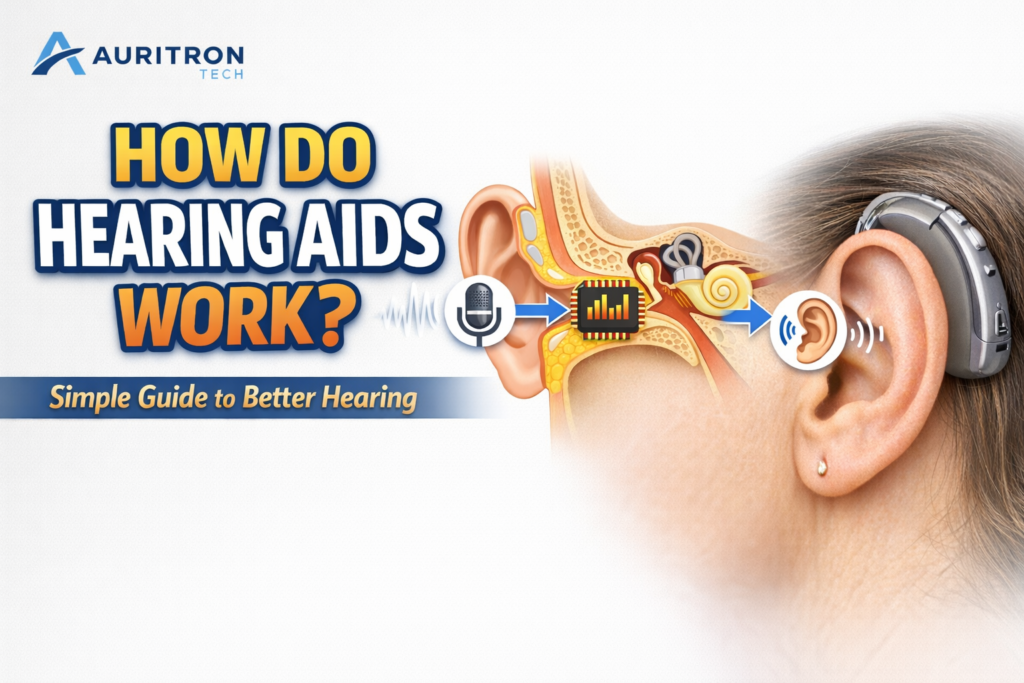
Blog Book An Appointment How Do Hearing Aids Work? A Simple Explanation Hearing aids may be small in size, but they make a noticeable difference in everyday life. When hearing starts to decline, even simple things like conversations, phone calls, or watching TV can feel challenging. Hearing aids help make these sounds clearer so that communication becomes easier and more natural. If you’ve ever wondered how hearing aids actually work, the idea is quite straightforward. These devices pick up sounds around you, process them, and send them into your ear in a clearer form. At Auritron Tech Manufacturing Pvt. Ltd., the aim is to provide solutions that are not only effective but also easy to use in real-life situations. What Is a Hearing Aid? A hearing aid is a small electronic device that is worn in or behind the ear to help improve hearing. It doesn’t fully restore natural hearing, but it helps make sounds louder and clearer so that everyday communication becomes more comfortable. Modern hearing aids are designed to be compact, efficient, and suitable for different environments, whether you are at home or in a busy setting. How Do Hearing Aids Work? Hearing aids follow a simple step-by-step process to improve the way you hear sounds. Different parts inside the device work together to make this possible. Sound Collection Through Microphone The process begins with a microphone that picks up sounds from your surroundings. These sounds are then converted into signals so they can be processed. Processing and Amplification The device then processes these signals and increases their strength. This helps important sounds, especially speech, become easier to hear. Delivering Sound to the Ear Once processed, the signals are turned back into sound and sent into the ear through a small speaker. Brain Interpretation After reaching the inner ear, the sound signals are sent to the brain, where they are understood as meaningful sounds. Continuous Adjustment Many modern hearing aids can automatically adjust based on your surroundings, helping you hear better whether you are in a quiet room or a noisy place. Main Components of a Hearing Aid While hearing aids may look different on the outside, most of them include a few essential parts that help them function properly. Microphone Captures sound from the environment and converts it into signals. Amplifier Boosts the strength of the sound signals for clearer hearing. Speaker (Receiver) Delivers the processed sound into the ear. Battery or Power Source Provides the energy needed for the device to operate. Digital Processor Adjusts sound according to the user’s needs and helps reduce unwanted background noise. Benefits of Hearing Aids Hearing aids can make daily life much easier. They help improve conversations, reduce the need to repeat things, and allow individuals to stay more socially active. They also support confidence and reduce the frustration that often comes with hearing difficulties. With better hearing, everyday experiences become more enjoyable. Who Can Benefit from Hearing Aids? Hearing aids are suitable for people with mild to severe hearing loss. They are especially helpful for older adults who find it difficult to follow conversations or hear clearly in noisy environments. If hearing problems begin to affect your daily life, it is a good idea to consider a professional hearing evaluation. Why Choose Auritron Tech Manufacturing Pvt. Ltd.? Auritron Tech Manufacturing Pvt. Ltd. focuses on creating hearing solutions that are comfortable, reliable, and easy to use. Each device is designed to match different hearing needs and daily lifestyles. With a strong focus on quality and user-friendly design, the goal is to help individuals experience better hearing in a simple and practical way. Conclusion Understanding how hearing aids work helps you see how important they are in daily life. By capturing, processing, and delivering sound effectively, these devices make communication easier and more comfortable. At Auritron Tech Manufacturing Pvt. Ltd., the focus is on providing practical and dependable hearing solutions that support better hearing and a better quality of life. FAQs Do hearing aids restore normal hearing? No, they do not fully restore natural hearing, but they make sounds clearer and easier to understand. How quickly do hearing aids start working? They start working immediately, but it may take a short time to get used to them. Are hearing aids useful in noisy places? Yes, modern devices are designed to reduce background noise and improve speech clarity. Do all hearing aids work in the same way? The basic process is similar, but features and technology can vary. Can hearing aids adjust automatically? Yes, many devices adjust sound levels automatically based on the environment. No, they do not fully restore natural hearing, but they make sounds clearer and easier to understand. They start working immediately, but it may take a short time to get used to them. Yes, modern devices are designed to reduce background noise and improve speech clarity. The basic process is similar, but features and technology can vary. Yes, many devices adjust sound levels automatically based on the environment. What Makes Hearing Aids So Powerful? Discover the Answer Book An Appointment
Ear Machine for Old Age
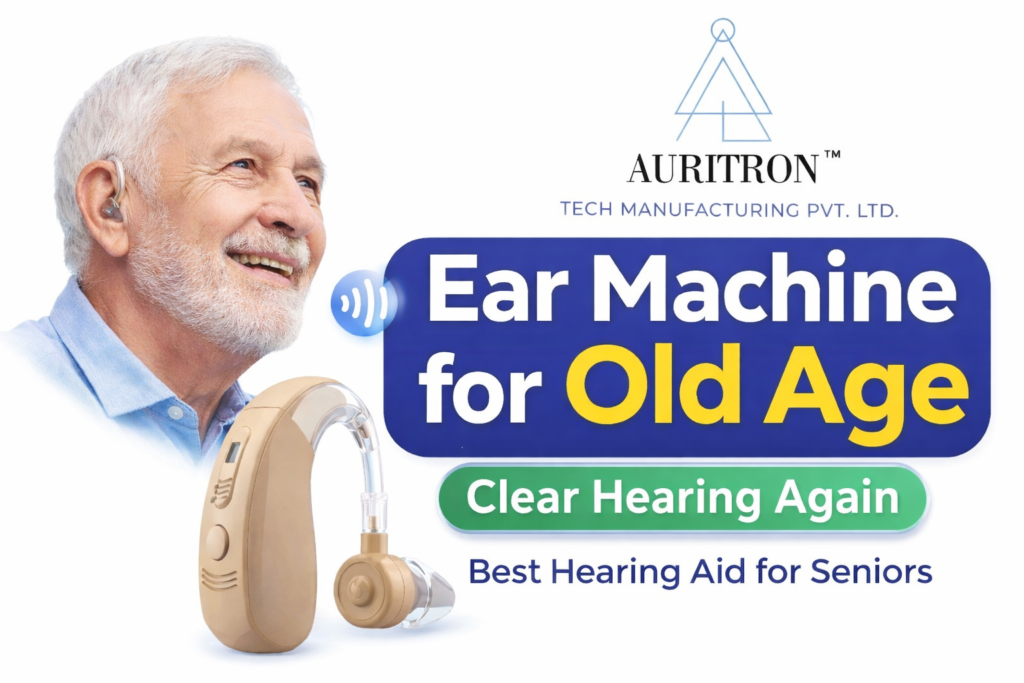
Blog Book An Appointment Ear Machine for Old Age: Making Everyday Hearing Easier Hearing loss often arrives quietly. It starts with missing a few words in a crowded room or needing the television volume just a bit higher than everyone else. For many seniors, this transition can feel isolating, making social gatherings or simple phone calls feel like a chore. However, a modern ear machine for old age is more than just technology; it is a bridge back to the conversations and people that matter most. At Auritron Tech Manufacturing Pvt. Ltd., we understand that a hearing aid for an elderly user must be more than powerful—it must be practical. A device should be easy to handle, comfortable for all-day wear, and intuitive enough to use without a steep learning curve. Our goal is to provide reliable solutions that restore both sound and the confidence to stay engaged with the world. What Is an Ear Machine for Old Age? While commonly called an “ear machine,” these devices are sophisticated, miniature computers known as hearing aids. They capture sound through a microphone, convert it into a digital signal, and amplify specific frequencies—usually those associated with human speech—so the wearer can hear clearly again. For older adults, these machines are engineered to address age-related hearing loss (presbycusis). They often feature slightly larger housings or tactile buttons to make them easier to manipulate for those with limited finger dexterity. Whether it sits behind the ear or fits inside the canal, the primary job of the device is to bring the world back into focus without the distortion associated with older technology. Why Do Elderly People Need Hearing Aids? Age-related hearing loss is caused by the natural wear of tiny hair cells in the inner ear. Because this happens slowly, many don’t realize how much they’ve missed until they try a hearing aid. Beyond hearing better, these devices play a critical role in mental health; treating hearing loss can reduce the risk of cognitive decline and depression by keeping the brain socially active. By using a hearing aid, seniors maintain their independence. Being able to hear a doorbell, a boiling kettle, or a car horn is essential for safety. Most importantly, it removes the frustration of misunderstandings during family dinners or doctor’s appointments, ensuring the user remains a vibrant participant in their own life. Key Features of Ear Machine for Old Age Modern devices have evolved to include features specifically catering to the lifestyle and physical needs of elderly users. Easy to Use and Comfortable Modern BTE (Behind-the-Ear) models are contoured to sit securely, even for those who wear glasses. Controls are often “set and forget,” meaning the device automatically adjusts as the user moves from a quiet bedroom to a noisy grocery store. Clear and Strong Sound Output As hearing loss progresses, the need for clean power increases. Quality ear machines provide enough amplification to overcome significant hearing gaps without the “whistling” feedback common in older models, ensuring even whispers are understood. Noise Reduction Support Advanced noise-reduction technology identifies steady background sounds—like a ceiling fan or traffic—and softens them, while simultaneously sharpening the frequencies of the human voice to make “mumbled” speech clear. Rechargeable Options Fiddling with tiny batteries can be frustrating. Rechargeable hearing aids allow users to simply place them in a dock at night, providing a full day of use by morning, much like a smartphone. Durable Design for Long-Term Use These devices are built to be moisture-resistant and robust enough to handle an accidental drop. With protective shells and sweat-resistant coatings, they provide consistent performance through years of daily activity. Benefits of Using Ear Machine in Old Age The benefits extend far beyond the ears. The most immediate change is a boost in emotional well-being. When you stop struggling to hear, the “listening fatigue” that causes mid-afternoon exhaustion begins to disappear. Conversations become a joy again, and the need for a partner to “translate” is removed. Better hearing is also linked to improved balance and spatial awareness, leading to a richer, safer, and more connected life. How to Choose the Right Ear Machine? Selecting the right device involves a hearing test and a conversation about lifestyle. If the user is mostly at home, a simpler device may suffice. However, for those active in community groups, advanced background noise filtering is essential. Physical comfort is also vital; while “invisible” models are popular, many seniors prefer BTE models because they are easier to clean and handle. Why Choose Auritron Tech Manufacturing Pvt. Ltd.? We focus on engineering hearing aids that bridge the gap between high-end digital technology and everyday simplicity. Our devices undergo rigorous testing to ensure they meet international standards for sound clarity and durability. We believe everyone deserves to hear the voices of their loved ones clearly, and our user-friendly designs ensure that technology is an asset, not a hurdle. Conclusion An ear machine for old age is a powerful investment in happiness and independence. It turns the volume back up on life, ensuring no one sits on the sidelines. At Auritron Tech Manufacturing Pvt. Ltd., we provide dependable, high-quality hearing solutions that restore the human connection. FAQs Which hearing aid is best for elderly people? BTE (Behind-the-Ear) or RIC (Receiver-in-Canal) models are usually best. They offer the best balance of power, battery life, and ease of handling for those with limited dexterity. Are hearing aids difficult to use for seniors? No. Today’s devices are highly automated, often turning on and adjusting volume automatically when taken out of the charger. How long does an ear machine last? With basic daily care, a quality hearing aid typically lasts five to seven years. Are rechargeable hearing aids a good option? Yes. They eliminate the physical struggle of changing tiny batteries and are very cost-effective. When should someone start using a hearing aid? As soon as you notice you are “working” to hear. Early adoption helps the brain stay adapted to sound for better long-term results. BTE (Behind-the-Ear) or RIC (Receiver-in-Canal) models