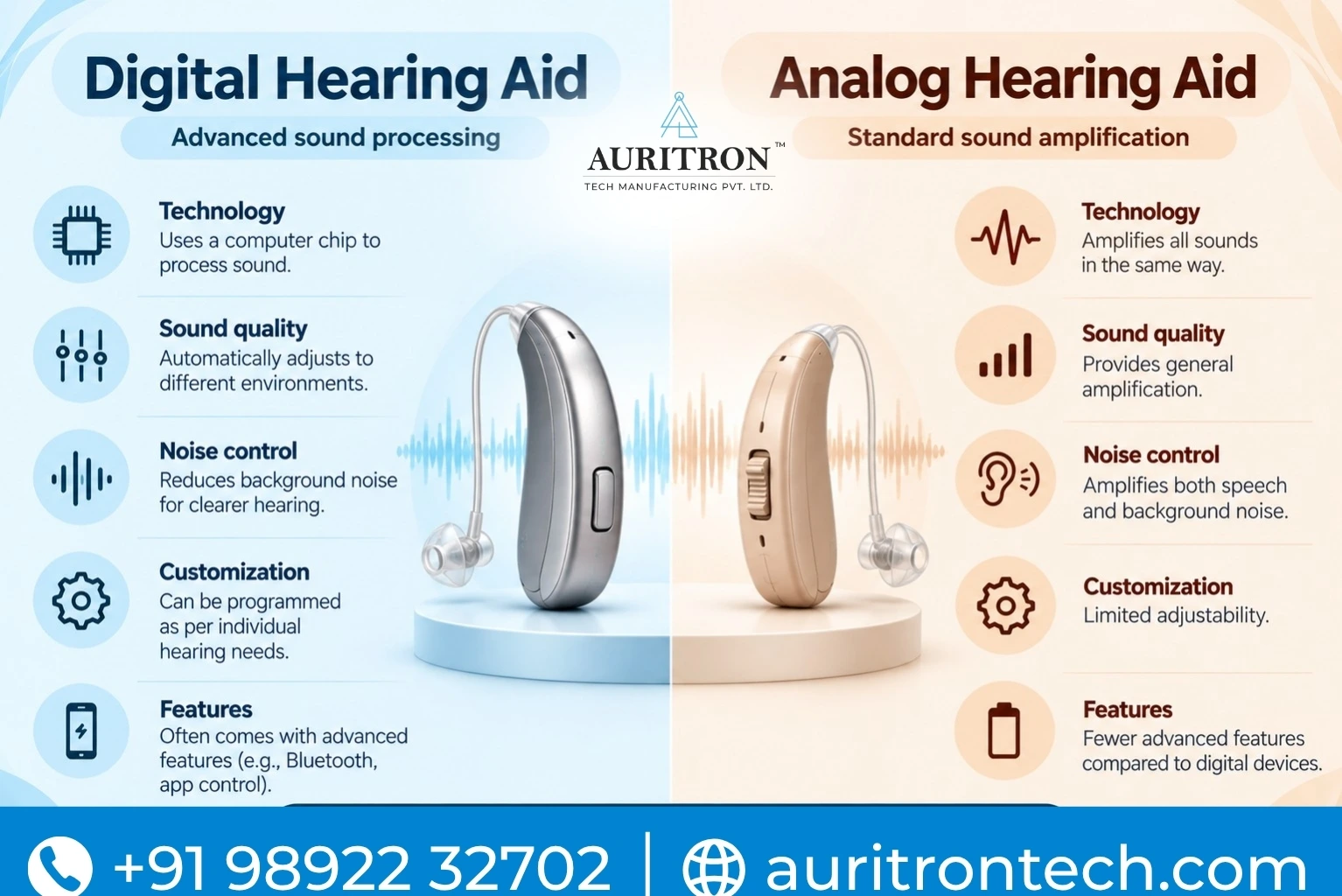
Both types aim to help you hear better, but they get there in pretty different ways. Digital hearing aids run on Digital Signal Processing, turning sound into digital signals for clearer speech and a more natural listening experience overall. They also pack in the extras automatic adjustments, feedback cancellation, Bluetooth, smartphone pairing, rechargeable batteries, and programming tailored to your specific hearing loss. That versatility is why they work for nearly everyone, from mild to profound hearing loss. Analog hearing aids, meanwhile, amplify sound as a continuous electrical signal simpler, more basic, and usually requiring manual tweaking. They’re more prone to that annoying whistle and rarely offer wireless features. There’s an upside, though: they’re cheaper, and simpler electronics often mean longer battery life. Still, they’re fading from popularity for good reason. For most people today, digital hearing aids simply offer more comfort, flexibility, and support.
|
Features
|
Digital Hearing Aids
|
Analog Hearing Aids
|
|---|---|---|
|
Technology
|
Digital Signal Processing (DSP)
|
Analog Amplification
|
|
Sound Processing
|
Converts sound into digital signals before amplification
|
Amplifies sound as continuous electrical signals
|
|
Speech Clarity
|
Excellent speech enhancement
|
Basic speech amplification
|
|
Background Noise
|
Advanced noise
|
Advanced noise
|
|
Customization
|
Highly programmable for individual hearing loss
|
Limited customization
|
|
Automatic Adjustments
|
Yes, adjusts to different listening environments
|
Usually manual adjustments
|
|
Feedback (Whistling) Control
|
Advanced feedback cancellation
|
More prone to whistling
|
|
Bluetooth Connectivity
|
Available in many models
|
Usually not available
|
|
Smartphone Compatibility
|
Yes
|
Yes
|
|
Rechargeable Option
|
Common
|
Rare
|
|
Listening Comfort
|
More natural and comfortable
|
Louder but less refined
|
|
Suitable For
|
Mild, moderate, severe, and profound hearing loss
|
Mild hearing loss or basic amplification needs
|
|
Battery Life
|
Efficient with modern technology
|
Generally longer in basic models due to simpler electronics
|
|
Price
|
Higher
|
Lower
|
|
Availability
|
Widely available
|
Becoming less common
|