
Hearing Machine Price – What Affects the Cost of Hearing Aids?

Blog Book An Appointment Hearing Machine Price: What Affects the Cost of Hearing Aids? When someone finds out they have hearing loss, one of the first questions that usually comes to mind is about the price of a hearing aid. Hearing devices can differ quite a lot in cost, and that can sometimes make things confusing for people who are trying to figure out what they actually need. The price of a hearing machine isn’t based on just one thing. It can vary depending on the type of device, the technology inside it, the features it offers, and even the level of hearing loss a person has. Some hearing aids are simple devices that mainly make sounds louder, while others come with advanced features like noise reduction, Bluetooth connectivity, or rechargeable batteries. Because every person’s hearing needs are different, choosing the right hearing device is usually about more than just looking at the price tag. Understanding what affects hearing machine price can help people make a more informed and comfortable decision when considering hearing support. What Is a Hearing Machine? A hearing machine, often called a hearing aid, is a small electronic device designed to help people hear sounds more clearly. It works by picking up sound from the surrounding environment, increasing its volume, and sending that amplified sound into the ear. Today’s hearing machines are designed to be small, lightweight, and comfortable to wear. Depending on the type, they may sit behind the ear or fit inside the ear canal. Hearing machines are commonly recommended for people with mild to moderate hearing loss, though some modern devices can also assist individuals with more significant hearing difficulties. What Factors Affect Hearing Machine Price? Level of Technology Hearing machines are available in different technology levels. Basic models mainly amplify sound, while more advanced ones can automatically adjust to different listening environments. Device Features and Connectivity Some hearing machines include additional features such as Bluetooth connectivity, smartphone compatibility, rechargeable batteries, and improved noise filtering. These extra features can influence the overall cost. Type and Design of the Hearing Aid The physical design of the hearing machine also plays a role in pricing. Smaller, more discreet devices that sit deeper inside the ear often involve more complex engineering and may cost more than larger models. Types of Hearing Machines Available Behind-The-Ear (BTE) Hearing Aids These hearing aids sit behind the ear and connect to the ear canal through a small tube or mold. They are widely used and suitable for different levels of hearing loss. In-The-Ear (ITE) Hearing Aids In-the-ear devices are custom-made to fit the outer part of the ear. They are slightly larger than canal devices but are usually easy to handle and adjust. Completely-In-The-Canal (CIC) Devices These hearing machines are smaller and fit deeper inside the ear canal, making them less visible when worn. Why Professional Hearing Evaluation Matters Choosing a hearing machine based only on price might not always give the best results. A proper hearing evaluation helps identify the exact type and level of hearing loss. Once this information is available, hearing specialists can recommend devices that suit the individual’s hearing needs, lifestyle, and comfort preferences. This approach helps ensure that the hearing solution is both effective and practical for everyday use. Why Choose Auritron Tech Manufacturing Pvt Ltd? Auritron Tech Manufacturing Pvt Ltd focuses on developing hearing technologies that aim to improve listening comfort and sound clarity. Through research-driven innovation and precision manufacturing, the company works to create hearing solutions that support better hearing experiences in everyday life. With a strong focus on quality and technology, Auritron contributes to advancing hearing care and increasing awareness about hearing health. Conclusion Hearing machine prices can vary depending on factors such as technology, design, and additional features. While cost is an important consideration, it should be looked at alongside comfort, hearing needs, and long-term usability. Getting a proper hearing evaluation and professional advice can make it much easier to choose the right hearing device. When people understand what affects hearing machine price, the process of selecting a hearing solution becomes clearer and more manageable. FAQs 1. Why do hearing machine prices vary so much? Prices can differ because hearing aids come with different levels of technology, features, and designs. 2. Are expensive hearing machines always better? Not necessarily. The best hearing machine is the one that fits the person’s hearing condition and lifestyle. 3. How long do hearing machines usually last? With proper care and maintenance, most hearing machines can last several years. 4. Can hearing machines improve everyday conversations? Yes. Hearing aids are designed to amplify speech and surrounding sounds, which can make conversations easier to follow. 5. Should someone get a hearing test before buying a hearing machine? Yes. A hearing test helps determine the level of hearing loss and allows specialists to recommend the most suitable device. Prices can differ because hearing aids come with different levels of technology, features, and designs. Not necessarily. The best hearing machine is the one that fits the person’s hearing condition and lifestyle. With proper care and maintenance, most hearing machines can last several years. Yes. Hearing aids are designed to amplify speech and surrounding sounds, which can make conversations easier to follow. Yes. A hearing test helps determine the level of hearing loss and allows specialists to recommend the most suitable device. Stop Ignoring the Signs of Hearing Loss Book An Appointment
Hearing Loss in Adults Under 40: Causes & Prevention
Blog Book An Appointment Hearing Loss in Adults Under 40: Causes & Prevention For the longest time, hearing loss was just… an old person thing. That was the assumption. You get to a certain age, your hearing goes, thats just how it works. But that idea? It’s slowly changing, and honestly, it’s changing faster than most people realise. More and more adults under 40 are starting to notice things. Conversations that feel harder to follow than they used to. A strange ringing in the ears after a night out. Sounds that seem too sharp or too muffled. And a lot of the time, people brush it off because they’re young, and hearing loss isn’t supposed to be their problem yet. But a lot of everyday habits are quietly contributing to this. Hours of headphones, constant city noise, working around loud machinery, or certain health conditions, all of it can affect hearing earlier than most people would ever expect. The tricky thing is, hearing changes usually happen so gradually that by the time someone actually notices something’s off, it’s already been building up for a while. Knowing the early signs and understanding what causes hearing loss in younger adults is genuinely worth paying attention to, because catching it early actually makes a difference. What Is Hearing Loss? At its most basic, hearing loss just means a reduced ability to hear sounds clearly. It can affect one ear or both, and it can range from mild difficulty hearing soft sounds to more noticeable challenges with everyday hearing. Inside the ear, there are very delicate structures that help process sound. When these structures are damaged or no longer function properly, the brain receives fewer sound signals, which makes hearing less clear. It’s not always about volume. Sometimes it’s about clarity, sharpness, the ability to separate one voice from background noise. While hearing loss has always been strongly associated with ageing, lifestyle habits and environmental noise are now contributing to hearing problems even in people in their 20s and 30s. It’s not rare anymore, it’s just underreported. Common Causes of Hearing Loss in Adults Under 40 There usually isn’t one single dramatic cause. Most of the time its a combination of habits and exposures that pile up quietly over the years. Here are the most common ones: Prolonged Use of Headphones at High Volume This one probably affects more people than any other cause in this age group. A lot of people spend hours every day listening to music, podcasts, or videos through headphones or earbuds, commuting, working, working out, and falling asleep. When the volume is too high for long periods, it slowly damages the sensitive cells inside the inner ear. And those cells don’t regenerate. The damage that builds up over years of high-volume listening doesn’t reverse when you finally turn it down. direct them through the ear canal, basically funnelling sound inward so the rest of the system can do its thing. Exposure to Loud Environments Concerts, nightclubs, busy traffic areas, and workplaces with heavy machinery, frequent exposure to these kinds of environments can gradually wear down hearing over time. And the thing is, the sound doesn’t even have to feel uncomfortable for it to be doing damage. Repeated exposure is what matters, even when the volume seems manageable in the moment. Ear Infections or Medical Conditions Certain infections or untreated ear conditions can interfere with hearing ability, sometimes more significantly than people realise. In some cases, underlying medical issues can also affect how the ear processes sound, even in otherwise healthy younger adults. Signs of Hearing Problems in Younger Adults Because hearing changes are gradual, the early signs are easy to dismiss. But these are the things worth actually paying attention to: Difficulty Following Conversations Some people start noticing they have trouble understanding conversations, especially in crowded places or when several people are talking at the same time. It starts feeling like everyone is mumbling. Or like you’re catching every other word but missing the thread. A lot of younger people mistake this for distraction or tiredness. But if its happening consistently, its worth paying attention to. Ringing or Buzzing in the Ears A continuous ringing, buzzing, or humming sound in the ears, often called tinnitus, can show up after exposure to loud sounds. Some people experience it occasionally after a loud concert. Others start noticing it more regularly, even in quiet environments. If it’s happening often, that’s not something to just push through and ignore. Increasing Volume on Devices This one seems small, but it’s actually a pretty telling sign. If someone is regularly turning up the volume on their phone, TV, or headphones more than they used to, and the people around them keep pointing it out, it could be an early signal that hearing clarity has quietly changed. How Hearing Loss Can Be Prevented The good news is that a lot of noise-related hearing damage is preventable, or at least significantly reducible, with some fairly straightforward habits: Maintain Safe Listening Habits Keeping volume at moderate levels and avoiding long stretches of loud audio exposure can reduce the strain on your ears considerably. A simple rule of thumb many hearing specialists suggest, if someone next to you can hear what’s coming through your headphones, it’s probably too loud. Protect Ears in Noisy Environments Using ear protection in very loud environments, such as concerts, construction sites, and industrial workplaces, can genuinely help prevent long-term damage. It might not feel like a big deal in the moment, but those repeated exposures accumulate over the years. Regular Hearing Checkups Occasional hearing evaluations can help spot small changes early before they develop into something more significant. Most people don’t think about getting a hearing test until something already feels obviously wrong, but getting checked proactively is just a smarter approach. Why Choose Auritron Tech Manufacturing Pvt Ltd? Auritron Tech Manufacturing Pvt Ltd focuses on developing advanced hearing technology designed to support better hearing care and awareness. Through continuous research and precision
How Noise Pollution Affects Your Hearing: The Long-Term Risks
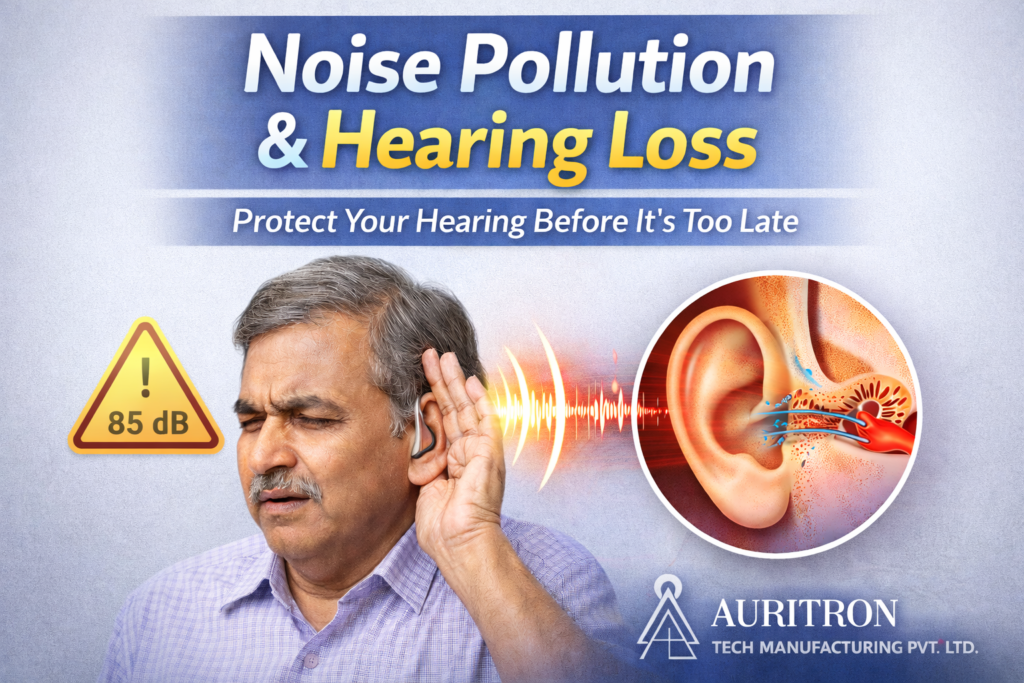
Blog Book An Appointment How Noise Pollution Affects Your Hearing: The Long-Term Risks Most of us think of noise as just something annoying, like traffic outside the window, loud music from a nearby event, construction going on down the road, or just that constant low-level buzz that comes with living in a city. You tune it out. You get used to it. No big deal, right? Well, not quite. Noise isn’t only irritating. When it gets too loud or happens too often, it can quietly start affecting your hearing and the really tricky part is, most people don’t feel it happening. Our ears are honestly pretty delicate. They’re designed to handle sound within certain safe levels, and when we’re exposed to loud noise again and again, the tiny structures inside the ear can start getting damaged. It doesn’t happen all at once; it builds slowly. And a lot of people don’t notice anything until hearing problems have already set in. In today’s world, noise pollution is becoming more and more common. Busy roads, crowded cities, workplaces with heavy machinery, and even everyday habits like listening to music through headphones at full volume, all of it contributes to long-term sound exposure that adds up over the years. Understanding how noise pollution affects hearing can help people become more aware of the risks and take small steps that actually protect their ears in the long run. What Is Noise Pollution? Noise pollution basically refers to unwanted or excessive sound that interferes with normal life. It could come from traffic, construction work, industrial equipment, loud events, or just the constant background hum of a busy environment. Sound is measured in units called decibels (dB). When sound levels climb above certain limits, and people are exposed to them for long periods, it can begin to take a toll on hearing health. Sometimes the damage comes from a single, sudden, very loud sound, like an explosion or certain heavy machinery. Other times it builds gradually, someone exposed to moderate noise levels for hours every single day, year after year. How The Ear Processes Sound The human ear is genuinely a remarkable system. It takes sound waves from the outside world and converts them into signals the brain can actually understand, and it does all of this in milliseconds without you thinking about it at all. Outer Ear And Sound Collection The outer ear’s job is to collect sound waves from the environment and direct them through the ear canal, basically funnelling sound inward so the rest of the system can do its thing. Middle Ear And Vibration Transmission Inside the middle ear are some very small bones, some of the smallest in the entire human body, that vibrate when sound waves reach them. These vibrations help carry sound deeper into the ear. Inner Ear And Nerve Signals In the inner ear, tiny hair-like cells convert sound vibrations into electrical signals. Those signals travel through the auditory nerve up to the brain, where they’re interpreted as the sounds you actually hear. And here’s the critical bit: these hair cells are extremely delicate. Once they’re damaged by loud noise, they cannot grow back. That’s what makes noise-related hearing damage permanent. There’s no repair mechanism, no regeneration. Once they’re gone, that’s it. Long-Term Effects Of Noise Pollution On Hearing When someone is exposed to loud noise for long periods, several hearing-related problems can slowly develop. Most people don’t see them coming, which is exactly what makes them so worth knowing about. Gradual Hearing Loss This is one of the most common effects of long-term noise exposure. The inner ear hair cells slowly get damaged, making it harder and harder to hear certain sounds clearly. Because it happens so gradually, people often just adapt, until one day conversations start becoming genuinely difficult to follow. Tinnitus Or Ringing In The Ears Some people begin to notice ringing, buzzing, or humming sounds in their ears,, even when there’s no external sound causing it. This is called tinnitus, and it can be directly linked to noise exposure. For some people it comes and goes; for others, it becomes a constant presence that’s genuinely hard to live with. Difficulty Understanding Speech People who experience noise-related hearing damage often find it harder to follow conversations, especially in noisy or crowded environments. Words start sounding muddy or unclear, even when the volume isn’t really the issue. Common Sources Of Harmful Noise Exposure A lot of everyday situations expose people to harmful noise levels without them ever really thinking about it. Here are some of the most common ones: Urban Traffic And City Noise Busy roads, car horns, construction work, and just the constant activity of city life can create really high background noise levels. If you live or work in a city, you’re likely exposed to this for hours every single day, and it adds up. Workplace Noise Jobs involving heavy machinery, factory equipment, construction tools, or aircraft engines often expose workers to strong sound levels for long stretches of time. In many cases, workers don’t realise the damage being done because it happens so gradually. If your job involves sustained loud noise, this is genuinely something worth paying attention to. Personal Audio Devices This one is easy to overlook. Listening to music through headphones or earbuds at high volume for extended periods can strain hearing over time, and a lot of people do this daily without thinking twice about it. How To Protect Your Hearing From Noise Pollution You can’t always avoid noise pollution; that’s just the reality of modern life. But there are a few simple habits that can genuinely reduce the risk of hearing damage over time: Lower Volume Levels Keeping music, television, and personal audio devices at a moderate volume is one of the simplest things you can do. It reduces the stress on your ears during the hours when you actually have control over the noise around you. Use Hearing Protection Earplugs or protective earmuffs can make a real
Why You Need Regular Audiology Checkups – Even Without Symptoms
Blog Book An Appointment Why You Need Regular Audiology Checkups (Even Without Symptoms) Most people don’t really think about getting their hearing checked unless something feels wrong. Maybe conversations start sounding muffled, or the TV volume slowly keeps going up, and that’s usually when it hits. Oh, wait, something might actually be off with my hearing. But here’s the thing nobody really tells you, hearing loss often develops very slowly. Like, really slowly. Most people just adjust to these small changes without even noticing them. And by the time the problem becomes obvious enough to actually do something about it, the hearing difficulty may already have progressed quite a bit. That’s exactly why regular audiology checkups matter, even if everything seems completely normal right now. A simple hearing test can sometimes catch small changes early, long before they start creeping into your daily life. Honestly, hearing checkups are just like eye tests or dental visits. You may not feel anything wrong, but routine checks help keep things healthy in the long run. You wouldn’t skip your eye test for 10 years and expect your vision to just sort itself out, would you? What Is An Audiology Checkup? An audiology checkup is basically a professional hearing evaluation, carried out by an audiologist or hearing specialist. During the visit, they run you through different tests to see how clearly you can actually hear sounds, tones, and speech in real conditions. The process is usually simple and painless. Most hearing tests take less than an hour, so its not like you’re committing your entire day to it either. During a hearing checkup, specialists may go through tests like: Hearing threshold testing Speech clarity and recognition tests Ear health examination Comparison of hearing levels between both ears These tests together help build a clear picture of a person’s hearing ability, and more importantly, they can pick up on early signs of hearing changes that you might otherwise completely miss on your own. Why Regular Hearing Checkups Are Important A lot of people assume hearing tests are only needed when there’s an obvious problem. But that’s honestly a bit backwards. Routine hearing evaluations are actually most useful before problems even show up; that’s kind of the whole point of them. Early Detection Of Hearing Changes Hearing loss usually doesn’t happen overnight it develops gradually over time, often so gradually that you just adapt without realising it. A routine hearing checkup can identify small changes early. And catching those changes sooner means you can actually take steps to protect your hearing and manage things before they get worse, rather than scrambling to deal with it later. Protecting Long-Term Hearing Health Think about it the same way you’d think about tracking blood pressure or vision. Monitoring hearing regularly helps create a proper record of changes over time, not just a one-off snapshot. That ongoing record makes it much easier for specialists to spot patterns and suggest ways to protect your hearing if something starts shifting in the wrong direction. Supporting Better Communication Hearing plays a massive role in communication, pretty much every single conversation you have depends on it. If hearing difficulties are caught early, people can take steps that prevent everyday conversations from becoming frustrating or exhausting. And honestly, nobody wants to get to that stage where talking to friends or family starts feeling like hard work. Who Should Consider Regular Audiology Checkups? Although hearing tests can benefit pretty much anyone, there are some groups where regular evaluations aren’t just helpful, they’re kind of necessary. Adults Over The Age Of 40 Age-related hearing changes often begin gradually in midlife, way earlier than most people expect. And here’s the frustrating part: many people don’t notice these small changes until communication has already started becoming harder. Routine hearing tests help track these changes early, before they start quietly affecting your day-to-day life. People Exposed To Loud Noise If you work in construction, manufacturing, music, or anywhere with heavy machinery or consistent loud noise, your hearing is taking hits over time, even if it doesn’t feel that way right now. Individuals exposed to loud music, machinery, or industrial noise can experience gradual hearing damage that builds up quietly over the years. Regular hearing checkups are genuinely one of the most practical things you can do to keep an eye on it. People With Family History Of Hearing Loss In some cases, hearing changes can run in families. If that’s something that affects your parents or siblings, it’s worth paying more attention, not to panic, but just to stay aware. Routine hearing evaluations may help identify early signs of inherited hearing conditions before they become harder to manage. How Often Should You Have Your Hearing Checked? The ideal frequency honestly depends on your age and lifestyle there’s no one-size-fits-all answer here. But as a rough guide: Baseline Hearing Test In Early Adulthood Many hearing specialists suggest having at least one hearing test in early adulthood, even if your hearing feels completely fine. This creates a baseline record, something that all your future tests can actually be compared against. Without that baseline, you’re basically starting from scratch every time. Not ideal. Routine Hearing Tests Every Few Years For adults without any symptoms, hearing tests every few years are a solid approach. Enough to stay on top of gradual changes, not so frequent that it becomes a whole thing. Annual Tests For Higher Risk Groups People exposed to loud noise regularly, older adults, or anyone who’s already had hearing changes flagged in a previous test, annual checkups make much more sense for this group. The more frequently things are monitored, the smaller the changes that get caught. Why Choose Auritron Tech Manufacturing Pvt Ltd? Auritron Tech Manufacturing Pvt Ltd focuses on creating hearing technology designed to support accurate hearing evaluation and better listening experiences. By combining research, advanced manufacturing techniques, and quality-driven design, the company works toward developing hearing solutions that help individuals stay connected to sound and communication. Auritron’s
Hearing Loss & Mental Health – How They’re Actually Connected in Real Life
Blog Book An Appointment Hearing Loss & Mental Health — How They’re Actually Connected in Real Life Okay so when most people hear the words “hearing loss”, they immediately picture someone turning up the TV way too loud or constantly going “what? what did you say?” in every conversation. And yeah, that’s part of it. But honestly? That’s just the surface. What doesn’t get talked about enough is what happens inside a person’s head, emotionally, when they’re dealing with hearing difficulties day after day. It’s not just about sound. It starts quietly affecting the way you feel, how confident you are, whether you actually want to go out or just stay home and avoid the whole thing. I think a lot of people don’t realise how deeply connected hearing health and mental health actually are, and thats what this post is really about. What Actually Is Hearing Loss? In simple terms, it just means sounds aren’t coming through as clearly as they used to. And the tricky part is, it often doesn’t happen overnight. For most people, it’s a slow, gradual thing. You adjust a little here, turn the volume up a little there, and before you know it, you’ve been living with it for years. Some common things people notice: Struggling to follow conversations, especially in noisy places Asking people to repeat themselves more than usual Needing the TV or phone volume higher than everyone else in the room Feeling like people are mumbling even when they’re not Now, hearing loss can happen because of age, yes, but also from years of loud noise exposure, infections, certain medications, or other health conditions. It’s really not a one-size-fits-all kind of thing. How Does Hearing Loss Actually Affect Your Mental Health? This is where it gets a bit heavy. Think about how much of your day involves communication — talking to coworkers, chatting with family, catching what someone says across a table. Now imagine that being a constant struggle. That wears on you, it really does. You Start Pulling Away From People This one probably hits the hardest. When group conversations start feeling like a puzzle you can’t solve, the easiest thing to do is just… stop showing up. Avoid the dinner party. Skip the family gathering. Say you’re tired. It’s not laziness or rudeness, it’s exhaustion. Following multiple voices in a room is genuinely hard when your hearing isn’t working with you. And the embarrassment of mishearing things and laughing at the wrong moment, or responding to something completely different? Nobody wants to keep putting themselves through that. Over time, that withdrawal adds up. And isolation is one of the fastest paths to loneliness, low mood, and eventually much deeper mental health struggles. The Daily Frustration Is Very Real Imagine spending every single day working overtime just to hear normal things. A phone call. A meeting. Your kid telling you about their day. That mental effort piles up fast. A lot of people with untreated hearing loss describe feeling constantly drained, not from anything physically tiring, just from the sheer effort of trying to keep up. That kind of ongoing stress messes with your mood more than people expect. Your Confidence Takes a Hit Too This one’s quieter but just as impactful. When you’re not sure if you’re hearing things right, you start second-guessing yourself in conversations. You might hold back from sharing opinions. You may avoid phone calls. You might even stop speaking up at work because you’re scared of responding to something you only half-heard. And confidence, once it starts slipping, it takes a while to come back. It’s Not Just Emotional, Your Brain Is Involved Too Here’s something a lot of people genuinely don’t know. Hearing isn’t just something your ears do. Your brain does a massive chunk of the work — interpreting sounds, figuring out speech, making sense of conversations. And when the signals coming in are weaker or messier, the brain has to work way harder to fill in the gaps. Your Brain Gets Tired Faster When hearing is hard, the brain is basically doing mental gymnastics during every conversation. It’s using way more energy than it would normally need to. So by the end of the day, you feel mentally wiped, even if you haven’t done anything particularly demanding. This isn’t a weakness. It’s literally just your brain compensating for something it’s not getting enough support with. Less Sound = Less Mental Stimulation When hearing loss goes untreated for a long time, the brain simply receives fewer signals. And brains, they need stimulation to stay sharp. Conversations, sounds, and interactions keep the brain active. Without enough of that input, things can slowly start to get a bit… foggy. Research has consistently pointed to links between untreated hearing loss and cognitive decline over time. It’s not a guarantee, obviously, but it’s a risk that’s worth taking seriously. Why Getting Help Early Actually Matters A lot of people put off doing anything about their hearing for way too long, sometimes for years. There’s this idea that it’s just “part of getting older” and you just deal with it. But that really doesn’t have to be the case. Here’s what early hearing care can actually do: Better day-to-day communication – Conversations become less of a battle. Less misunderstandings, less frustration, just… easier talking with people. Improved mood and emotional well-being – When you’re not constantly straining to hear, you’re less irritable, less anxious, and generally in a better headspace. Staying connected to the people around you – Social life doesn’t have to shrink. You can actually stay present in conversations and not feel like you’re on the outside of everything. It’s genuinely one of those situations where earlier is better. Not because hearing loss is the end of the world, but because why live with the knock-on effects when you don’t have to? Why Choose Auritron Tech Manufacturing Pvt Ltd? Auritron Tech Manufacturing Pvt Ltd is focused on building reliable hearing technology that actually makes